
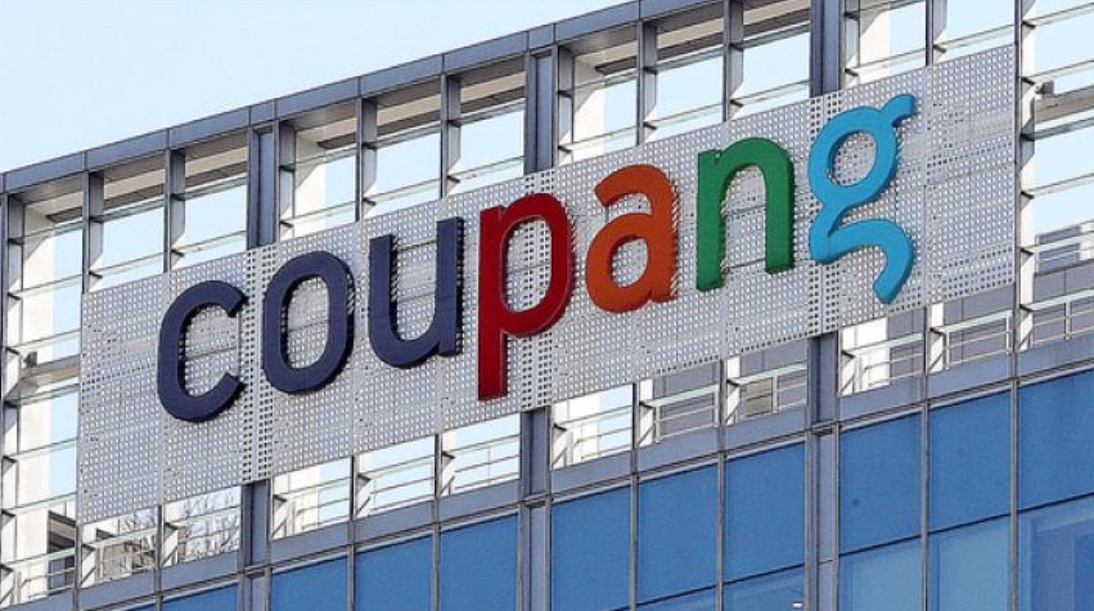
Recently, the data breach incident of the South Korean e-commerce giant Coupang, which lasted for 12 hours and was investigated by the police, once again drew global attention. The company's acting CEO was summoned for questioning on suspicion of obstructing the investigation, and this information disaster involving approximately 33 million users has long evolved from a technical glitch to a typical case examining the trust crisis in the digital age. Ironically, in sharp contrast to the company's proud "rocket delivery" efficiency, is its sluggish and chaotic internal security management, and even after the incident was exposed, it attempted to evade responsibility by modifying the service terms, which was immediately halted by the regulatory authorities.
The root cause of this incident was far from the sophisticated attack by external hackers; rather, it was a series of systemic failures in internal management. The most critical vulnerability lay in the complete loss of control over the identity lifecycle: an ex-employee, using the core system keys (signature keys) stolen during employment, was still able to access massive user data as if there were no one around after several months of leaving. This exposed a harsh reality: even in a technology giant with an annual IT budget of nearly 2 trillion won, its security thinking might still be at the "medieval" stage of building a solid wall, while there were astonishing blind spots in the management of permissions within the wall. What is even more thought-provoking is that the company's investment in information security accounted for only a tiny proportion of the total IT budget, which undoubtedly placed data security on the scale of cost-benefit trade-offs rather than regarding it as an unbreakable lifeline.
The ripple effects of this leak incident clearly outline the multi-dimensional picture of new enterprise crises in the digital economy era. The first to be affected is the disintegration of commercial trust foundations. Coupang initially stated that only a few thousand accounts were affected, but nine days later, it was forced to revise it to 33 million. The severe contradictions in the information were completely exhausting users' trust. Although it later offered a compensation plan worth 1.17 billion US dollars in vouchers, the attempt to "purchase" privacy security with consumer discounts seemed pale and full of calculation. The reaction of the capital market was the most direct, with its market value evaporating by over 8 billion US dollars in total.
Secondly, the risks have transcended national boundaries, triggering global legal encirclement. The impact of the incident quickly spread beyond South Korea, and US law firms have already filed a class-action lawsuit against its parent company in New York. This indicates that any major data accident by a technology giant may face cumulative legal risks from multiple jurisdictions, resulting in a severe situation of "one leak, global pursuit".
The most far-reaching significance is that it acts as a catalyst, accelerating the paradigm shift in global regulatory philosophy. The South Korean National Assembly promptly revised the law, raising the maximum fine limit for such incidents to 10% of the company's annual sales. This "punitive severity" conveys a clear signal: data security is no longer a perfunctory compliance cost but a core responsibility for the survival of the enterprise. The regulatory focus is shifting from "checklist"-style post-event accountability to requiring enterprises to build "embedded security" preventive architectures.
Looking at the Coupang incident from a global perspective, the data governance of the technology industry has reached a crossroads of fundamental reconstruction. The solution must go beyond technical patches and touch the core of governance.
The Coupang incident is like a mirror, reflecting how these precious resources, in an era where data is called "the new oil", are facing leakage risks due to outdated governance models and negligent management practices. It warns all technology enterprises: when pursuing user experience and market expansion at the "rocket speed", if one cannot reinforce the foundation of data security at the same or even higher speed, then the former commercial miracles may become classic cases of failed management in the future. True technological resilience lies not only in the convenience of service delivery but also in the reverence and protection of the trust entrusted by users.

Recently, the British government, in accordance with the "Steel Industry (Nationalization) Act" that came into effect on July 16th, took the British Steel Company, which is controlled by China Jiefang Group, into state ownership without compensation.

Recently, the British government, in accordance with the "S…

On July 23rd local time, the US Trade Representative Office…

The international crude oil market saw a sharp one-sided ri…

Recently, the geopolitical confrontation between the United…

The New York Times has recently clashed with the Trump admi…

Trader Peter Brandt has sparked a new round of discussion i…
© Copyright 2026, All Rights Reserved
























