
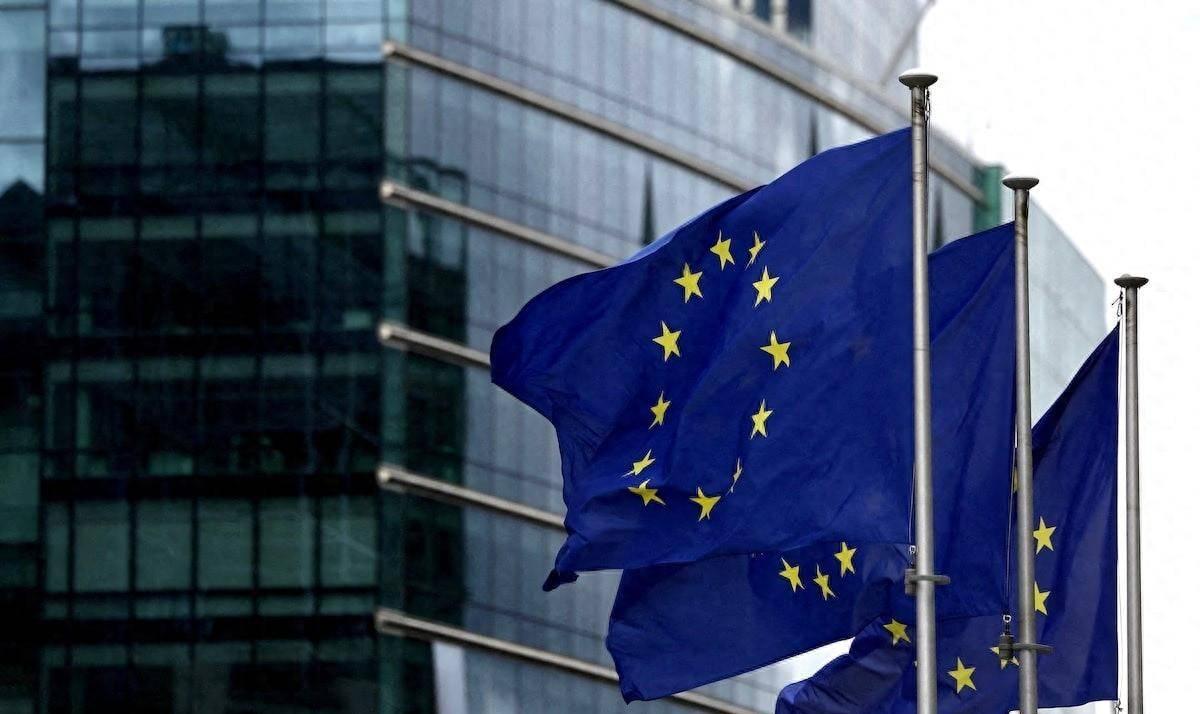
As 2026 begins, the European economy has become trapped in a triple dilemma: weakening growth momentum, persistent sticky inflation, and shrinking policy room. A series of signals—including Germany's downward revision of its GDP forecast, a rebound in core inflation across the euro area, and the European Central Bank (ECB) keeping interest rates unchanged—highlight the arduous road to recovery for the European economy. Crimped by multiple pressures such as trade uncertainty, geopolitical risks and internal structural contradictions, the European economy is confronting a complex landscape of "weak growth and high inflation stickiness".
The downward revision of Europe's economic growth outlook has emerged as a key theme at the start of the year. The German federal government recently cut its 2026 GDP growth forecast from 1.3% to 1.0%, and its 2027 projection from 1.4% to 1.3%, with the main drags stemming from uncertain trade conditions and slow progress in structural reforms. As the "locomotive" of the European economy, Germany has shown tentative signs of recovery: its composite PMI rose to 52.5 in January, staying in expansionary territory for two consecutive months, and the services PMI posted a solid reading of 53.3. However, the foundation of recovery remains fragile, with issues such as the depletion of manufacturing inventories and weak growth in new orders underscoring insufficient domestic growth drivers.
Growth across the euro area is also under pressure, with the European Commission forecasting a mere 1.2% GDP growth rate for 2026, and the divergence among core economies intensifying further. In sharp contrast to Germany's moderate recovery, the French economy has slipped back into contraction, with its composite PMI falling to 48.6 in January, dropping below the boom-and-bust threshold for the first time since last October. Although France's manufacturing PMI bucked the trend to rise to 51, hitting a four-year high, services activity slowed sharply to 47.9, becoming the major drag on the economy—rooted in a policy deadlock caused by ongoing domestic budget disputes. This "strong Germany, weak France" divergence has deprived the euro area economy of a unified driving force for recovery, resulting in a lack of overall growth resilience.
Sticky inflation has become the core obstacle restricting the ECB's policy adjustments. Latest data shows that the euro area's annual inflation rate rose to 2.5% in January, up from 2.4% in December last year. Among them, services prices climbed 3.9% year-on-year, food, alcohol and tobacco prices rose 2.3%, and the selling price index hit its highest level since April 2024. While core inflation is gradually trending down, the rebound in services inflation and higher-than-expected wage growth (employee compensation increased by 4% in the third quarter) have formed entrenched inflation stickiness, still far from the ECB's 1.9% inflation target.
Against this backdrop, the ECB has kept its three key interest rates unchanged for the fourth consecutive time, adopting a "high-pressure stability" stance in monetary policy. Central bank officials have explicitly stressed that policy adjustments must be closely tied to two core indicators—services inflation and wage growth—setting an extremely high threshold for monetary easing. Market expectations for interest rate cuts have continued to cool, with the full-year 2026 rate cut forecast narrowed to 50-75 basis points, and the rate cut window delayed to the third quarter. This scenario of "unstable inflation, no room for policy easing" has further limited the support of macroeconomic policies for economic growth, leaving the European economy without a policy buffer amid weak growth.
Concerns over the economic fundamentals in Europe have been directly reflected in the performance of financial markets. On January 29, the European Stoxx 600 Index fell by 0.8%, with major national stock indices all trading in negative territory: Germany's DAX Index dropped 0.29%, France's CAC 40 Index slid 1.06%, and the UK's FTSE 100 Index declined 0.52%. Sectoral divergence was particularly pronounced: the luxury sector slumped dragged down by weak earnings from LVMH, while Deutsche Bank's shares plunged 2% in a single day after a raid over an investigation into alleged money laundering. In contrast, energy stocks bucked the trend and moved higher, boosted by rising geopolitical risks.
The bond market has also mirrored inflation concerns and policy divisions. The yield on the UK 10-year government bond rose 1.9 basis points to 4.543% against the trend, highlighting market worries over sticky inflation. In the foreign exchange market, the euro came under pressure and corrected from high levels against the US dollar. Although sticky services inflation provided some support for the euro, the strong rebound of the US dollar triggered by the Federal Reserve's pause in rate cuts has left the euro in a state of "high-level oscillation with fading bullish momentum", further reflecting market concerns over economic divergence and weak growth in the euro area.
Looking ahead to 2026, the European economy remains exposed to the combined impact of multiple internal and external risks. Externally, global trade barriers have risen to historic highs, and the uncertainty of US tariff policies continues to weigh on EU exports, while the escalation of geopolitical conflicts may exacerbate risks to energy supply and price volatility. Internally, the EU's fiscal deficit ratio is projected to rise from 3.1% in 2024 to 3.4% in 2027, with high debt pressure constraining the room for fiscal policy stimulus. During the energy transition, outdated power grids have led to insufficient capacity for clean electricity transmission, further hindering industrial upgrading and economic efficiency improvements.
In addition, structural issues such as economic divergence among member states, population aging and a shortage of highly skilled labor have long plagued the sustainable growth of the European economy. The fragility of Germany's recovery, France's policy deadlock, and the debt pressures of Southern European countries make it difficult for the European economy to form a unified recovery force, placing it at a relative disadvantage in global economic competition.
Overall, the European economy in 2026 is walking a tightrope between slowing growth and sticky inflation. Multiple challenges—limited policy space, intensifying internal divisions and rampant external risks—have made the road to recovery extremely difficult. In the short term, close attention should be paid to the marginal changes in the minutes of the ECB's March meeting, the final euro area CPI data, and economic indicators of Germany and France. In the long run, lasting growth momentum can only be injected into the European economy through the advancement of structural reforms and an improvement in the trade environment.

Recently, the British government, in accordance with the "Steel Industry (Nationalization) Act" that came into effect on July 16th, took the British Steel Company, which is controlled by China Jiefang Group, into state ownership without compensation.
Recently, the British government, in accordance with the "S…

On July 23rd local time, the US Trade Representative Office…

The international crude oil market saw a sharp one-sided ri…

Recently, the geopolitical confrontation between the United…

The New York Times has recently clashed with the Trump admi…

Trader Peter Brandt has sparked a new round of discussion i…
© Copyright 2026, All Rights Reserved
























