
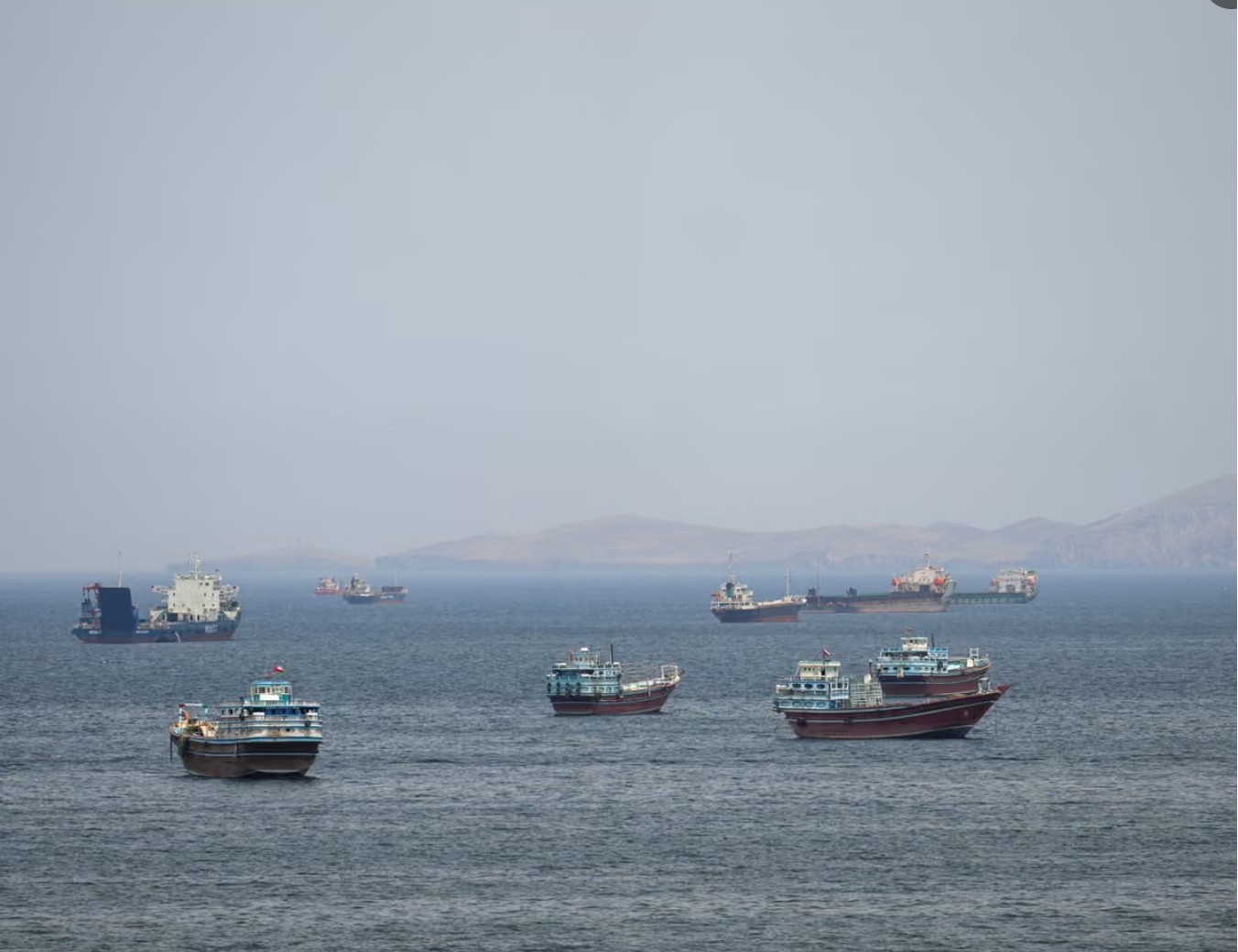
In April 2026, the "blockade war" between the United States and Iran in the Persian Gulf reached a stalemate. The United States imposed a comprehensive maritime blockade on Iran to exert pressure, while Iran responded by threatening to cut off the Strait of Hormuz and the Red Sea shipping lanes. The military standoff and diplomatic games between the two sides escalated simultaneously. In this conflict, Turkish President Recep Tayyip Erdoğan's warning was particularly notable: If the Middle East war continues, Europe will face a triple blow of a refugee crisis, an energy crisis, and an economic recession.
I. The US-Iran Blockade War: From Military Confrontation to Strategic Stalemate
The US blockade of Iran's maritime routes began on April 13, 2026, covering all Iranian ports in the Persian Gulf and the Gulf of Oman. The US deployed 15 warships to form a "zero-breakthrough" blockade line. Iran responded with a "permanent mechanism to control the Strait of Hormuz," threatening to block 20% of global oil transportation channels and warning of cutting off the Red Sea shipping lanes - an action that directly threatened the energy lifelines of Europe and Asia.
The essence of this blockade war is a game of "maximum pressure" and "counter-deterrence." The United States aimed to force Iran to yield by cutting off its oil exports, but Iran countered with the "strategic chip" of the Strait of Hormuz, causing global energy markets to fluctuate. Brent crude oil prices soared, and European natural gas futures rose by 80% in a single month, highlighting the vulnerability of the energy supply chain.
II. Turkey's Warning: Europe's "Triple Crisis"
Erdoğan's warning was not an exaggeration. As a hub connecting Europe and Asia, Turkey is well aware of the chain reaction of a Middle East conflict on Europe:
1. Refugee Crisis: Turkey shares a border with Iran. If the conflict escalates, Iranian refugees may flood into Europe via the "Iran-Turkey-Greece" route. In 2015, Turkey's acceptance of 3.5 million Syrian refugees already led to a surge in domestic employment pressure and fiscal deficits. If it has to take in Iranian refugees as well, Europe will face even more severe border control and social stability issues.
2. Energy Security Crisis: Although Europe's direct dependence on Persian Gulf energy is only 6%, the global market's interconnectivity makes it difficult for Europe to remain unscathed. A blockade of the Strait of Hormuz will push up international oil prices, and with European natural gas inventories at a recent low, the cost of replenishing inventories may cause industrial gas prices to soar, putting energy-intensive industries such as chemicals and metal smelting at risk of production halts.
3. Economic Recession Risk: The surge in energy prices has already led the European Central Bank to lower its 2026 economic growth forecast to 0.9% and raise the inflation forecast to 2.6%. If the conflict persists into winter, energy shortages may trigger "stagflation."
III. Europe's Predicament: The Absence of Strategic Autonomy and Division
In the face of the crisis, Europe has shown significant internal division: the UK and Spain have refused the US the use of their military bases, while France and Germany have explicitly refused to participate in the "Joint Fleet" to open the Strait of Hormuz, demonstrating the resistance of NATO allies to US unilateralism.
European Commission President Ursula von der Leyen called for the restoration of freedom of navigation, but German Chancellor Angela Merkel admitted that "Europe's dual dependence on US security guarantees and fossil fuel imports" constitutes a strategic vulnerability. Although the EU plans to accelerate the transition to renewable energy, it is difficult to break away from its dependence on Middle Eastern energy in the short term.
IV. Geopolitical Shifts: Turkey's Rise and the US's Predicament
In this crisis, Turkey has become a key variable. The Erdogan government has refused to follow the US in sanctioning Iran, instead strengthening energy cooperation with Tehran and secretly coordinating with Russia, highlighting its role as an "independent actor". Turkey controls the Bosporus Strait (a global 3% oil transportation channel), and if the US-Iran conflict escalates, it may become a mediator or provider of negotiation chips, further enhancing its regional influence.
In contrast, the US is trapped in a double predicament of "ally disunity" and "strategic goal failure". The Trump administration attempted to force Iran to yield through a blockade, but the refusal of NATO allies to participate has undermined the legitimacy of its actions; and Iran's tough countermeasures have proven that the US cannot unilaterally control the global energy lifeline.
The stalemate in the US-Iran blockade war and Turkey's warnings jointly reveal a reality: in today's intertwined energy geopolitics and military conflicts, Europe's "strategic autonomy" cannot remain just a slogan, but must be achieved through substantive actions to reduce external dependence. Whether it is accelerating the energy transition, strengthening EU defense integration, or reconstructing transatlantic relations, Europe must confront a core issue: in the volatile Middle East, how to avoid becoming a victim of major power games? This crisis may be an opportunity for Europe to reposition its strategic coordinates.

Recently, the British government, in accordance with the "Steel Industry (Nationalization) Act" that came into effect on July 16th, took the British Steel Company, which is controlled by China Jiefang Group, into state ownership without compensation.

Recently, the British government, in accordance with the "S…

On July 23rd local time, the US Trade Representative Office…

The international crude oil market saw a sharp one-sided ri…

Recently, the geopolitical confrontation between the United…

The New York Times has recently clashed with the Trump admi…

Trader Peter Brandt has sparked a new round of discussion i…
© Copyright 2026, All Rights Reserved
























