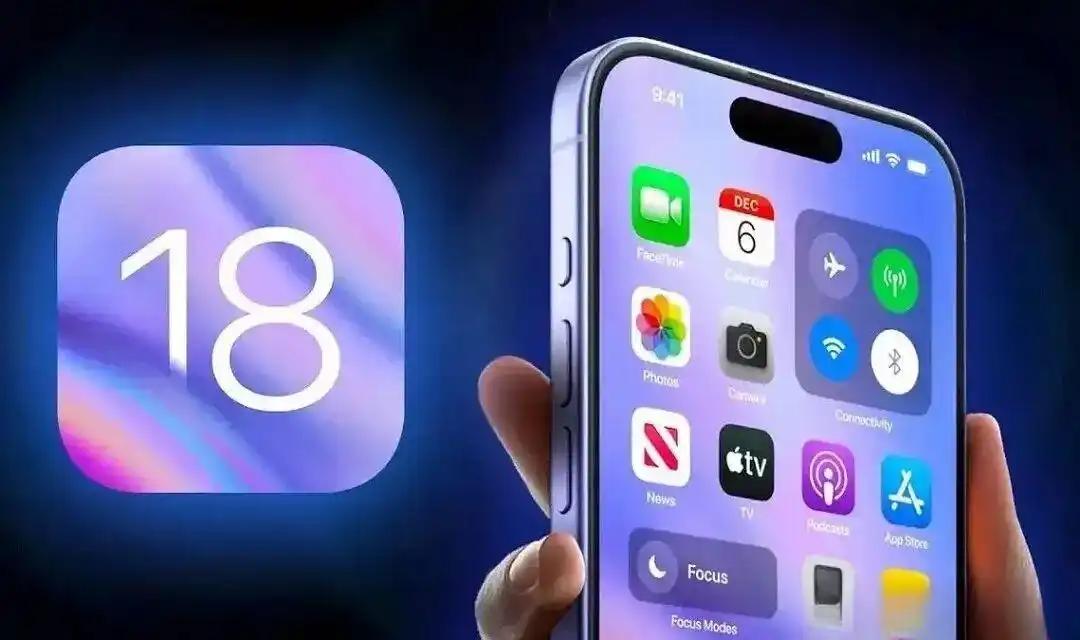
Recently, Apple officially announced the details of the settlement for the class action lawsuit over Siri AI false advertising, agreeing to pay $250 million in settlement compensation. The incident originated from the 2024 WWDC conference, where Apple made a high-profile announcement that Siri in iOS 18 would undergo a transformation with the enhancement of AI, enabling it to not only understand context but also support cross-application operations. However, with the repeated delays of the "fully-fledged Siri", two years later, Apple seems to have been somewhat burned by its own actions. This incident not only damaged Apple's brand reputation but also acted like a pebble thrown into the lake of the technology industry, causing a chain of negative ripples. As a global technology giant, every move made by Apple carries significant industry benchmarking implications. This farce, from high-profile promotion to failure to deliver, and then to huge compensation payments, has brought profound and lasting negative impacts to the entire technology sector, worthy of reflection by all practitioners.
The most direct impact is the severe damage to the credibility of AI among tech giants. For a long time, Apple has established itself in the industry with an image of "extreme experience and reliable fulfillment". At the WWDC conference in 2024, it announced the Apple Intelligence platform in a high-profile manner, promising that Siri would achieve core AI capabilities such as contextual understanding and cross-application operation, and stating that it would be launched simultaneously with the iPhone 16 series. This promotion became a core selling point of the new device, attracting tens of millions of users to make a purchase. However, in March 2025, Apple suddenly announced a delay of the feature to the fall of 2026, and then quietly removed all related advertisements. This kind of "pie-in-the-sky marketing" directly consumed users' trust. What is more alarming is that as an industry benchmark, Apple's breach of trust will have a contagion effect. In the future, users will be skeptical of any official announcement of AI features by tech companies, whether it is new AI products from Google or Microsoft, or functional promotions from small and medium-sized manufacturers. All will face stricter scrutiny, and the industry trust system will encounter unprecedented challenges.
This incident has also exacerbated the excessive hype in the AI industry, disrupting the healthy development order of the industry. Currently, the technology circle suffers from a common problem of "emphasizing promotion and neglecting implementation". In order to seize the market and attract capital attention, manufacturers often overstate the AI concept in advance, packaging functions that are still in the research and development stage as core selling points that are "about to be implemented". Although Apple paid a high price this time, it did not fundamentally change the industry chaos. Instead, it may lead some small and medium-sized manufacturers to make the misjudgment that "the cost of hype is lower than the benefit", imitate Apple's promotion model, exaggerate AI capabilities, blur the launch time, and focus on marketing hype rather than technology research and development and implementation. If this continues, the AI industry will fall into a strange circle of "conceptual involution", and the truly valuable technology research and development will be neglected, seriously depleting the industry's innovation vitality.
The development path of AI has thus encountered a trust crisis, dragging down the progress of industry research and development. Apple has always been a staunch proponent of the local AI + privacy security approach on the device side, advocating for AI functions to run locally on mobile phones, balancing privacy and response speed. However, the delay in Siri's release this time has precisely exposed the practical dilemma of device-side AI: the limited computing power of mobile phone hardware makes it difficult to support the operational requirements of high-level large models, while reconstructing old system architectures faces high risks and costs. This awkward situation of "wanting to do but not being able to do" has made the industry cautious about investing in device-side AI. Capital and enterprises have begun to adopt a conservative wait-and-see approach, and resources originally planned for device-side AI research and development have been reduced. The iteration speed of lightweight device-side AI and native smartphone intelligent ecosystems has slowed down, and some enterprises have even shifted away from the device-side approach and turned to cloud-based AI, which carries lower risks, leading to confusion in the industry's development direction.
In summary, the Siri AI delay and the astronomical settlement incident are not crises for Apple alone, but rather a mirror reflecting the entire technology industry. In the future, manufacturers need to return to rationality, abandon "pie-in-the-sky marketing", and focus on technology implementation; the industry needs to establish more standardized promotional guidelines to guide healthy competition; and capital needs to view the AI track rationally and focus on long-term value. Only in this way can the technology industry shake off the fickleness of concept speculation, return to the essence of innovation, and allow AI to truly serve users and achieve sustainable development.
According to a report by Reuters on June 2nd, the US Department of Commerce's export control system for cutting-edge artificial intelligence chips has significant design flaws.
According to a report by Reuters on June 2nd, the US Depart…

According to recent reports by US media, US President Trump…
Donald Trump is embroiled in the biggest corruption controv…

Recently, Trump has launched two core economic and trade me…

The current surface of the US economy is flat: US stocks ha…
After the market closed on June 3, Broadcom delivered a see…
© Copyright 2026, All Rights Reserved