
After the market closed on June 3, Broadcom delivered a seemingly decent financial report—Q2 revenue of $15.01 billion, adjusted earnings per share of $2.44, both of which exceeded market expectations. However, the stock price plunged nearly 13% in after-hours trading. There is only one reason: the third-quarter AI chip sales guidance was only $16 billion, while the market expected $17.2 billion. A $1.2 billion difference, with over $150 billion in market value evaporating. A company with "better-than-expected earnings" was heavily penalized by the market for "not surpassing expectations in the future," which itself shows that the pricing logic of tech stocks has fundamentally changed.
Over the past two years, AI chips have been the core narrative engine for the entire US tech sector. Nvidia's price soared from $200 to $1,400, and supply chain companies like Broadcom, Mywell, and Amphenol followed suit. The market's valuation logic is very simple—AI is the next industrial revolution, and anyone involved is worth a high price. In this narrative, revenue growth is more important than profit, and the customer list is more important than gross margin. The phrase "We are working on AI" itself is the best catalyst for stock prices. But Broadcom's recent crash revealed a harsh reality: when the market starts pricing with "guidance" rather than "story," many companies reveal their true colors.
Broadcom's real problem isn't that AI is failing, but that its AI business is "making noise but not profitable." Broadcom's largest AI chip customers are Google and Meta, both developing their own TPU and MTIA chips. Broadcom mainly sells customized AI accelerators and high-speed interconnect chips. These orders are huge, have extremely long cycles, low gross margins, and extremely slow payment collections. The financial report looks impressive at the revenue figures, but breaking it down, the quality of cash flow and profit margins are far from as healthy as the market imagines. While investors are still cheering for "Broadcom is the core AI target," capital has already begun asking an even sharper question: Can these orders actually turn into real profits?
This is the real signal behind Broadcom's plunge — AI investment is shifting sharply from the 'storytelling' phase to the 'doing the math' phase. In the past, the market was willing to assign a 30x or even 50x P/E ratio to 'AI-related' companies, on the premise of believing in exponential growth over the next three years. But now, even a company like Broadcom, whose performance is still growing, was hammered down 13% just because its guidance fell by 7%. This means the market's tolerance for error has become extremely low, and any sign of 'growth slowing' gets magnified into a 'logical collapse.'
What's even more worrisome is that Broadcom is unlikely to be the last one. Nvidia's next earnings report, TSMC's capital expenditure guidance, or even Microsoft and Google's AI Capex plans could all become triggers for the next downturn. When the valuation of the entire AI industry chain is built on the assumption that 'the future will be better,' any gap in expectations at any link can trigger a chain reaction. Blue Origin's rocket explosion destroyed the moon landing timeline; Broadcom's guidance 'crash' shattered the last layer of the market's unconditional faith in AI chips.
AI of course is not dead, but the era when just the words 'AI' could double a stock price might actually be over.

According to a report by The Wall Street Journal on July 22nd, due to the failure of Congress to pass the new fiscal year spending bill, the US federal government will face another partial shutdown starting from July 24th.

According to a report by The Wall Street Journal on July 22…
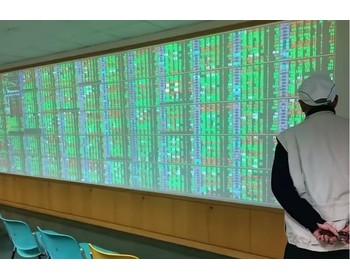
On July 17th, Taiwan's stock market experienced a historic …

On July 22nd local time, the pre-market short-term decline …
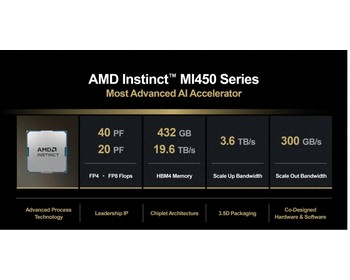
On July 22 local time, Advanced Micro Devices (AMD) officia…

According to the report by Rich Asplund, a columnist of Bar…

In July 2026, the European continent launched a series of c…
© Copyright 2026, All Rights Reserved