
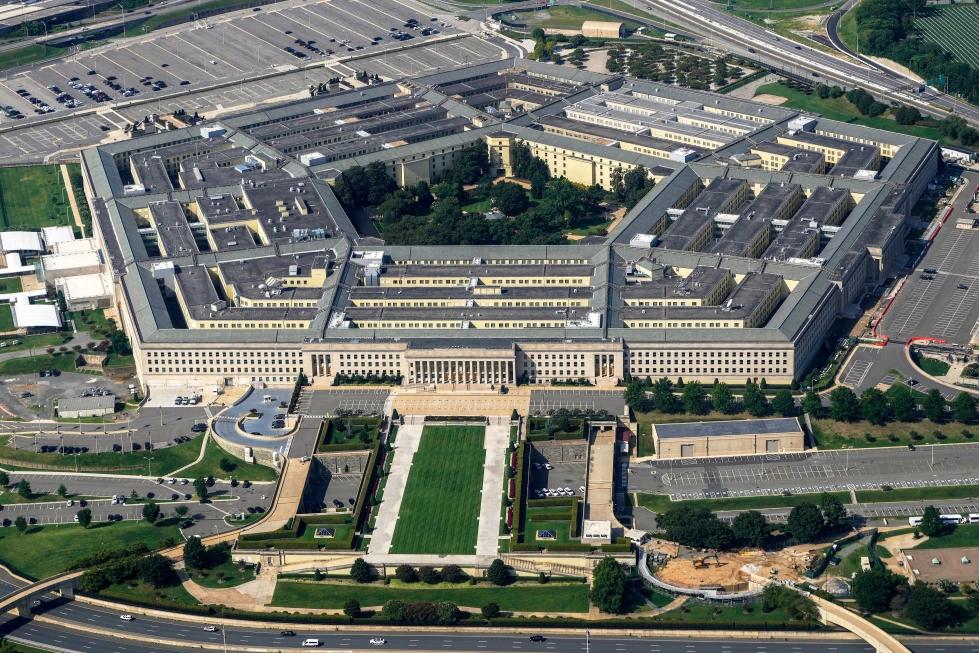
AP, Washington — The U.S. Pentagon has announced a major reversal of its disease prevention policy, reinstating mandatory influenza vaccination for all recruits across every service branch boot camps merely two months after scrapping the flu shot requirement for military personnel. This policy U-turn coincides with an ongoing clustered influenza outbreak at an Air Force training base, laying bare deep tensions between public health science, institutional management, and the principle of medical autonomy within closed military compounds, while offering a telling case study for seasonal infectious disease control in densely populated enclosed facilities worldwide.
The shift in policy stems from a mix of institutional revisions at the Department of Defense and tangible public health risks. At the end of April, Defense Secretary Pete Hegseth repealed the long-standing mandatory flu vaccination rule for service members, citing respect for medical self-determination and religious freedom. The administration shifted inoculation to a fully voluntary framework with a 15-day grace window, allowing individual medical commands to file for exceptions or retain mandatory vaccine protocols. The new policy drastically reduced vaccination compliance pressure on incoming military recruits, leaving inoculation entirely to personal choice.
Loosened vaccination mandates swiftly eroded the military’s collective disease defense. Following the policy change, influenza vaccination rates among recruits at Lackland Air Force Base plummeted to just 40 percent, a steep drop from levels seen under the compulsory system. As the primary Air Force recruit training facility, the base admits roughly 700 new trainees weekly. Recruits live, train and conduct inspections in constant close quarters: they reside in large open dormitories, share bathing facilities, and endure grueling high-stress training schedules with insufficient rest, creating an environment highly conducive to pathogen transmission. The combination of low vaccination uptake and dense communal living sparked a multi-week flu cluster. Democratic Representative Joaquin Castro, whose congressional district encompasses part of the base, stated on social media that the outbreak had persisted for three weeks with a confirmed case count of 275, severely disrupting recruit training operations and camp sanitation security.
Faced with critical public health vulnerabilities and spreading infection, the Pentagon rolled back its rules to reimpose universal flu vaccination for all new recruits. Pentagon officials stressed the exemption approval process had been finalized back in early June, framing the timing as a mere coincidence unrelated to the Lackland outbreak rather than an emergency corrective measure responding to the spread. Authorities confirmed exemptions to resume mandatory shots were granted to the Army, Navy, Air Force, National Security Agency and Defense Health Agency. The Army and Navy separately noted they would prioritize mandatory influenza shots for high-risk cohorts including overseas-deployed troops, medical staff and childcare workers to fortify disease defenses for frontline critical roles.
From a public health science perspective, the military flu outbreak exhibits classic traits of transmissible disease clusters in concentrated populations. Dr. Arnold Monto, professor emeritus and leading influenza expert at the University of Michigan, explained that while influenza peaks in late autumn and winter, low-level viral circulation persists through warmer spring and summer months. Congregated enclosed sites such as military installations and cruise ships frequently see off-season localized outbreaks. Vaccination remains the most established, effective scientific intervention to curb influenza transmission in dense populations, as widespread uptake builds herd immunity that limits cross-contamination and large-scale outbreaks.
The back-and-forth vaccine policy has sparked clashing viewpoints from different stakeholders. Advocates for bodily autonomy and religious liberties supported the prior voluntary system, arguing mandatory vaccination infringes on individual medical decision-making authority. Public health advocacy groups, by contrast, criticized the earlier rollback of vaccine requirements. Michelle Slavkoski, executive director of Families Fighting Flu, issued a statement condemning the temporary elimination of recruit vaccine mandates, noting the U.S. military had relied on compulsory flu shots for decades to safeguard troop and public health. She argued the hundreds of illnesses at Lackland directly demonstrated the hazards of weakening such safeguards, and the updated military guidance would save lives by restoring collective immunity.
The incident also reveals structural flaws within the military’s disease prevention framework. For years, consistent mandatory vaccination rules formed a reliable public health buffer for boot camps. Reversing this framework based solely on ideological priorities, without accounting for the unique infectious risks of densely packed military training environments, undermined evidence-based disease control measures, broke down herd immunity protections and allowed viral spread. The episode underscores that infectious disease policy must be tailored to the specific risks of a setting and grounded in established public health research.
In summary, the military’s repeated revisions to its influenza vaccine policy exemplify the ongoing friction between evidence-based public health standards and ideological priorities around personal medical choice. In the short term, reinstating mandatory shots for new recruits will rapidly repair gaps in camp disease defenses, rebuild herd immunity, contain the spread of influenza clusters, and stabilize recruit training schedules alongside military operational readiness. Over the long term, the outbreak delivers a stark lesson: disease prevention policies for high-density closed environments cannot be altered purely on ideological grounds and must align closely with epidemiological research and site-specific transmission risks. The U.S. Department of Defense is expected to refine tiered disease control protocols to strike a balance between medical autonomy and collective troop safety. Its policy adjustments and subsequent public health outcomes will serve as a valuable reference for infectious disease management in congregated facilities across the globe.

Recently, the British government, in accordance with the "Steel Industry (Nationalization) Act" that came into effect on July 16th, took the British Steel Company, which is controlled by China Jiefang Group, into state ownership without compensation.

Recently, the British government, in accordance with the "S…

On July 23rd local time, the US Trade Representative Office…

The international crude oil market saw a sharp one-sided ri…

Recently, the geopolitical confrontation between the United…

The New York Times has recently clashed with the Trump admi…

Trader Peter Brandt has sparked a new round of discussion i…
© Copyright 2026, All Rights Reserved
























