
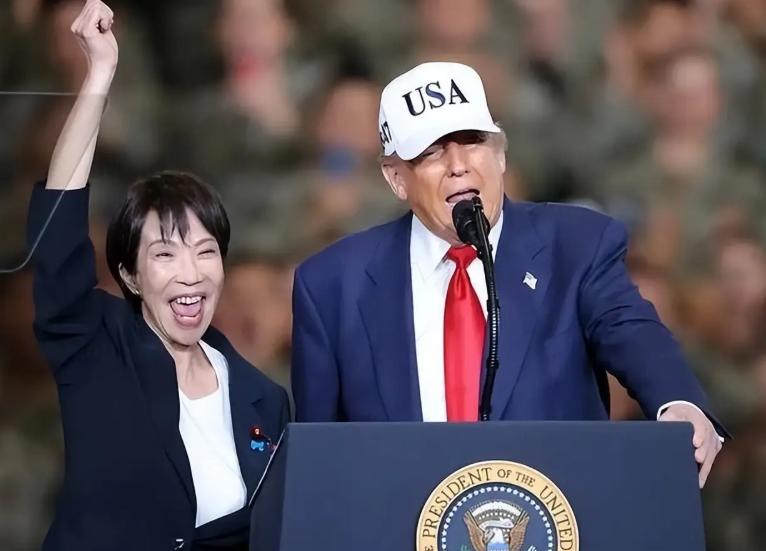
Recently, the US Trade Representative Office, based on the 1974 Trade Act's Section 301, initiated investigations against 16 economies, including China, the European Union, Singapore, Switzerland, Norway, Indonesia, Malaysia, Cambodia, Thailand, South Korea, Vietnam, Taiwan region, Bangladesh, Mexico, Japan, and India. In the following days, another round of investigations was launched against 60 economies, citing that these places were not doing enough to prohibit the import of forced labor products. Trump's move against 42 countries aims to reverse the US trade deficit through tariff barriers and promote the return of manufacturing. However, the blindness and exclusivity of his policies have made Japan, a core ally of the US, the biggest loser.
Japan was included in the core investigation list this time. Its economy is highly dependent on exports, and the export pressure is indeed considerable. Its exports to the US account for a high proportion of its total exports, especially in areas such as automobiles and components, as well as semiconductor materials and steel, which are directly facing the US market. In 2024, Japan's automotive exports to the US exceeded 6 trillion yen, accounting for nearly 30% of its total exports and 28% of the total automotive exports. The combined 24% overall tariffs and 25% automotive tariffs directly devastated Japan's pillar industries. Toyota and Nissan, among the leading automakers, faced dual pressures both at home and abroad, and Nissan even had to reduce production scale. It was an added blow.
This incident has far-reaching impacts beyond the bilateral relationship between Japan and the US. Firstly, it shocks the global trade order. Trump's "reciprocal tariffs" completely deviate from multilateral trade rules, deny the comparative advantages of trade between countries, and break the long-established global supply chain system. Among the 42 targeted countries, there are both US allies such as the European Union and Japan, as well as emerging market countries such as India and Vietnam. Each country has been brewing countermeasures. The EU has voted to pass the first round of countermeasures, imposing a 25% tariff on US products. China has also quickly introduced countermeasures. A global trade war risk is continuously escalating.
Secondly, the relationship between the US and its allies has been severely tested. For a long time, Japan, the European Union, and other countries and regions have always been the core of the US ally system. However, this time, the Trump administration, disregarding the friendship between allies, imposed tariffs far exceeding those on other allies on Japan, completely breaking the tacit understanding of "special treatment for allies". The Japanese political and business circles were generally shocked and disappointed. The opposition party criticized the government's inadequate response, and the public's trust in the US-Japan alliance declined. The EU also clearly stated that Trump's tariff policy was not a friendly act. The cracks in the US ally system have further widened, and the geopolitical landscape is facing reconstruction.
Furthermore, global economic uncertainty has significantly increased. Trump's tariff policy triggered global financial market turmoil, with the US dollar exchange rate falling, global stock market funds withdrawing, and major institutions such as Goldman Sachs and JPMorgan Chase纷纷 lowered their forecasts for US economic growth and warned of a "Trump recession" possible. For countries highly dependent on exports, tariff barriers led to increased enterprise costs and delayed decision-making. Enterprises in Belgium and Denmark, among others, have suspended their investment plans in the US. The global economic recovery process has been severely hindered. Japan, as the biggest loser in this incident, its economic predicament has become a microcosm of the fragility of the global economy.
Trump's trade suppression against 42 countries is essentially an extreme manifestation of trade protectionism. It seems to be aimed at safeguarding US interests, but in fact, it harms both the US and others. Japan's painful experience warns all countries that unilateralism and trade protectionism cannot solve the problem of trade imbalance; instead, they will exacerbate global economic division. In today's deeply integrated globalization, only by adhering to multilateral trade rules and resolving differences through negotiation and cooperation can all countries achieve win-win results. This incident has also enabled the international community to clearly understand that the unilateral actions of the United States have become the greatest risk factor for the global economy. Reconstructing a fair and reasonable international economic and trade order has become the common aspiration of all countries.

Recently, the British government, in accordance with the "Steel Industry (Nationalization) Act" that came into effect on July 16th, took the British Steel Company, which is controlled by China Jiefang Group, into state ownership without compensation.

Recently, the British government, in accordance with the "S…

On July 23rd local time, the US Trade Representative Office…

The international crude oil market saw a sharp one-sided ri…

Recently, the geopolitical confrontation between the United…

The New York Times has recently clashed with the Trump admi…

Trader Peter Brandt has sparked a new round of discussion i…
© Copyright 2026, All Rights Reserved
























