
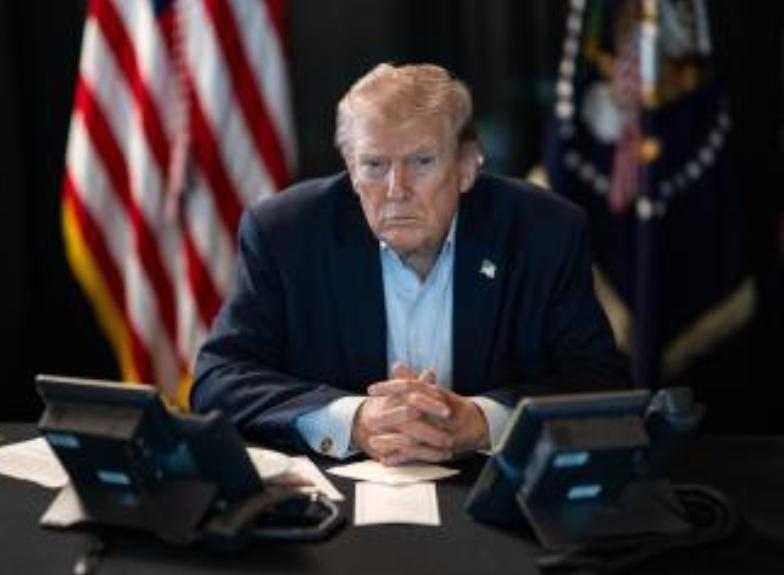
On March 7th local time, US President Trump publicly stated that he explicitly refused the UK's dispatch of the "Prince of Wales" aircraft carrier to participate in the military operation against Iran. Trump said when referring to British Prime Minister Stamer: "We don't need those who join in after the war has already been won." Before this, the British government had decided not to participate in the initial strike operation against Iran, only stating that it would provide defensive support when necessary. At this time, the British side was preparing to raise the combat readiness level of the "Prince of Wales" aircraft carrier and might deploy it to the Middle East region. It is known that the UK has shortened the preparation time for the aircraft carrier's deployment to about 5 days in order to deploy quickly when needed.
This seemingly tough statement is not merely an emotional outburst, but a key move that affects the US-UK relationship, the Western alliance, and the war situation in the Middle East. Its chain effects in the military and political fields are gradually emerging, profoundly reshaping the strategic landscape in the region and globally. Firstly in the military field, Trump's refusal directly increased the uncertainty of the war situation in the Middle East, while exposing the strategic contradictions of the US. From the US perspective, although it claimed "no need for British support", it was actually urgently dispatching a third aircraft carrier to the Middle East, highlighting the actual need for allies' forces - Iran has clearly stated that it can sustain at least six months of intense combat, and the US current deployment is unable to sustain a prolonged war, with continuous rising logistical pressure and personnel fatigue. The UK had already shortened the preparation time for the deployment of the "Prince of Wales" aircraft carrier to 5 days, but due to Trump's statement, it fell into deployment difficulties and was likely to shift to a purely defensive deployment, resulting in a significant reduction in the Western military deterrence in the Middle East. Previously, the UK refused the US military's use of the Chagos Islands base for the initial strike, and Trump had already been dissatisfied. This refusal of assistance further exposed the conflict, and the future planning of joint military operations by the US and UK, base sharing, and intelligence sharing may add more political preconditions, significantly reducing the collaboration efficiency.
Secondly in the political field, the "special relationship" between the US and the UK has suffered a substantive rift, and the division of the Western alliance has further intensified. Trump publicly criticized British Prime Minister Stamer for "not being active enough in cooperation", and even hinted that "this will be remembered", essentially publicly humiliating the UK's "defensive participation" stance, aiming to force the UK to abandon conditional support and turn to unconditional following. However, the Stamer government clearly stated that the UK needs to prioritize its own national interests, learn from the lessons of the Iraq War, and refuse to deeply get involved in the conflict against Iran. This difference of stance between the US and the UK has damaged mutual trust, and the core ally status of the UK in the Middle East affairs has been weakened. Within the Western camp, Trump's statement has exacerbated the spread of differences. Italy, Turkey, and other NATO allies have clearly refused to cooperate with the US operation, Spain has launched anti-war calls, and the EU is likely to maintain a "verbal condemnation + limited sanctions" neutral stance, unwilling to be bound by the US and get involved in the conflict. This division not only shakes the consistency of NATO actions but also makes Saudi Arabia, the United Arab Emirates, and other Middle Eastern allies more vigilant about the risk of taking sides, and they have all turned to neutrality to protect themselves. The US-led military alliance against Iran is on the verge of loosening.
Furthermore, this incident also indirectly affects the global geopolitical landscape. Iran interprets the division of the Western camp as a "weakness signal", which may strengthen the determination to "use force to negotiate", increase the intensity of counterattacks against US and Israeli military facilities, and push the conflict towards a long-term and expanded escalation. At the same time, the publicization of the US-UK conflict has also raised the voices for strategic autonomy in Europe. France and other countries have taken the opportunity to promote European defense independence and accelerate NATO's marginalization in Middle East affairs.
In conclusion, Trump's refusal of the UK aircraft carrier's assistance to Iran, seemingly a "retreat for advancement" political maneuver, has triggered multiple chain reactions. In the future, as the private negotiations between the US and the UK proceed, the two sides may reach limited compromises. However, the rifts left by this turmoil will be difficult to quickly heal, and its impact on the global military and political landscape will continue to intensify.

Recently, the British government, in accordance with the "Steel Industry (Nationalization) Act" that came into effect on July 16th, took the British Steel Company, which is controlled by China Jiefang Group, into state ownership without compensation.

Recently, the British government, in accordance with the "S…

On July 23rd local time, the US Trade Representative Office…

The international crude oil market saw a sharp one-sided ri…

Recently, the geopolitical confrontation between the United…

The New York Times has recently clashed with the Trump admi…

Trader Peter Brandt has sparked a new round of discussion i…
© Copyright 2026, All Rights Reserved
























