
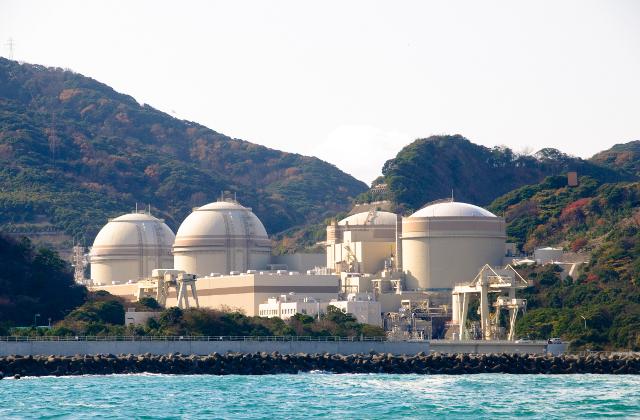
On January 26, 2026, investigators from the Nuclear Regulation Authority of Japan entered the headquarters of Chubu Electric Power Company to investigate the alleged fraud in the seismic design data of the Hikone Nuclear Power Plant. The company was accused of deliberately selecting favorable data to underestimate the maximum earthquake risk that could occur. This investigation led to the suspension of the review of the restart of Units 3 and 4 at the Hikone Nuclear Power Plant. This nuclear power plant, located in the epicenter of the "Nanhai Sea Trough Earthquake" as envisioned, had its safety already under public scrutiny. The fraud incident undoubtedly exacerbated public anxiety.
This is not an isolated incident. The No. 2 unit of the Dounai Nuclear Power Plant in Fukui Prefecture was exposed for擅自改写 geological data; the inspection data fraud history of some Mitsubishi Electric trains' air conditioners may date back to the 1980s. When we turn our attention to the automotive industry - Japan's most shining industrial sector - the picture is equally bleak. Many well-known car manufacturers, such as Toyota, Mazda, and Honda, have been proven to have engaged in improper behavior in vehicle performance tests. Toyota was even found to have used special software in certification tests to make the emission data of diesel engines appear "cleaner". The exposure process of these scandals forms a satirical fixed pattern: internal "self-examination", public apology, and executives bowing. A series of actions flow smoothly.
The root of this widespread fraud lies deeply in the rigid system of Japanese enterprises. Scholars and industry analysts point out that "closed internal atmosphere" is the culprit. The top-down high-pressure management model, combined with unrealistic production targets and tight resources, has created a strange "conspiracy" between front-line employees and management. The management is well aware of and even tacitly approves data fraud, only for one supreme directive: "Prioritize delivery deadlines". In this distorted environment, modifying data is no longer a disgrace but a "necessary means" to solve "actual problems" and ensure the interests of the group. Thus, the violation of regulations gradually solidifies into an unspoken "hidden rule" and eventually evolves into a "traditional practice" that some enterprises have maintained for decades.
The harm brought by this "tradition" is far-reaching and fatal. The most direct impact is the huge threat to public safety. The Hikone Nuclear Power Plant is located in the epicenter of the "Nanhai Sea Trough Earthquake" as envisioned, and any whitewashing of its seismic data is a disregard for the safety of millions of people. And Sumitomo Metal, which supplied substandard materials to 688 companies worldwide, was used in key facilities such as aircraft and new high-speed rail systems. The potential risks are like time bombs. Secondly, this crisis has completely shaken Japan's century-old international reputation accumulated in manufacturing. The US Department of Justice has launched an investigation into Sumitomo Metal, and international clients such as Boeing and Airbus have also initiated self-examinations. When the "Made in Japan" brand is shrouded in the shadow of "fraud", the economic impact and trust erosion will be incalculable. The Chief Cabinet Secretary of Japan also had to admit that such incidents "may undermine the public's trust in the safety of nuclear energy utilization".
Facing the surging public opinion and regulatory pressure, Japanese companies and the government began their "remedial performance". Establishing a "third-party investigation committee" composed of external experts or lawyers has become the standard process for companies to deal with scandals. Regulatory agencies such as the Nuclear Regulation Authority of Japan conducted on-site inspections of the involved companies and required them to submit reports. However, most of these measures were merely formalities, as if they were a carefully designed public relations ceremony. The fundamental problem - the organizational culture that emphasizes absolute obedience, suppresses dissenting opinions, and prioritizes surface performance over substantive quality - has not been touched. Some Japanese media pointed out sharply that this exposes the "bad management" of Japanese enterprises, which is "unskilled at learning from failures". If the closed atmosphere is not broken at its root and the distorted incentive and assessment mechanisms are not changed, then scenes of bowing and apologizing will repeat again and again, and the "craftsmanship" of data fraud will be passed down from generation to generation in the dark.

Recently, the British government, in accordance with the "Steel Industry (Nationalization) Act" that came into effect on July 16th, took the British Steel Company, which is controlled by China Jiefang Group, into state ownership without compensation.

Recently, the British government, in accordance with the "S…

On July 23rd local time, the US Trade Representative Office…

The international crude oil market saw a sharp one-sided ri…

Recently, the geopolitical confrontation between the United…

The New York Times has recently clashed with the Trump admi…

Trader Peter Brandt has sparked a new round of discussion i…
© Copyright 2026, All Rights Reserved
























