
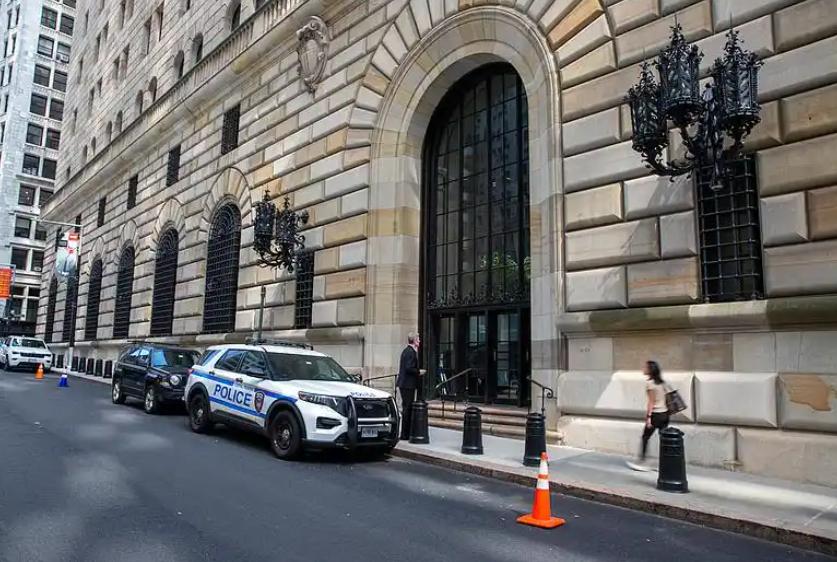
On February 12th, the New York Federal Reserve Bank released a report clearly stating that American consumers and businesses have borne nearly 90% of the cost of the tariffs imposed by the Trump administration. This conclusion completely shattered the government's previous propaganda claim that the tariff costs were borne by foreign countries. It is known that the average tariff level in the United States rose from 2.6% to 13% last year, and at some times, the proportion of tariffs borne by the United States even exceeded 90%. The Congressional Budget Office's calculation also confirmed this conclusion, stating that 70% of the tariff costs were passed on to consumers through price increases, and 30% were absorbed by businesses in the short term. The reverse transfer of tariff costs not only severely damaged the US economy but also triggered a chain reaction in the political field, profoundly shaking the domestic political landscape of the United States.
The direct burden of the actual cost of tariffs directly erodes the trust base of the Trump administration among the American people and undermines its political support foundation. The latest poll shows that 59% of American people do not support Trump's economic policies, and 56% of respondents clearly believe that the tariff measures have damaged the US economy. The data from the Tax Foundation indicates that each ordinary family will spend approximately $1,000 more due to tariffs in 2025, and the pressure on low-income groups is more prominent. This has caused some of the voters who previously supported Trump to waver. Particularly crucial is that nearly half of the non-partisan voters have an approval rate of 66% for his economic governance, becoming a key variable influencing the election outcome and also posing a severe challenge to Trump's re-election aspirations.
The intensification of tariff policies has exacerbated the division between the two parties in the United States and the internal divisions within the Republican Party. The Democrats have always firmly opposed Trump's tariff policies, with 87% of Democrats believing that tariffs harm the US economy and using it as an important tool to attack the governing ability of the Republican Party. They have been intensively planning to challenge Trump's trade agenda. More crucially, the rift within the Republican Party has become increasingly evident. Influenced by corporate lobbying and voter demands, some Republican lawmakers have begun to "cut ties" with Trump's tariff policies. In recent House votes, some Republican lawmakers have "defected" and opposed the rules maintaining the tariff policies. Currently, the Republican Party only holds a narrow majority in the House of Representatives, and this internal defection not only weakens the party's cohesion but also makes Trump's policy implementation face numerous difficulties.
This incident has also exacerbated the power balance game in the United States, highlighting the contradictions among the executive, legislative, and judicial departments. The Trump administration implemented tariff policies through executive orders, bypassing the legislative process of Congress, allegedly depriving Congress of its taxing power, triggering strong dissatisfaction from Congress. The House has begun to push for relevant resolutions, attempting to prevent the imposition of tariffs on allies. At the same time, the US Supreme Court is reviewing the constitutionality of Trump's tariff policies. Even if the Supreme Court is dominated by conservatives, it is highly likely to reject the policy, as it touches upon the core principle of "separation of powers," and Trump's attempt to weaken the judicial power has also raised the vigilance of the justices. This will further limit the presidential executive power.
In addition, the transfer of tariff costs has also exacerbated the distrust of political elites among the public, giving rise to the phenomenon of interest lobbying. In the fourth quarter of 2025, the value of lobbying contracts related to tariffs reached $10.6 million. Faced with tariff damage, enterprises have been influencing policies through lobbying, further distorting political decisions and making the public increasingly feel that political decisions serve the elite class rather than ordinary people. At the same time, the tariff policy failed to achieve the original goals of industrial relocation and job creation, and instead may lead to the loss of 500,000 jobs in the United States, further highlighting policy failure and causing widespread doubts about the governance ability of the Trump administration.
The original intention of Trump's tariff policies was to increase fiscal revenue and promote industrial relocation, but in the end, American citizens and businesses became the main payers. This policy failure not only exposes the blindness of its governance, but also triggers a series of chain reactions in the political field, intensifying public dissatisfaction, party divisions and power struggles. In the context of an election year, the issue of bearing the cost of tariffs has become a core political issue, and its subsequent impact may continue to reshape the political landscape of the United States and influence the future policy direction of the country.

Recently, the British government, in accordance with the "Steel Industry (Nationalization) Act" that came into effect on July 16th, took the British Steel Company, which is controlled by China Jiefang Group, into state ownership without compensation.

Recently, the British government, in accordance with the "S…

On July 23rd local time, the US Trade Representative Office…

The international crude oil market saw a sharp one-sided ri…

Recently, the geopolitical confrontation between the United…

The New York Times has recently clashed with the Trump admi…

Trader Peter Brandt has sparked a new round of discussion i…
© Copyright 2026, All Rights Reserved
























