
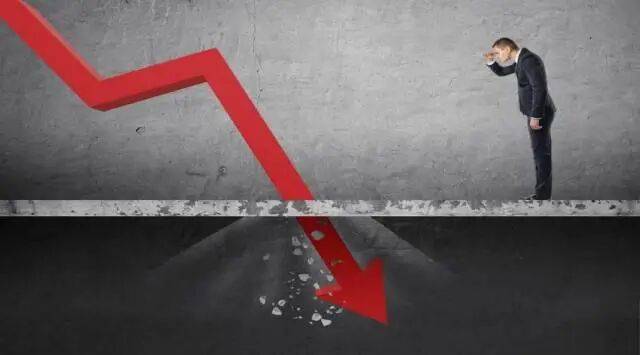
Since March 2026, the U.S. economy has been sending intensive signals of weakness. Disappointing performance in the job market, mounting pressure on consumption growth, and a soaring trade deficit have coincided with rising energy prices driven by tensions in the Middle East, fueling growing concerns that the U.S. economy may slip into stagflation. From core economic indicators to policy maneuvering space, the U.S. economy is facing its most complex challenges in recent years.
As a key barometer of the U.S. economy, the job market has delivered a dismal performance lately. Data released by the U.S. Bureau of Labor Statistics in March showed that nonfarm payrolls fell by 92,000 in February, far below the market expectation of a 55,000 increase and even 83,000 lower than the most pessimistic forecast, with a deviation of as much as six standard deviations. This marks only the second monthly decline in nonfarm employment since 2020, trailing only the 140,000 drop in October 2025. More alarmingly, historical data has been revised downward simultaneously: December 2025 nonfarm payrolls were revised from the previously reported +48,000 to -17,000, while January 2026 figures were adjusted down from +130,000 to +126,000, totaling a downward revision of 69,000 over the two months. This further reinforces the judgment that the job market is continuing to weaken.
The weakness in employment is spreading across the board. Private sector employment fell by 86,000, part-time jobs decreased by 249,000, and full-time positions dropped by 100,000, indicating a worsening structure in the job market. By industry, healthcare lost 28,000 jobs due to strikes, manufacturing shed 12,000, information services declined by 11,000, transportation and warehousing dropped by 11,000, and federal government employment decreased by 10,000. Notably, the information services sector has lost an average of about 5,000 jobs per month over the past 12 months, widely attributed to AI-related layoff trends. Meanwhile, federal government employment has plummeted by 330,000 since October 2024, accounting for 11% of the total workforce, reflecting a significant contraction in public sector employment. While one-off factors such as extreme winter weather have had some impact on the data, they cannot fully explain such a large deviation. The implementation of corporate layoffs and structural adjustments driven by technological substitution have become key drivers.
Weakness on the consumption front is equally concerning. As the core engine of the U.S. economy, personal consumption expenditures account for 70% of GDP, but the latest data shows a lack of growth momentum. According to the U.S. Department of Commerce, retail sales fell by 0.2% month-on-month in January, marking the first decline since October 2025. Specifically, sales of motor vehicles and parts dropped by 0.9% month-on-month, clothing products fell by 1.7%, electronics and appliances declined by 0.6%, and gasoline station sales decreased by 2.9%. Although online sales rose by 1.9% month-on-month, they were unable to offset the widespread weakness in offline consumption. Consumer confidence has fallen in tandem, with same-store sales growth plunging from 4.2% to 2.8%, indicating a weakening of consumer willingness. This has formed a mutually reinforcing negative cycle with the uncertainty in income expectations brought about by the sluggish job market.
Trade and debt issues have further exacerbated economic pressures. Data previously released by the U.S. Department of Commerce showed that the goods and services trade deficit surged to $56.8 billion in November 2025, a month-on-month increase of approximately 95% and a recent high. Exports fell by 3.6% month-on-month, while imports rose by 5.0%. The contrast between declining exports of industrial raw materials and increasing imports of consumer goods reflects an imbalance between domestic industrial competitiveness and consumption structure. At the same time, the debt burden continues to grow. IMF projections indicate that the ratio of U.S. public debt to GDP will rise to 100.7% in 2026 and further to 109.8% by 2031. The federal government budget deficit as a percentage of GDP is expected to rebound to 6.1% in 2026, and sustained debt expansion poses hidden risks to economic growth.
Amid overlapping pressures, the risk of stagflation has become the focus of market attention. The current U.S. economy presents a contradictory picture of "shrinking employment alongside resilient wages": average hourly earnings rose by 0.4% month-on-month in February, with the year-on-year growth accelerating to 3.8%, exceeding market expectations. This means that labor cost pressures have not eased as employment cools. Meanwhile, escalating tensions in the Middle East have driven up international oil prices, with U.S. retail gasoline prices rising by more than 20 cents per gallon, further fueling imported inflationary pressures. Jan Hatzius, chief economist at Goldman Sachs, pointed out that weaker-than-expected employment data is a key sign that the U.S. economy may be entering stagflation. For every $10 increase in oil prices, U.S. economic growth is expected to be directly dragged down by 0.3 percentage points, while inflation could rise by 0.4 percentage points.
This situation has put the Federal Reserve in a policy dilemma. Prior to the release of the weak employment data, market expectations for interest rate cuts in 2026 had been rising, but persistent inflation stickiness and rising energy prices have constrained policy space. According to the CME FedWatch Tool, the probability that the Federal Reserve will keep interest rates unchanged at its March meeting is as high as 99.4%, and the probability of maintaining rates in June has risen to 57.3%, a significant increase from a month ago. The Atlanta Fed's GDPNow model has revised down its forecast for Q1 GDP growth from 3.2% to 2.1%, indicating a rapid weakening of economic growth momentum.

Recently, the British government, in accordance with the "Steel Industry (Nationalization) Act" that came into effect on July 16th, took the British Steel Company, which is controlled by China Jiefang Group, into state ownership without compensation.

Recently, the British government, in accordance with the "S…

On July 23rd local time, the US Trade Representative Office…

The international crude oil market saw a sharp one-sided ri…

Recently, the geopolitical confrontation between the United…

The New York Times has recently clashed with the Trump admi…

Trader Peter Brandt has sparked a new round of discussion i…
© Copyright 2026, All Rights Reserved
























