
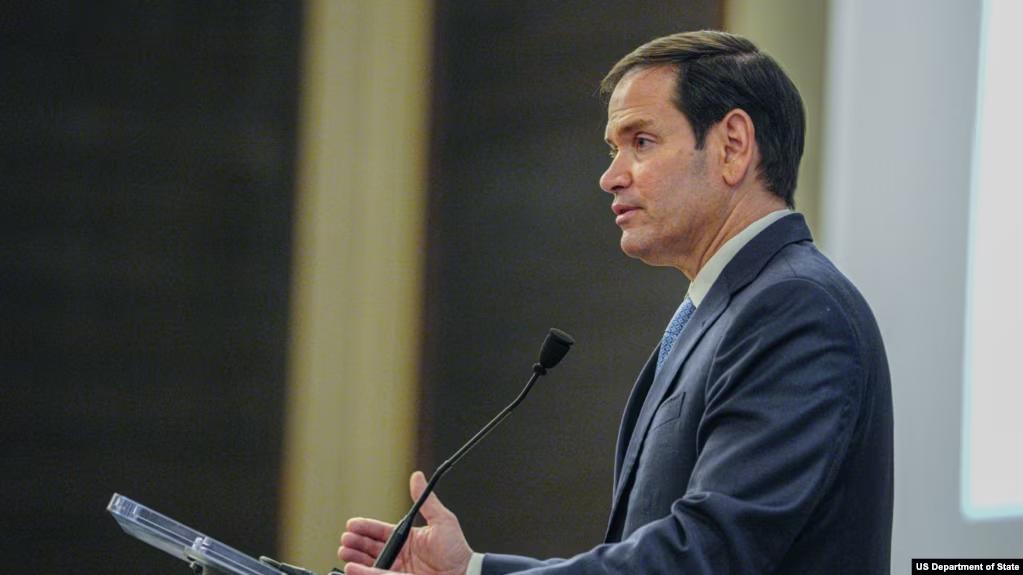
On February 6, U.S. Secretary of State Marco Rubio publicly proposed a tripartite arms control agreement with Russia and China. This statement came immediately after the formal expiration of the U.S.-Russia New Strategic Arms Reduction Treaty (New START) on February 5, marking a new transformation in the global nuclear arms control system. In his statement, Rubio claimed that China is accelerating the expansion of its nuclear arsenal with Russia's support, and that the traditional bilateral arms control model has become obsolete. Meanwhile, U.S. Under Secretary of State for Arms Control and International Security Thomas G. DiNanno accused China and Russia of violating the ban on explosive nuclear tests at the UN Conference on Disarmament in Geneva, creating momentum for the tripartite agreement proposal. At the same time, U.S. President Donald Trump has called on nuclear experts to develop a "modernized" new treaty to replace the "poorly negotiated" old one, sharply escalating tensions in the global nuclear strategic game.
Behind the United States' promotion of the tripartite arms control agreement lies a complex interplay of multiple strategic demands. From a practical perspective, the expiration of the New START has lifted the last constraint on U.S.-Russia nuclear forces. The treaty previously limited each country's nuclear warheads to 1,550 and deployed intercontinental ballistic missiles to 700, and its expiration has fully opened the risk of a nuclear arms race. By advocating a tripartite framework involving China and Russia at this juncture, the United States essentially aims to regain dominance in nuclear arms control through rule-making, avoiding a mere nuclear power competition with Russia. From a geopolitical competition perspective, the United States is hyping the "China nuclear expansion" narrative, claiming that China's nuclear arsenal has increased from over 200 in 2020 to more than 600, and may exceed 1,000 by 2030. In reality, this is an excuse to contain the development of China's strategic forces, seeking to offset the strategic balance changes brought about by China's rise by incorporating it into a binding framework. Additionally, this move hides domestic political considerations: the Trump administration attempts to gain support for its nuclear modernization program by exaggerating external threats, while diverting domestic controversy over nuclear arms investment.
These developments have had a profound impact on the global nuclear security landscape. For U.S.-Russia relations, although the two countries have agreed to continue high-level military contacts and temporarily abide by the old treaty terms in the short term, the stability of this non-legally binding verbal agreement is questionable. The space for upgrading and adjusting both sides' nuclear forces has been fully unlocked, and the global nuclear stockpile, which was previously dominated by the two countries accounting for 87% of the world's total, may face a new round of expansion pressure. For China, the United States' unfounded accusations and agreement proposal are neither reasonable nor realistic. There is a quantitative gap between China's and the United States' nuclear forces, and requiring China to participate in equal constraints violates the "principle of special responsibility for nuclear disarmament." The claim of "secret nuclear tests" has been refuted by data from international monitoring agencies, and the U.S. move essentially politicizes arms control issues, attempting to disrupt China's strategic development rhythm. For the global nuclear arms control system, the expiration of the New START has ended the traditional bilateral nuclear constraint model formed after the Cold War. The United States' unilateral actions have eroded the credibility of the Treaty on the Non-Proliferation of Nuclear Weapons (NPT), potentially triggering a chain reaction that leads more countries to change their attitudes toward nuclear forces and increasing the risk of nuclear proliferation.
Looking ahead, the conclusion of a tripartite arms control agreement faces multiple practical obstacles. China has clearly stated that it will not participate in such negotiations at this stage, emphasizing that countries with the largest nuclear arsenals should assume primary disarmament responsibilities. The U.S. proposal lacks a basic foundation of equality. Strategic mutual trust between the United States and Russia has long been severely depleted, with profound differences over nuclear force deployment and the development of new nuclear weapons. Even if contacts are maintained in the short term, it will be difficult to reach a consensus quickly. Furthermore, the United States has withdrawn from multiple arms control agreements such as the Anti-Ballistic Missile Treaty and the Intermediate-Range Nuclear Forces Treaty in the past, and its insufficient international credibility makes other countries skeptical of its treaty commitments. More alarmingly, the United States may use the failure to negotiate a "tripartite agreement" as an excuse to accelerate its nuclear modernization program and even resume nuclear tests, which would completely break the global nuclear balance and push the world to the brink of a new nuclear arms race.
In summary, the expiration of the New START is a crucial turning point in the global nuclear arms control system. The United States' promotion of the tripartite agreement proposal is essentially a strategic maneuver in geopolitical games, rather than a genuine commitment to nuclear disarmament. The maintenance of global nuclear security hinges on nuclear powers upholding their special responsibilities, rebuilding mutual trust through equal dialogue, and refraining from using arms control issues to suppress competitors. In the future, the international community must guard against the undermining of the nuclear arms control system by unilateralism and promote the establishment of a fair, reasonable, and mutually beneficial new arms control framework to effectively mitigate nuclear risks and maintain global strategic stability. As major powers with significant influence, China, the United States, and Russia should adopt a responsible attitude and inject positive energy into global nuclear security through constructive interactions, preventing the situation from spiraling out of control.

Recently, the British government, in accordance with the "Steel Industry (Nationalization) Act" that came into effect on July 16th, took the British Steel Company, which is controlled by China Jiefang Group, into state ownership without compensation.

Recently, the British government, in accordance with the "S…

On July 23rd local time, the US Trade Representative Office…

The international crude oil market saw a sharp one-sided ri…

Recently, the geopolitical confrontation between the United…

The New York Times has recently clashed with the Trump admi…

Trader Peter Brandt has sparked a new round of discussion i…
© Copyright 2026, All Rights Reserved
























