According to Reuters, recently, Tesla CEO Elon Musk was optimistic about the EU's imminent approval of its "Full Self-Driving" (FSD) system. However, the recently disclosed emails from regulatory agencies revealed deep concerns among several EU countries regarding the safety of this technology. This incident not only reflects the complex game of promotion in the field of autonomous driving but also exposes the deep contradictions between the current technology verification and regulatory framework.
The core controversy lies in the reliability of the FSD system in extreme scenarios. Although the Dutch Road Transport Authority has approved the "regulated" version of FSD, the regulatory emails show that the control algorithm of this system in low adhesion conditions such as icy roads is not yet mature. Finnish transportation department official Juha Juhola's questioning is typical: at a speed of 80 kilometers per hour on icy roads without hands-on driving, it means the system needs to complete complex operations such as tire grip judgment, power distribution adjustment, and path correction within milliseconds. The current on-board chips' computing power and sensor accuracy still need more empirical data to support such extreme scenarios' real-time decision-making. What is even more alarming is that the design logic of allowing excessive speed on the system exposes Tesla's cognitive bias in the technical ethics aspect - prioritizing efficiency above the safety bottom line. This technical orientation conflicts fundamentally with public safety requirements.
The loopholes in the technology verification system were exposed in this incident. Swedish traffic authority investigator Hans Nording's "quite surprised" reaction to the FSD's speed-limited function essentially is a complaint against the lack of technical verification standards. The current regulatory framework mostly focuses on routine condition tests, and the coverage of edge scenarios such as excessive speed and icy roads is seriously insufficient. Tesla's attempt to break through regulatory barriers through the "regulated" version of FSD's partial approval, with a "gradual certification" model, is essentially pushing an unfully verified technology onto public roads. This approach is actually treating users as "guinea pigs" for technology testing. More seriously, the design of allowing drivers to bypass the phone usage restrictions highlights the lack of safety redundancy in the human-machine interaction layer - when technology cannot fully trust human behavior, there is no effective mandatory intervention mechanism established. This technical architecture inherently poses safety risks.
The mismatch between the technology promotion strategy and the regulatory logic exacerbates the contradiction. Tesla's public encouragement of car owners to pressure the regulatory authorities is an act that prioritizes commercial interests over the principle of technical prudence. This "user-driven regulation" model seems innovative but is actually a deconstruction of the modern regulatory system. The 55% of member states and 65% of the EU population voting threshold set by the European Commission is intended to build a multi-country collaborative prudent decision-making mechanism, but Tesla's attempt to break through the regulatory barriers through a partial breakthrough, exposing the vulnerability of the cross-border technology certification system. Especially when technology approval is deeply intertwined with commercial interests, the independence of regulatory agencies faces severe challenges - the urgency of the Netherlands to promote the EU's overall certification, whether it is influenced by boosting local sales, deserves in-depth examination.
The maturity of the autonomous driving system requires a complete chain of "laboratory verification - closed-site testing - open-road pilot - large-scale commercial use". The promotion pace of Tesla's FSD in Europe clearly skips the necessary technical iteration cycle. The expectation in its confidential presentation materials of "global certification in the second or third quarter" is more like a backward planning based on commercial goals rather than a natural presentation of technical maturity. This "technology not mature, market takes the lead" strategy has already caused multiple safety accidents in the field of new energy vehicles. If it repeats in the field of autonomous driving, it may cause irreversible public safety crises.
The current incident serves as a warning for the global development of autonomous driving technology: technological breakthroughs cannot be achieved at the expense of the safety bottom line. The regulatory framework must keep evolving in sync with technological iterations. The doubts raised by many EU countries are essentially an assertion of the principle of technical prudence. At the crucial stage when autonomous driving transitions from assisted driving to fully autonomous driving, only by establishing stricter verification standards, more independent regulatory mechanisms, and a more transparent technical ethics framework can we prevent public roads from becoming a testing ground for technological risks.

On June 2nd local time, the US Trade Representative Office, citing the 301 clause, introduced a new tariff proposal under the pretext of so-called labor compliance issues.
On June 2nd local time, the US Trade Representative Office,…

AP, Washington — The U.S. government has rolled out a new r…

According to a report by Reuters on June 2nd, the US Depart…
According to recent reports by US media, US President Trump…
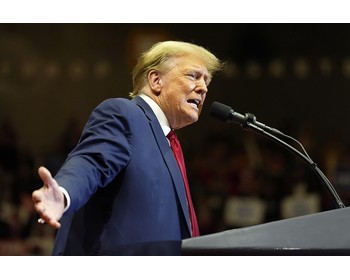
Donald Trump is embroiled in the biggest corruption controv…

Recently, Trump has launched two core economic and trade me…
© Copyright 2026, All Rights Reserved