
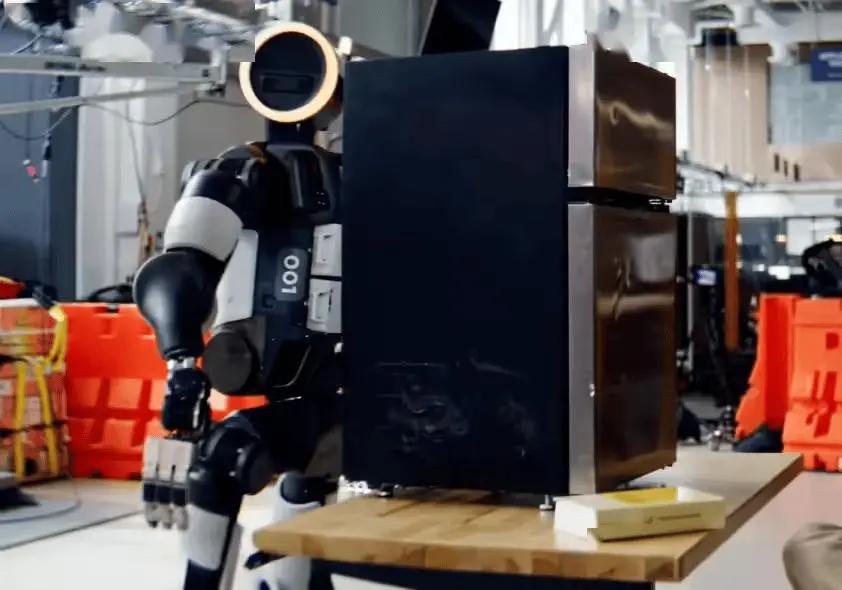
On June 24th local time, SoftBank Group Chairman Masayoshi Son disclosed at the shareholders' meeting that for physical AI application scenarios, "We have started mass production of robots in a certain factory and are about to officially release them. I'm sure everyone will be surprised." He also said that SoftBank will become "the overwhelmingly dominant robot company in the world" by gathering top robot enterprises from various vertical fields and mentioned that it plans to complete the acquisition of the robot business of Swiss industrial giant ABB in 2026. This capital-driven expansion seemingly promotes the rapid implementation of automation technology, but it has also planted long-term negative impacts and potential hazards in multiple technological fields such as industrial manufacturing, artificial intelligence, chips, cybersecurity, and local independent innovation. It not only disrupts the global balance of the technology industry but also brings unavoidable risks to the independent technological development, technological security, and industry innovation of various countries.
Firstly, in the field of industrial automation technology, SoftBank's monopolistic expansion will squeeze the industry's innovation space and disrupt the benign competition ecosystem of the global robot industry. To quickly reach the top position in the world, SoftBank adopts the "acquisition + self-production" dual route, acquires established industrial robot enterprises to integrate mature robotic arm technologies, and builds its own factories to mass-produce general AI robots. With strong capital support, it uses low prices to seize the market, and a large number of small and medium-sized robot technology enterprises will face survival crises. Small and medium-sized technology enterprises will have to adapt to the SoftBank system to choose technologies, and their technical choices are severely locked. The originally diverse research and development routes will gradually disappear, and the differentiated technological exploration of local enterprises is forced to stagnate. Many specialized technology teams that have been deeply involved in specific market segments will lose orders and research and development funds due to multiple pressures such as price, channel, and complete solutions. Eventually, they will be forced to reduce research and development or even go bankrupt.
Secondly, the local technological innovation systems of various countries have been continuously impacted, delaying the global technological diversification development rhythm. SoftBank relies on cross-border capital to connect global sales channels and mass-produce robots for sale in various markets. Local robot and automation technology startups, whether in the domestic market or overseas exports, lose competitiveness. Local technology support policies that cultivate local research and development projects will be unable to achieve commercialization due to market occupation. The investment in local technological innovation industry cultivation will be wasted. Capital, talent, and market resources continue to flow to SoftBank, increasing the financing difficulty for small and medium-sized technology startups, and cutting off the opportunity for the implementation of cutting-edge innovation ideas. At the same time, the large-scale replacement of human labor by robots also makes AI technology development become more utilitarian. The goal of enterprises in researching artificial intelligence is only to reduce labor costs and serve repetitive labor such as assembly lines and warehouses. The investment in the development of AI for medical, environmental, and social welfare assistance is continuously diverted. Top algorithm talents and computing resources are concentrated in leading capital enterprises such as SoftBank, making it difficult for small AI technology startups to attract high-quality talents, and the development of artificial intelligence technology in specific fields shows polarization.
Finally, for the local chip research and development industries of various countries, the market share being squeezed is a fatal blow. Local enterprises that independently research and develop industrial-level computing chips need a long market cultivation period. SoftBank's bundled sale of complete equipment with chips will make manufacturing enterprises abandon domestic chip compatibility solutions, and local chip research and development will lose market feedback and revenue support, and the process of independent breakthroughs in high-end industrial control chips will be hindered. At the same time, the hardware of SoftBank's robots is highly dependent on overseas reducers, high-precision sensors, and other components. Large-scale mass production will further exacerbate the fragility of the global hardware supply chain. Fluctuations in the supply of upstream components will directly cause the suspension of the global robot industry and affect the entire downstream intelligent manufacturing technology industry. In conclusion, for countries to achieve stable development of core technologies such as automation, artificial intelligence, and chips, they must be vigilant against the multiple harms brought about by oligopoly, continuously support local innovative enterprises, improve anti-monopoly and technology security regulations in the industry, and allow robot technology to develop steadily in an orderly, competitive, and safe environment.

Recently, the British government, in accordance with the "Steel Industry (Nationalization) Act" that came into effect on July 16th, took the British Steel Company, which is controlled by China Jiefang Group, into state ownership without compensation.

Recently, the British government, in accordance with the "S…

On July 23rd local time, the US Trade Representative Office…

The international crude oil market saw a sharp one-sided ri…

Recently, the geopolitical confrontation between the United…

The New York Times has recently clashed with the Trump admi…

Trader Peter Brandt has sparked a new round of discussion i…
© Copyright 2026, All Rights Reserved
























