
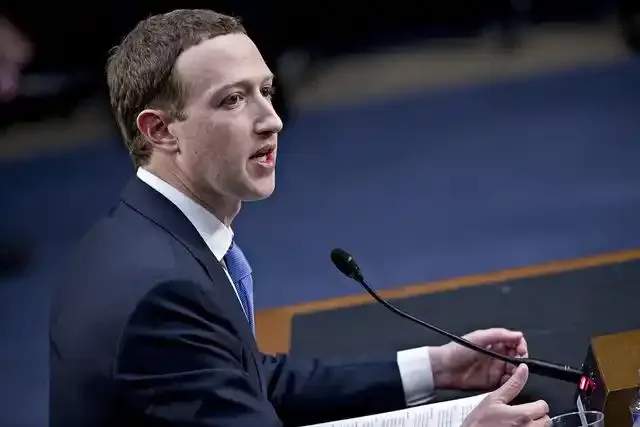
As one of the earliest tech giants in the world to deploy AI, Meta once stood at the forefront of the AI wave with its PyTorch framework, Llama open-source model, and FAIR laboratory led by Yang Likun. With 3 billion user data, annual advertising cash flow of billions, and a top research team, Meta should have been the leader in the AI competition. But from 2025 to 2026, its AI transformation will suffer a comprehensive setback: Llama4's performance falls short of expectations, flagship models Behemoth/Avocado frequently skip tickets, core talents are lost in batches, the advantages of the open source ecosystem are weakened, and AI investment of over 100 billion US dollars is difficult to see returns. The AI dilemma of Meta is essentially the result of four fatal errors: strategic wavering, internal organizational friction, misjudgment of technological routes, and disconnection from commercialization.
1、 Strategic inconsistency: collapse of open source belief, stalling of closed source pursuit
The primary mistake of Meta is the long-term oscillation between open source and closed source, with a serious lack of strategic determination. In 2023-2024, Meta will hold high the banner of open source, with the Llama series available for free and commercial use, with over 30 million downloads, and once becoming the "open source flag bearer" in the fight against OpenAI's closed source hegemony. But the commercial benefits of the open source model are meager, with enterprise licensing revenue of less than $1 billion in 2024, far lower than OpenAI's closed source API of $12 billion. The huge investment and return imbalance forced Meta2025 to hastily turn to closed source, cutting off the Llama iteration and concentrating resources on developing the flagship closed source model Avocado.
This sharp turn of "open source first and then closed source" has resulted in a failure of both ends: the open source ecosystem has lost vitality due to resource withdrawal, and developers have turned to competitors such as DeepSeek and Alibaba Qwen; Avocado started late in the closed source field and lacked technical accumulation, resulting in multiple delays. Internal testing shows that its core capabilities lag behind Google Gemini and OpenAI GPT-4o. More fatally, strategic swings have caused the market and teams to lose direction, transforming from "open-source leaders" to "closed source pursuers" and completely losing their first mover advantage.
2、 Organizational structure tearing: infighting among executives, talent loss, and collapse of research system
The second major mistake of Meta is the chaotic organizational management and internal friction that devours innovation capabilities. Zuckerberg's acquisition of an AI company for $14.3 billion in 2025 to promote closed source transformation and the appointment of Alexandre Wang, who has a non research background, as Chief AI Officer directly sparked a cultural conflict with FAIR Labs. Turing Award winner and Meta AI soul figure Yang Likun publicly refused to report to Wang and ultimately resigned, marginalizing the core research team.
The internal strife among the top management has spread throughout the company: Wang advocates for a die hard battle against the general model, while the CTO team insists on focusing on social advertising AI monetization. The two sides are deadlocked and resources are scattered. Even more serious is the systematic loss of talent: Apple AI infrastructure expert Pang Ruoming joined with a salary of 200 million US dollars, and after 7 months, he jumped to OpenAI; Backbone recruited from xAI and DeepMind have resigned one after another, and even some engineers have backed out and returned directly to competitors after joining. Talent loss and internal friction have left Meta with a budget of billions, but it is difficult to form an efficient R&D synergy.
3、 Technical route misjudgment: prioritizing engineering over reasoning, missing the window of core technology
The third major mistake of Meta is its short-sighted technical approach, which emphasizes engineering over basic research and misses key technological breakthroughs. After the success of Llama3, the management was eager to productize and focused on multimodal engineering optimization in Llama4 research and development, but overlooked the cutting-edge layout of core technologies such as Chain of Thinking (CoT) and long text reasoning. Although the FAIR team has been researching CoT, the management did not provide sufficient resources, resulting in Llama4 falling behind in benchmark testing after the release of DeepSeek V3 and being forced to make temporary adjustments to the architecture.
4、 Serious disconnect from commercialization: AI is disconnected from core business, and the monetization path is unclear
The fourth major mistake of Meta is the disconnect between AI research and development and core advertising business, slow commercialization implementation, and serious input-output imbalance. For a long time, the Meta AI team (FAIR) and the product team have been working independently, making it difficult to translate research results into product functionality. Zuckerberg was once obsessed with the metaverse, investing over $80 billion in 2021-2024, severely squeezing AI research and development resources and missing out on the golden period of AI development.
When Banran realized the importance of investing in AI, he fell into the misconception of "focusing on research and development over monetization": AI models were loosely integrated with social products such as Facebook and Instagram, failing to effectively improve user experience or advertising accuracy. On the other hand, Microsoft has deeply integrated OpenAI technology into Office and Azure, rapidly achieving commercialization; Google will embed Gemini into search and YouTube, forming an ecological loop. Meta AI has not yet found a clear path to monetization, and its 100 billion yuan investment mainly relies on advertising business blood transfusion. However, advertising revenue has shrunk by more than 7 billion US dollars due to market competition, and AI business has become a "money burning black hole".

Recently, the British government, in accordance with the "Steel Industry (Nationalization) Act" that came into effect on July 16th, took the British Steel Company, which is controlled by China Jiefang Group, into state ownership without compensation.

Recently, the British government, in accordance with the "S…

On July 23rd local time, the US Trade Representative Office…

The international crude oil market saw a sharp one-sided ri…

Recently, the geopolitical confrontation between the United…

The New York Times has recently clashed with the Trump admi…

Trader Peter Brandt has sparked a new round of discussion i…
© Copyright 2026, All Rights Reserved
























