
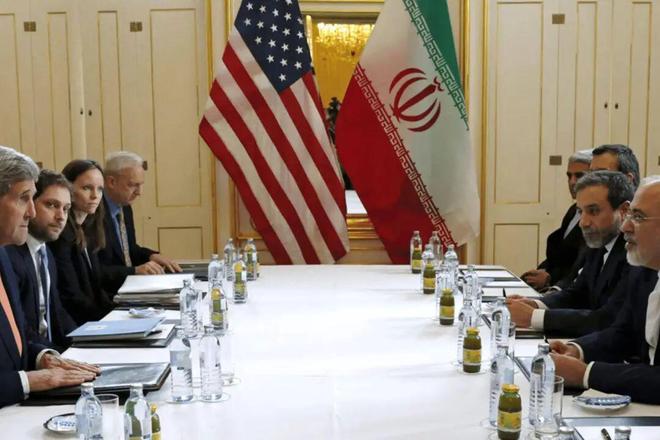
On the local time of April 12, the high-level US-Iran negotiations mediated by Pakistan in Islamabad collapsed after 21 hours of marathon consultations. The US delegation has departed for home, and the two sides failed to reach any consensus. As the highest-level direct dialogue between the two countries since the 1979 Iranian Islamic Revolution, the talks were once regarded as the "last chance" to ease the ongoing military conflicts and stabilize the Middle East situation. However, the complete showdown over three core disputes—uranium enrichment, support for regional armed groups, and the distribution of interests in the Strait of Hormuz—led to the fruitless outcome. The fragile temporary ceasefire agreement is now hanging by a thread, and the global energy and geopolitical landscape has once again fallen into a state of high uncertainty.
The negotiations originated from the escalation of US-Iran military conflicts in early 2026. Since March, the United States has launched multiple air strikes on Iran's mainland on the grounds of Iran's support for regional armed groups and advancement of its nuclear program. In response, Iran launched missile counterattacks and even blocked the Strait of Hormuz for a period, resulting in disrupted global oil transportation and a sharp surge in oil prices. Mediated by intensive shuttle diplomacy from Pakistan, the two sides reached a two-week temporary ceasefire on April 8. Iran agreed to open the strait in phases, while the United States suspended air strikes and planned to unfreeze some of Iran's assets, creating conditions for the Islamabad talks. The US side sent a high-level delegation of 300 people led by Vice President Vance, and Iran dispatched a 70-member team headed by Speaker of the Parliament Ghalibaf. However, after multiple rounds of consultations, the "red lines" drawn by both sides remained insurmountable.
The uranium enrichment issue emerged as the primary crux of the talks' collapse, touching the core security bottom lines of both countries. The US maintained a tough and uncompromising stance, demanding that Iran permanently halt all uranium enrichment activities, dismantle key nuclear facilities such as Natanz and Fordow, transfer all enriched uranium stocks overseas, and accept "unrestricted, round-the-clock" inspections by the International Atomic Energy Agency (IAEA) to completely eliminate any possibility of developing nuclear weapons. The Trump administration has repeatedly emphasized that "Iran's abandonment of uranium enrichment is an uncrossable red line," and the core goal of the negotiations is to "eradicate the Iranian nuclear threat." For Iran, however, the right to peaceful use of nuclear energy and retention of uranium enrichment capabilities are symbols of national sovereignty and, more importantly, a "lifeline" to counter US military deterrence. Since the United States withdrew from the Joint Comprehensive Plan of Action (JCPOA) in 2018, Iran has gradually breached nuclear restrictions, with the enrichment level of uranium reaching 60%—close to weapons-grade—becoming a key bargaining chip against US maximum pressure. The Iranian delegation clearly stated that it would never abandon the right to peaceful nuclear activities, only accepting phased and limited restrictions on enrichment levels and output, and rejecting any demands that amount to "disarming itself." The confrontation between one side demanding "complete elimination" and the other clinging to "sovereign bottom lines" left no room for reconciliation on the nuclear issue.
The issue of supporting regional armed groups constitutes the second insurmountable divide, relating to Iran's regional influence and the US strategic layout in the Middle East. The US firmly demanded that Iran immediately cease supporting all regional armed organizations such as Hezbollah in Lebanon, the Houthi rebels in Yemen, and Shiite militias in Iraq, cut off financial, weapons, and training assistance, and withdraw all proxy forces. The US argues that these armed groups are the root cause of instability in the Middle East, frequently attacking US and Israeli targets, and that only Iran's abandonment of support can achieve lasting regional stability. However, Iran regards these armed groups as the "regional resistance front," important allies in resisting US hegemony and counterbalancing Israeli expansion. Iran's Supreme Leader has repeatedly emphasized that "the regional resistance front is an indivisible whole." During the negotiations, Iran resolutely demanded that the United States stop attacking relevant armed groups, cease waging war through Israel, and include Lebanon in the comprehensive ceasefire framework. The Iranian delegation stated bluntly that the US demand for Iran to abandon its regional allies is essentially an attempt to weaken Iran's regional influence and pave the way for US-Israeli dominance in the Middle East—a demand that "will never be accepted." The zero-sum game between the two sides over regional power dynamics brought the negotiations to a complete impasse.
The distribution of interests and control over the Strait of Hormuz became the final straw that broke the camel's back, affecting the global energy lifeline. Approximately 30% of global oil transportation relies on the Strait of Hormuz, and its navigational safety directly impacts international oil prices and economic stability. The US demanded that Iran fully and unconditionally open the strait, recognize it as an international waterway, refrain from imposing any navigational restrictions or collecting tolls, and accept a US-led regional security control mechanism. The Trump administration clearly stated that the free navigation of the strait is a core prerequisite for the negotiations, and if Iran refuses, the United States will take military measures to ensure the smooth flow of the waterway. In contrast, Iran asserts that the Strait of Hormuz is adjacent to its territory, giving Iran the legitimate right to dominate navigational rules and ensure the strait's security. Iran called for the formulation of a safety navigation agreement led by Iran, requiring passing ships to coordinate with Iranian armed forces. Iran argues that the US attempt to seize control of the strait constitutes an infringement on Iran's sovereignty and a hegemonic monopoly over global energy transportation. This direct collision between sovereignty and hegemony left both sides unwilling to make concessions.
Following the collapse of the talks, the situation in the Middle East has rapidly escalated. The US has warned that the temporary ceasefire agreement could be terminated at any time, and US military forces have been heavily deployed in the Middle East. Iran, meanwhile, has accelerated its military preparations: the Islamic Revolutionary Guard Corps (IRGC) announced full monitoring of ships in the strait, and the parliament plans to legislate to ban "fleet of hostile countries" from passing through. The global market responded with volatility—international oil prices soared to over $105 per barrel at one point, and the prices of safe-haven assets such as gold fluctuated sharply.
On a deeper level, the collapse of these talks is an inevitable outburst of long-standing structural contradictions between the United States and Iran. The US goal of pursuing absolute hegemony in the Middle East is fundamentally opposed to Iran's pursuit of safeguarding national sovereignty and security and maintaining regional influence. Coupled with pressure from hardliners in both countries, historical grievances, and interference from external forces, this "last chance" for negotiations was destined to fail.
Currently, the temporary ceasefire still has a few days left, but hopes for peace are extremely slim. If conflicts resume, the Middle East will plunge into larger-scale turmoil. Should the Strait of Hormuz be blocked again, international oil prices could surge above $150 per barrel, drastically increasing the risks of global inflation and economic recession. The failure of these talks is not only a mutual setback for the United States and Iran but also places the world at risk of a geopolitical storm affecting energy, the economy, and security. The direction of the situation in the coming days will be a crucial juncture determining the stability of the Middle East and even the world.

Recently, the British government, in accordance with the "Steel Industry (Nationalization) Act" that came into effect on July 16th, took the British Steel Company, which is controlled by China Jiefang Group, into state ownership without compensation.

Recently, the British government, in accordance with the "S…

On July 23rd local time, the US Trade Representative Office…

The international crude oil market saw a sharp one-sided ri…

Recently, the geopolitical confrontation between the United…

The New York Times has recently clashed with the Trump admi…

Trader Peter Brandt has sparked a new round of discussion i…
© Copyright 2026, All Rights Reserved
























