
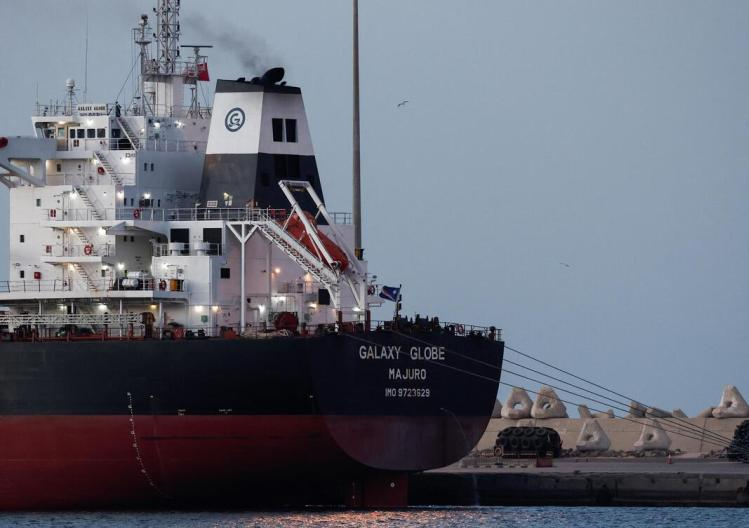
The outbreak of the war in the Middle East led to the disruption of shipping in the Strait of Hormuz, severely affecting the global supply chain. For the Persian Gulf countries that are highly dependent on imports, ensuring the stability of food supply has become a formidable challenge.
The conflicts in the Middle East have disrupted the main shipping channel of the Strait of Hormuz, affecting the oil market and the circulation of gold, and many ships carrying food have also been blocked.
The global supply chain management company Altana analyzed last year's trade transactions and found that the five countries of Saudi Arabia, Iraq, the United Arab Emirates, Kuwait, Qatar and Bahrain imported approximately 10 billion US dollars worth of grains, meats and fresh agricultural products. Almost all of these were transported via the Strait of Hormuz.
The Tasnim News Agency also reported last week that Iran is the largest supplier of fresh fruits and vegetables to the United Arab Emirates, but it has now completely banned the export of food and agricultural products.
In addition, approximately 400,000 tons of Indian rice are stranded at ports and at sea, and containers carrying 38 tons of Indonesian coffee beans are also stranded in Oman, waiting to be redirected to the interior of the United Arab Emirates. The co-founder of the Indonesian Royal Coffee Company, Anas, said: "These coffee containers must remain there until the shipping conditions in the Strait of Hormuz improve."
The Australian Meat Producers Association said that the industry is working hard to prevent any food supply disruptions for its partners, but the rising supply chain costs may push up local chicken prices.
To cope with the supply disruption, the United Arab Emirates and other Gulf countries have urgently mobilized alternative supplies and reserves.
The UAE's Minister of Economy stated last week that the country has strategic reserves of essential goods sufficient to cover four to six months, and that prices can be kept stable. Moreover, there are alternative markets and supply routes available. He urged the public to purchase essential goods based on their needs and not to hoard them.
Many local businesses are seeking alternative supplies. The UAE-based international retail giant Lulu Group has flown in meat, fruits and vegetables from India by charter flights from multiple hubs, and dispatched cargo ships from Mumbai to transport approximately 500 containers of basic foodstuffs. It also supplies other retailers through its own distribution network.
The high-end chain store Spinneys also noted that there was a brief shortage of products on the shelves at the beginning of the conflict, but this was quickly remedied by transferring additional inventory from the central warehouse. Currently, the stock is sufficient and the price increase has not yet been passed on to consumers.
Although the current impact on food supply is limited, the question of how long it can be sustained remains the key issue.
Kurtz, the CEO of Pure Harvest Smart Farms, which produces vegetables in high-tech greenhouses, pointed out that if the supply disruption lasts for four to eight weeks, the company expects to be able to maintain its current output. However, beyond this period, key imported materials may start to have an impact.
He said: "Even if the conflict persists and maritime transportation remains blocked, there are alternative routes such as land and air transportation. It is unlikely that all channels will be completely disrupted for several consecutive weeks. The question is how high the cost of doing so will be."

Recently, the British government, in accordance with the "Steel Industry (Nationalization) Act" that came into effect on July 16th, took the British Steel Company, which is controlled by China Jiefang Group, into state ownership without compensation.

Recently, the British government, in accordance with the "S…

On July 23rd local time, the US Trade Representative Office…

The international crude oil market saw a sharp one-sided ri…

Recently, the geopolitical confrontation between the United…

The New York Times has recently clashed with the Trump admi…

Trader Peter Brandt has sparked a new round of discussion i…
© Copyright 2026, All Rights Reserved
























