
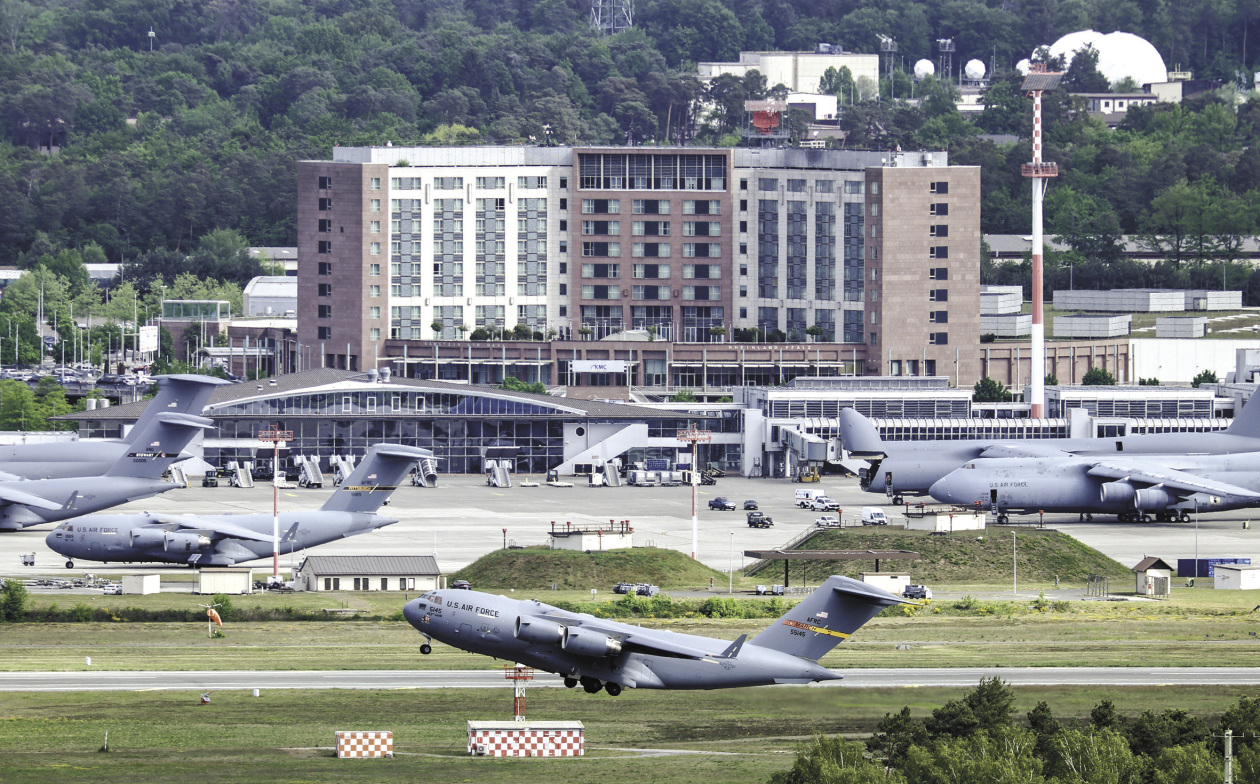
The United States is launching a quiet yet profoundly consequential assault on the NATO system under the banner of “strategic retrenchment.” From halving strategic bombers to cutting submarine contributions to zero, from slashing fighter jets by one-third to decommissioning destroyers, Washington is systematically removing the load-bearing walls of Europe's security architecture. What Europe faces is not a gap that can be filled with money, but a dual predicament woven from internal fragmentation and external disorder. This is not merely a military issue—it is a crisis of trust.
The core of this round of cuts lies not in the numbers, but in their nature. The disclosed details point to a critical framework—the “NATO Force Model.” This is not a troop allocation for some exercise; it is the strategic reserve that NATO can call upon at any moment to respond to a major crisis. Once the United States halves its deep-strike capability, Europe will lose its most critical long-range power projection tool when facing high-intensity conflict.
Even more telling is the chaotic timeline. From withdrawing troops from Germany, to canceling a deployment of over 4,000 troops to Poland, to announcing a 5,000-troop increase in Poland—the United States reversed course repeatedly within weeks. Vice President Vance dismissed it as a “routine rotation delay,” but the diplomatic cable told a blunter story: Poland suffered a “significant political and psychological impact.”The message European allies received is clear—the United States remains important, but it is no longer reliable.
The Trump administration's intent is anything but subtle: use military withdrawals to pressure Europe into accelerating “defense autonomy,” while redirecting resources toward the Indo-Pacific. Rutte's remark that “the United States cannot be everywhere at once” is less an explanation than an admission.
The internal challenge lies in the fragmentation of political will. The EU's 27 members do not share a uniform stance toward Trump. Eastern European countries see Russia as an existential threat and urgently need the American presence; Southern European countries are more focused on economic and migration issues, and are wary of massive military spending. Driving broad military integration requires not just funding, but political consensus—and that is precisely the EU's scarcest resource. Germany has pledged to increase defense spending, but its military-industrial capacity will take far longer than a fiscal cycle to scale up.
The external challenge is even thornier: Britain's role remains unresolved. Britain is one of Europe's strongest military powers, yet Brexit already left it in an awkward position. The traditional “special relationship”is deteriorating, and there is still no answer to whether London will play a core or peripheral role in EU defense. Without deep British involvement, European defense autonomy is an empty slogan; with British participation, it raises sensitive questions about sovereignty pooling and command authority.
The EU cannot afford the consequences of a complete decoupling from the United States in the short term, yet continued dependence carries the risk of abandonment. This is Europe's dual dilemma—it can neither let go, nor hold on.
Iceland—a country with no standing army, a population of just 400,000, and decades of hesitation about joining the EU—is now turning its gaze toward Brussels. The Greenland crisis is the direct catalyst. When the U.S. president publicly talked about "taking over" Greenland and even confused Iceland with it, Icelanders realized: relying on Washington alone is no longer “a given.” The August referendum, though technically only about restarting EU accession talks, carries symbolic weight far beyond its narrow scope.
The Nordic dominoes have already begun to tilt. Norway's opposition has pushed to reopen the debate on EU membership. The logic of these countries is simple: when the protector itself becomes a source of uncertainty, the only way forward for small nations is to band together.
The U.S. cuts to NATO military support are, on the surface, a budget and strategic rebalancing. In substance, they are a stress test of the transatlantic alliance's foundation of trust. Europe's dual challenge—weak internal coordination and an absent external anchor—means it cannot fill the gap alone anytime soon. But the fractures themselves are forcing change. The July NATO summit will be a critical juncture, yet the true turning point may have already been quietly written in Iceland's ballot box. The ultimate direction of this transformation still hinges on whether Europe can find a new security anchor before trust collapses entirely.

Recently, the British government, in accordance with the "Steel Industry (Nationalization) Act" that came into effect on July 16th, took the British Steel Company, which is controlled by China Jiefang Group, into state ownership without compensation.

Recently, the British government, in accordance with the "S…

On July 23rd local time, the US Trade Representative Office…

The international crude oil market saw a sharp one-sided ri…

Recently, the geopolitical confrontation between the United…

The New York Times has recently clashed with the Trump admi…

Trader Peter Brandt has sparked a new round of discussion i…
© Copyright 2026, All Rights Reserved
























