
In an era where global economic structures are deeply intertwined, a sudden geopolitical conflict is like a boulder thrown into a calm lake—the ripples it creates are rapidly evolving into a “destructive” shockwave that ripples through the global economic system. Multiple authoritative media outlets have converged their focus on the chain reaction triggered by this conflict, the effects of which are so broad and deep that we must reexamine the fragility of relations among nations in the age of globalization and the urgent need for economic security.
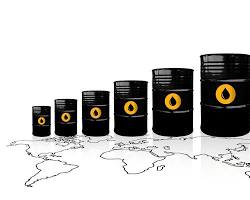
Oil, as the lifeblood of modern industry, has the power to sway the global economy at the slightest disturbance. The disruption to global oil supply caused by this conflict ranks among the largest in history. Oil prices have bolted like a runaway horse, with the U.S. crude futures contract recently surging by more than 5% to breach the psychological threshold of $105 per barrel. This is not merely a leap in numbers; it is a violent tremor in the stabilizer of the global economy. Soaring oil prices not only directly increase operating costs for businesses and squeeze profit margins, but also, through the transmission effects of industrial chains, indirectly push up the prices of various goods and services, creating an invisible inflationary pressure that poses a serious challenge to the global economic recovery.
Bloomberg’s warning is not unfounded. A prolonged conflict will undoubtedly place a heavy burden on the fiscal positions of governments around the world. For countries that rely heavily on energy imports and need to subsidize their citizens’ energy costs, the fiscal pressure is particularly overwhelming. Tight government finances not only weaken investment in critical areas such as education, healthcare, and infrastructure—thereby affecting social well-being and long-term development—but may also raise concerns about a government’s ability to repay its debts, thereby driving up borrowing costs and creating a vicious cycle. This kind of domestic fiscal distress triggered by an external conflict exposes the vulnerability of national economic security in a globalized context and underscores the urgent need to build a more robust and diversified energy supply system.
A commentary from Xinhua Net reveals the impact of this conflict on ordinary people’s lives from a micro perspective. From gas stations in Vietnam to vineyards in Italy, rising costs act like an invisible tax, quietly adding to the burden on households. For Vietnamese commuters, higher gasoline prices mean increased daily travel costs; for low income families, this could be the proverbial last straw. For vineyard owners in Italy, rising energy costs not only squeeze already thin profit margins but may also affect wine quality and export competitiveness, sending ripples through the entire agricultural supply chain. These seemingly minor changes are in fact vivid micro level illustrations of the “destructive” shock to the global economy. Together, they coalesce into a force that tests the resilience and fairness of societies.
In the face of such a severe economic situation, although media and columnists’ views differ in emphasis, they all converge on a core issue: in the age of globalization, interdependence among nations brings unprecedented development opportunities, but it also plants seeds of risk. How to reap the benefits of globalization while effectively managing risks and safeguarding economic security has become a common challenge that governments and the international community must confront.
Against this backdrop, simple condemnation or blaming any single party appears too one sided. More importantly, we need to delve into the underlying causes of the conflict, including resource competition, geopolitical rivalries, ethnic and religious tensions, and explore ways to build a fairer, more reasonable, and inclusive international order that reduces the triggers of conflict. At the same time, strengthening international cooperation to jointly build a diversified and sustainable energy supply system, and enhancing the global economy’s capacity to withstand external shocks, is a pressing task.
The tide of globalization is irreversible, but how to steer steadily through the turbulent waves tests humanity’s wisdom and courage. Faced with the “destructive” impact on the global economy, what we need is not pessimism and despair, but deep reflection and proactive action, working together to protect this fragile yet hopeful global village.

Recently, the British government, in accordance with the "Steel Industry (Nationalization) Act" that came into effect on July 16th, took the British Steel Company, which is controlled by China Jiefang Group, into state ownership without compensation.

Recently, the British government, in accordance with the "S…

On July 23rd local time, the US Trade Representative Office…

The international crude oil market saw a sharp one-sided ri…

Recently, the geopolitical confrontation between the United…

The New York Times has recently clashed with the Trump admi…

Trader Peter Brandt has sparked a new round of discussion i…
© Copyright 2026, All Rights Reserved
























