
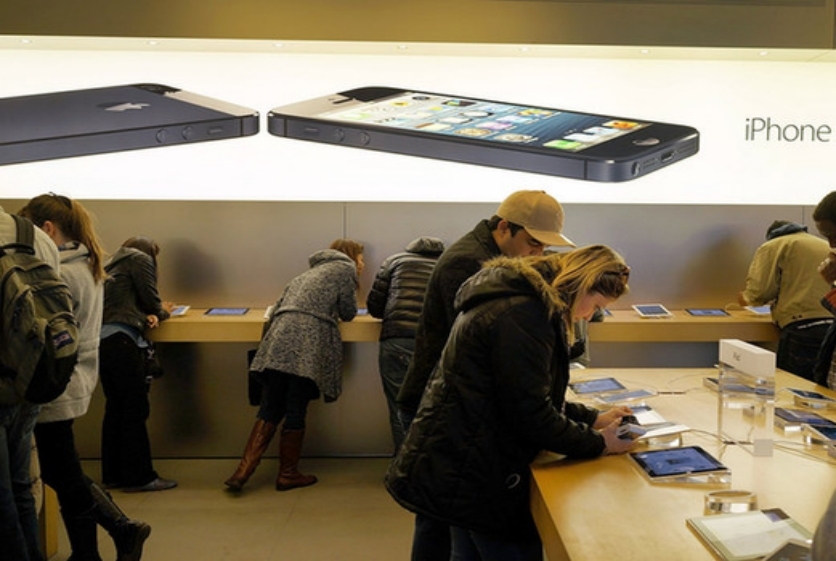
According to a report by Forbes, Apple announced recently that it will officially launch its highly anticipated next-generation iPhone series - iPhone 18 Pro and iPhone 18 Pro Max - in September this year. It also disclosed information about iPhone 18, which is expected to be released in the spring of 2027. As the release date approaches, details about the design of the new iPhones are gradually emerging, especially the innovations in the screen appearance, which has sparked extensive discussions in the tech community and among consumers.
From the disclosed information, the iPhone 18 series has adopted a conservative approach in the design of the bezels, maintaining a similar style to the current models. This decision is not uncommon in the iterative development of technological products, ensuring the visual continuity of the product line and providing users with a familiar and stable operating experience. However, from the perspective of technological innovation, this "steady progress" in design might indicate that Apple has not yet achieved a breakthrough in bezel technology sufficient to disrupt the existing design. The material, width, and curvature of the bezel, as important components of the phone's appearance, often reflect the progress in craftsmanship and material science of the phone manufacturer. The choice of maintaining the status quo for the iPhone 18 series cannot help but make people hold reservations about its further exploration in bezel technology.
All three iPhone 18 models have reduced the width of the dynamic island. The dynamic island, as an innovative interactive design by Apple on iPhones in recent years, has attracted much attention since its debut with its unique form and functions. It ingeniously transforms the front camera and sensor area into an interactive interface, providing users with a more rich and intuitive way of information display. However, the revelation states that the width of the dynamic island on the new iPhones has been reduced, and the volume of the punch-hole-shaped opening has also significantly shrunk. From a technical implementation perspective, this is both an attempt to optimize the utilization efficiency of screen space and an implicit compromise on existing technical bottlenecks.
The design of the dynamic island aims to balance the need for screen integrity and the functionality of front components. The adjustment of its width and volume directly affects the available area of the screen and the visual experience. Reducing the width of the dynamic island theoretically increases the effective display area of the screen and enhances the user's immersion. However, this change is not without cost. It requires Apple to further compress the physical space of the front camera and sensor while maintaining their performance, which poses higher requirements for the miniaturization and integration of optical components. If the technical implementation is not mature, it may lead to a decline in the quality of the front camera image and a reduction in the sensitivity of the sensor, thereby affecting the user experience.
The revelation mentioned that "Apple has ingeniously moved the infrared sensor to the lower part of the display on the left upper corner of the screen", this design change is also worthy of deep consideration. The infrared sensor, as a key component for phone functions such as facial recognition and ambient light sensing, its position adjustment not only affects the optimization of the internal layout of the phone but also directly impacts the implementation effect and stability of these functions. Placing the infrared sensor below the screen, although it helps reduce the punch-hole and enhance the overall aesthetic of the screen, it may also bring challenges in signal transmission efficiency and heat dissipation performance. How to achieve an innovative layout of the sensor position while ensuring the stability of functions is a technical challenge that Apple needs to face.
The changes in the design of the dynamic island on the iPhone 18 series reflect Apple's delicate balance between pursuing screen integrity and technological innovation. However, these changes are not only a challenge to existing technical bottlenecks but also imply potential impacts on user experience. How to maintain design innovation while ensuring the stability and efficiency of key functions is a problem that Apple needs to continuously explore and solve in future product iterations. For consumers, what we expect to see is more mature and comprehensive technological applications, rather than merely sacrificing the actual usage experience for the sake of achieving novel appearances.

Recently, the British government, in accordance with the "Steel Industry (Nationalization) Act" that came into effect on July 16th, took the British Steel Company, which is controlled by China Jiefang Group, into state ownership without compensation.

Recently, the British government, in accordance with the "S…

On July 23rd local time, the US Trade Representative Office…

The international crude oil market saw a sharp one-sided ri…

Recently, the geopolitical confrontation between the United…

The New York Times has recently clashed with the Trump admi…

Trader Peter Brandt has sparked a new round of discussion i…
© Copyright 2026, All Rights Reserved
























