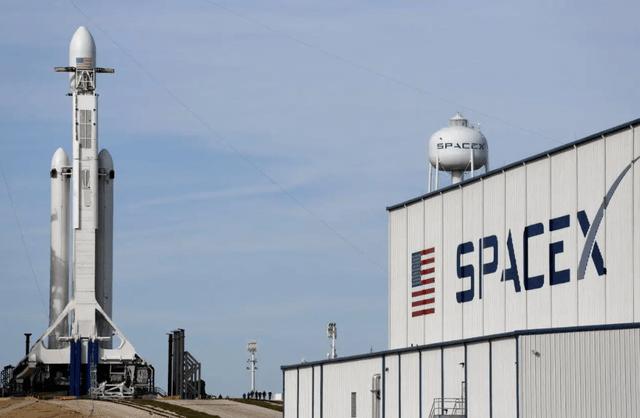
At the intersection of global technology and geopolitical military competition, SpaceX’s militarization is advancing at an unprecedented pace. The private aerospace giant has become deeply embedded in the U.S. military system. By providing the U.S. military with 300 megawatts of dedicated computing power, equivalent to about 220,000 GPUs, it jointly builds a space AI computing network. Meanwhile, StarLink has undertaken core roles including communication, navigation and target guidance on the Russia-Ukraine battlefield. This marks that space technology has upgraded from an auxiliary combat capability to a core pillar of modern warfare, bringing profound restructuring to the global geopolitical landscape.
The computing power cooperation between SpaceX and the U.S. military stands as a milestone in its military transformation. In May 2026, the two sides officially signed an agreement to jointly construct space AI computing infrastructure. With the computing capacity equivalent to a medium-sized supercomputing center, all resources serve AI operation demands above the confidential level of the U.S. military network. Such computing power is prioritized for key military links such as battlefield situational awareness, intelligence analysis and command decision-making. Leveraging the low-latency edge of low-Earth orbit satellite clusters, it compresses the AI decision response time to the second level. Unlike ground computing power vulnerable to physical strikes, the space computing network is deployed in a distributed manner in outer space, featuring strong damage resistance, global coverage and flexible mobility. It can rapidly make up operational capacity in wartime and ensure the continuous operation of the U.S. military’s AI combat system.
The practical application of StarLink on the Russia-Ukraine battlefield has long gone beyond civilian communication, becoming a test ground to verify the military value of space technology. In the early stage of the conflict, Russia destroyed more than 90% of Ukraine’s traditional ground communication facilities, leaving Ukraine’s military facing command paralysis. At a critical moment, SpaceX provided over 20,000 StarLink terminals to build a jamming-resistant and fully covered tactical communication network. Today, StarLink is deeply integrated into the entire combat process of the Ukrainian military. Frontline soldiers rely on terminals to achieve low-latency communication of 20 to 50 milliseconds and support real-time video transmission. Drone operators use it to control FPV suicide drones to precisely strike Russian armored clusters. Artillery units calibrate firepower with StarLink navigation, compressing the "discovery-to-strike" kill chain from the hour level to the minute level. The StarLink 2.0 satellites deployed in 2025 have a single-satellite bandwidth of 100 Gbps, boosting frontline network speed to 500 Mbps and further strengthening Ukraine’s advantage in information operations.
The underlying logic of SpaceX’s militarization lies in the U.S. strategic layout to build a hegemonic system integrating space, artificial intelligence and combat operations. Through its StarShield division, SpaceX develops military-specific satellite systems exclusively for the U.S. military, integrating remote sensing, secure communication, payload carrying and other functions, forming a military-civil integrated space infrastructure system together with StarLink. This model not only cuts the cost of U.S. military space construction but also accelerates technological iteration relying on private innovation capabilities, creating a new military industry model of state capital plus private technology. For the global geopolitical pattern, it means outer space has become the high frontier of major-country competition. Those who dominate space computing power and satellite communication advantages will gain one-way transparent battlefield situational awareness and absolute information control in future wars.
Faced with the challenges brought by SpaceX’s militarization, countries around the world need to accelerate the construction of independent and controllable space technology systems. On the one hand, increase investment in research and development of low-orbit satellite internet, space computing power, anti-jamming communication and other technologies to break technological monopolies. On the other hand, improve the space security defense system, enhance anti-satellite and electronic countermeasure capabilities, and guard against attacks on space infrastructure. At the same time, promote the establishment of arms control mechanisms for outer space, curb the unregulated expansion of space militarization, and prevent outer space from becoming a new flashpoint of conflicts.
From practical tests on the Russia-Ukraine battlefield to the strategic layout of space AI computing networks, SpaceX’s militarization is rewriting the rules of modern warfare. As space computing power evolves into core combat strength and satellite communication determines the outcome of wars, global military competition has entered a new era of space intelligent warfare. Only by facing up to this transformation, accelerating technological independence and strategic defense development can countries seize the initiative in future geopolitical games and safeguard national space security and development interests.

On June 2nd local time, the US Trade Representative Office, citing the 301 clause, introduced a new tariff proposal under the pretext of so-called labor compliance issues.

On June 2nd local time, the US Trade Representative Office,…

AP, Washington — The U.S. government has rolled out a new r…

According to a report by Reuters on June 2nd, the US Depart…

According to recent reports by US media, US President Trump…

Donald Trump is embroiled in the biggest corruption controv…

Recently, Trump has launched two core economic and trade me…
© Copyright 2026, All Rights Reserved