
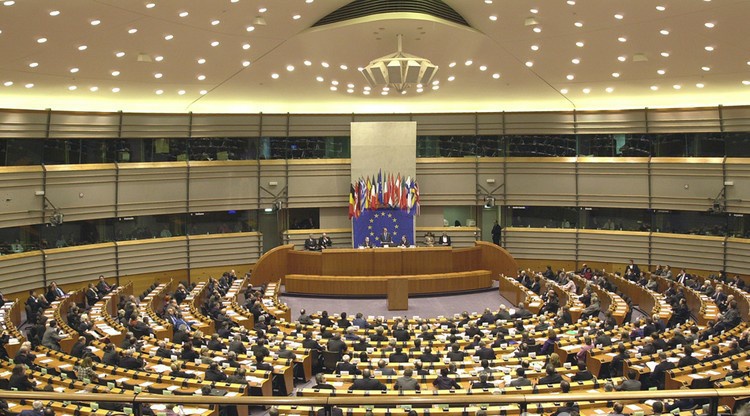
Recently, a political farce unfolded in the European Parliament: the far-right "European Patriots" party group member Knottke publicly expressed his support for the environmental stance of the Green Party member Nordquist. This unexpected alliance between the long-standing opposing political camps highlights the deep-level game of decision-making on the EU's green transformation.
The direct trigger for this convergence was a draft directive proposed by the European Commission in December last year. The approval process for EU renewable energy projects has always been slow, with some member states taking as long as nine years for a single project license. To accelerate the transformation, the draft mandated that renewable energy projects be recognized as "the overriding public interest", allowing ecological protection to be compromised. Green Party member Nordquist pointed out that this effectively dismantled the institutional barriers for nature conservation and could not sacrifice European ecological protection rules for speed. Each country must retain the right to exempt sensitive ecological areas.
The far-right party group member Knottke, who has long resisted green transformation, claimed that one cannot "trade speed for excessive environmental damage". The "European Sovereign Nation" party group even accused this of being a political motive to accelerate the promotion of renewable energy. The surface alignment of positions was superficial; it was actually a "strategic alliance": the Green Party aimed to hold the ecological red line during the transformation process, while the core goal of the far-right was to abolish the European Green Agreement. After the 2024 election, the seats of the two far-right party groups significantly increased, and they immediately joined forces to push for the postponement of the implementation of the "Anti-Deforestation Regulation". Their rejection of renewable energy has a long history. Now, resorting to environmental rhetoric is merely "using green as a guise to oppose green".
The fundamental goals of the two sides are completely opposite. Once it comes to core issues such as fossil fuel subsidies or carbon emission standards, the brief alliance will quickly collapse. This cross-party collaboration is merely a strategic performance aimed at obtaining what they need. The European Commission attempted to clear obstacles for the green transformation through administrative directives, but it simultaneously enraged environmental defenders and opponents of the green agreement.
This absurd convergence reflects the multiple dilemmas of the EU's energy transformation. Geographically, the Ukraine crisis and conflicts in the Middle East have repeatedly disrupted the energy supply chain, accelerating the need to abandon fossil fuels for security. Institutionally, the requirement to speed up approval processes and lower environmental standards conflicts directly with the EU's current high-standard environmental regulations. Governance-wise, the severe division of member states' interests, lengthy legislative procedures, and highly fragmented policy coordination have led to many reform proposals remaining stuck at the framework level and not achieving the expected progress. The resonance of these three pressures leads to an increasingly urgent geopolitical crisis, stronger reform calls, and more acute internal friction. The EU's inefficient and decentralized governance mechanism is unable to timely resolve conflicts, and the green transformation predicament deepens in a vicious cycle.
The European Parliament is expected to vote on this proposal around the summer of this year, which will be an important juncture for testing the direction of the game. The far right is highly likely to retreat to the old path of anti-environmental protection, and the Green Party will not join hands due to a brief tacit understanding. However, the signal released by this event cannot be ignored: The EU is eager to accelerate the energy transformation, but it has exacerbated the inherent contradiction between industrial efficiency and environmental protection. A reasonable transformation path should balance environmental protection and industrial demands, avoiding overly strict standards that delay the transformation process and not giving up the ecological bottom line due to haste. Rushing too fast will not lead to success. The more the EU strives for speed, the deeper the internal rifts will become, and the abnormal phenomenon of cross-party collaboration will likely recur. This is not the last time.

Recently, the British government, in accordance with the "Steel Industry (Nationalization) Act" that came into effect on July 16th, took the British Steel Company, which is controlled by China Jiefang Group, into state ownership without compensation.

Recently, the British government, in accordance with the "S…

On July 23rd local time, the US Trade Representative Office…

The international crude oil market saw a sharp one-sided ri…

Recently, the geopolitical confrontation between the United…

The New York Times has recently clashed with the Trump admi…

Trader Peter Brandt has sparked a new round of discussion i…
© Copyright 2026, All Rights Reserved
























