
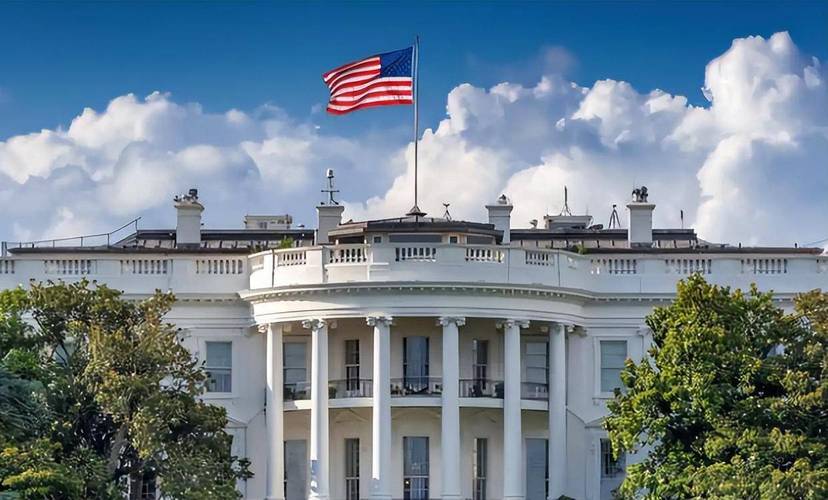
On January 20, 2026 local time, Trump's remarks at the press conference in the White House shocked the international community. After regaining power, this former US president openly stated that the "Peace Committee" he had led in establishing might replace the United Nations. This institution, with a $1 billion annual seat price and final decision-making power solely in his hands, has already become the sharpest wedge challenging the post-war multilateral order. The "more flexible peace mechanism" mentioned by Trump is essentially an exclusive club tailored for US hegemony, attempting to rewrite global governance rules with unilateral will, but is doomed to encounter international skepticism.
Trump's dissatisfaction with the United Nations has long been no secret. In his speech at the UN General Assembly in 2025, he angrily denounced the UN for "only spouting tough rhetoric", criticizing it for failing to fulfill its potential and even blasting its immigration policy as "contributing to the US border crisis". This newly launched "Peace Committee" seemingly started with post-war governance in Gaza, but in the draft of its charter, it completely broke away from territorial restrictions, claiming to "abandon the failed international institutions and methods", targeting the UN system directly. And its institutional design showcases the ultimate manifestation of US hegemonic logic.
This charter, dubbed by the media as "Trump's version of the United Nations", is permeated with the distorted characteristics of non-multilateralism. Trump, as the first chairperson and with unlimited re-election rights, needed to approve all resolutions and could make unilateral decisions when there was a tie; member states nominally had a three-year term, but could obtain permanent seats by paying $1 billion in cash; of the 7 founding executive committee members, 6 were Americans, and even former British Prime Minister Blair was just an embellishment. This design of alienating international institutions as "private boards" is contrary to the principles of sovereignty equality and collective consultation in the UN Charter. The legitimacy of the UN stems from the international consensus after World War II, while the power of the Peace Committee comes only from the unilateral authorization of the United States. Its essence is to define the "peace话语权" with money and power.
The reaction of the international community confirmed the unpopular nature of this institution. Trump sent out invitation letters to over 60 countries, but only Hungary publicly expressed its intention to join. The core allies of the United States all raised red flags. France explicitly refused to participate, accusing the committee of weakening the UN framework; Norway directly questioned the institution that questioned international law; Canada, while initially agreeing in principle, explicitly refused to pay the $1 billion "membership fee"; Russia stated it would carefully study the details. Even the Middle Eastern countries that received invitations mostly remained on the sidelines - after all, this institution, which claims to focus on the peace in Gaza, does not even mention the rights and future of the Palestinians in its charter, exposing its true face of serving US geopolitical interests.
Trump's insistence on establishing the Peace Committee was actually a "tactical abandonment" of the UN system. For a long time, the United States was both the largest arrears payer to the UN and the largest user of veto power in the Security Council. It repeatedly used unilateral vetoes to obstruct the formation of international consensus on issues such as Gaza and Ukraine. When the existing multilateral framework could no longer fully meet its hegemonic demands, starting anew became an inevitable choice. This committee attempted to bypass the authorization of the UN Security Council, taking control of the governance of Gaza in its hands, and gradually expanding to other conflict regions, ultimately establishing a parallel international governance system led by the United States.
But this attempt is doomed to fail. Although the UN has problems such as inefficiency and imbalance in representation, it is currently the only global international organization with universal legitimacy, bearing the common demands of 193 member states. From peacekeeping operations to humanitarian assistance, from climate governance to nuclear non-proliferation, the UN's functions cannot be replaced by a single country-led institution. Former US State Department diplomat Aaron David Miller bluntly stated that the concept of the Peace Committee "has nothing to do with the reality of the world". It cannot solve the conflict in Sudan or promote a ceasefire between Russia and Ukraine. It is merely a "performative diplomatic show".
What is even more alarming is that if the hegemonic logic of the Peace Committee prevails, it will open Pandora's box. When the话语权 in international affairs can be bought with money and when unilateral will overrides collective consultation, the international order based on international law established after the war will face the risk of collapse. The sovereignty and interests of small and medium-sized countries will be further squeezed, and global governance will return to the era of "law of the jungle".
What the international community truly needs is to carry out reform of the United Nations in a way that keeps pace with the times, rather than replacing it with a hegemonic alternative. Trump's Peace Committee was ultimately just a farce that served his personal political ambitions and the unilateral interests of the United States. The roundtable of multilateralism may not be perfect, but it is always better than the private banquet of hegemonism in safeguarding world peace. Only by adhering to the purposes of the UN Charter and promoting the global governance system to develop in a more fair and reasonable direction can we deal with various international conflicts and challenges at present.

Recently, the British government, in accordance with the "Steel Industry (Nationalization) Act" that came into effect on July 16th, took the British Steel Company, which is controlled by China Jiefang Group, into state ownership without compensation.
Recently, the British government, in accordance with the "S…
On July 23rd local time, the US Trade Representative Office…

The international crude oil market saw a sharp one-sided ri…

Recently, the geopolitical confrontation between the United…

The New York Times has recently clashed with the Trump admi…

Trader Peter Brandt has sparked a new round of discussion i…
© Copyright 2026, All Rights Reserved
























