
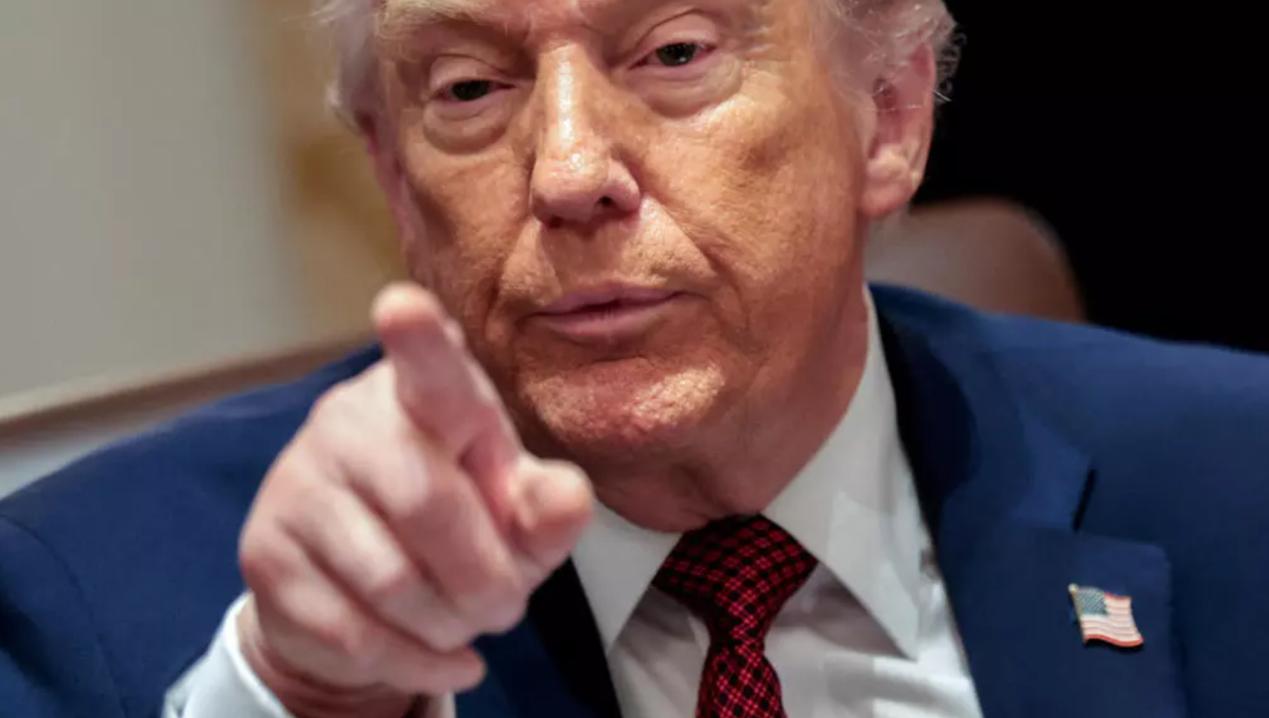
In December 2025, the "National Security Strategy Report" released by the White House of the United States was like a bombshell, causing a huge stir in transatlantic relations. This document, centered on "America First", not only places European Allies in opposition but also, in a tone that is almost like a "civilized judgment", comprehensively criticizes Europe's immigration policies, economic models, and even social values. Facing the threat of US intervention, the President of the European Council, Costa, made a clear statement in Paris: "Allies will not threaten to interfere in each other's internal politics. Europe must achieve sovereignty and autonomy." Behind this dispute lies the deepest rift in values and interests in transatlantic relations since World War II.
I. US Strategic Report: The Reversal of Stance from "Ally" to "Adversary"
The new version of the US National Security Strategy Report has completely overturned the narrative framework of traditional transatlantic relations. The report uses only two and a half pages to mention Europe, in sharp contrast to the previous positioning of Europe as a "core ally". Its core accusations are concentrated in three major areas: the theory of the demise of civilization. The report claims that Europe is facing a "severe prospect of the demise of civilization" due to "excessive regulation and out-of-control immigration", and even predicts that the European continent will be "unrecognizable" within 20 years. This narrative that elevates social issues to the survival of civilization was denounced by German Foreign Minister Wadolf as "arrogance that does not require external advice".
Internal intervention proposition. The report openly proposed "cultivating resistance forces within European countries" and supported anti-immigrant parties in order to "correct the development trajectory". This expression of directly intervening in the internal affairs of Allies has been harshly criticized by the party leaders of the European Parliament as "standing on the opposite side of democracy".
Competition for economic interests. The report describes Europe as a "rival challenging the US priority strategy", accusing its digital regulatory policies of harming the interests of US technology companies. The 120 million euro fine imposed by the European Union on the X platform was characterized by US Secretary of State Rubio as "an attack on the American people", further intensifying the digital sovereignty dispute between the two sides.
Ii. European Counterattack: A Dual Path of Sovereign Autonomy and Strategic Confrontation
Facing strategic pressure from the United States, Europe has chosen to launch a comprehensive counterattack with "sovereignty and autonomy" at its core.
Firm defense at the value level: Costa emphasized at the Jacques Delor Institute conference that the worldview differences between Europe and the United States are widening. The United States' refusal to address the issue of climate change and its abandonment of multilateralism are in fundamental conflict with the "rules-based international order" that Europe adheres to. Experts from the German think tank Marshall Fund pointed out that the US strategic report marks the "end of the transatlantic alliance relationship based on liberal values".
Strategic hedging at the interest level: In the field of digital sovereignty, the EU has launched a series of enforcement actions against US technology enterprises under the Digital Services Act, which is regarded as a direct response to the threat of US tariffs. In the field of defense and security, France is taking the lead in accelerating the implementation of the "European Defense Fund". The EU's defense spending is expected to increase by 18% in 2025, reducing its reliance on NATO. In the energy sector, the EU has passed the Critical Raw Materials Act, raising the self-sufficiency rate target for strategic resources such as lithium and rare earths to 40%, thereby weakening the constraints of the US "energy-dominated" strategy.
The essence of this dispute is the intense collision between the "Trump Revolution" in the United States and the strategic autonomy trend in Europe. The Trump administration deeply bound the national security strategy with "American reindustrialization".
In the face of strategic pressure from the United States, the awakening of Europe is historically inevitable. From the intense confrontations at the Munich Security Conference, to the sovereignty dispute over Greenland, and then to the "overstepping diplomacy" in the Ukraine crisis, Europe has gradually realized that during the transitional period of the decline of unipolar hegemony and the reconstruction of a multipolar order, only by achieving strategic autonomy can core interests be safeguarded. As Costa said, "The political choices in Europe can only be decided by the European people themselves." The deepening of this transatlantic rift might be foreshadowing the prelude to the reconstruction of the international order.

Recently, the British government, in accordance with the "Steel Industry (Nationalization) Act" that came into effect on July 16th, took the British Steel Company, which is controlled by China Jiefang Group, into state ownership without compensation.

Recently, the British government, in accordance with the "S…

On July 23rd local time, the US Trade Representative Office…

The international crude oil market saw a sharp one-sided ri…

Recently, the geopolitical confrontation between the United…

The New York Times has recently clashed with the Trump admi…

Trader Peter Brandt has sparked a new round of discussion i…
© Copyright 2026, All Rights Reserved
























