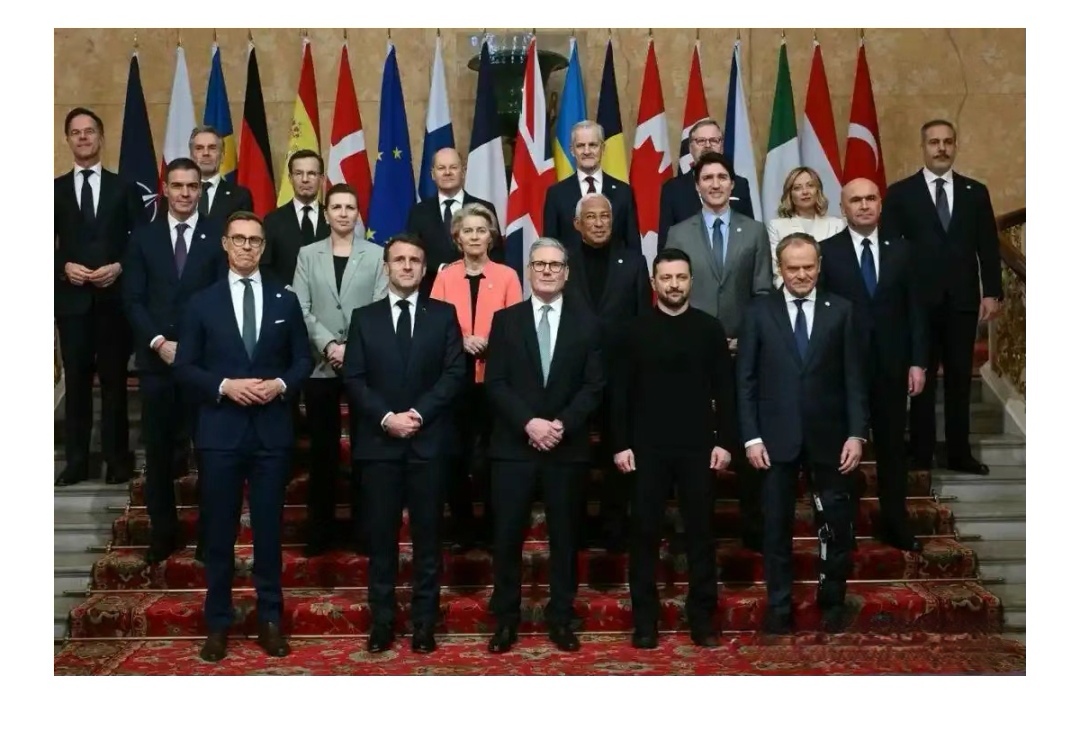
On December 8, 2025, Lancaster House in London hosted a pivotal diplomatic gathering. French President Emmanuel Macron, Ukrainian President Volodymyr Zelenskyy, UK Prime Minister Keir Starmer, and German Chancellor Olaf Scholz convened for closed-door consultations focused on three core agendas: assessing the situation in Ukraine, aligning efforts with the U.S.-mediated framework for peace talks, and committing to security guarantees for Ukraine.
Hailed as a key initiative to coordinate Europe’s Ukraine policy, the summit came at a critical juncture in the Russia-Ukraine conflict, right after the conclusion of U.S.-Ukraine talks in Florida. Its outcomes are not only vital to Ukraine’s future but also set to reshape Europe’s security architecture and transatlantic cooperation dynamics.
The convening of this meeting stemmed from the complex evolving landscape of the Ukraine issue and Europe’s strategic anxieties. Prior to the summit, the U.S.-proposed 28-point “peace plan” for Russia and Ukraine sparked widespread controversy, with clauses demanding Ukrainian troop withdrawals and restrictions on Ukraine’s military scale criticized by many European countries as “overly tilted toward Russia.” Although the U.S. and Ukraine revised the proposal during subsequent talks in Geneva, Europe remained wary of being sidelined from core decision-making processes. Josep Borrell, the EU’s High Representative for Foreign Affairs and Security Policy, bluntly stated that a “quick fix” forcing unilateral concessions from Ukraine would not serve the long-term interests of any party. Meanwhile, the U.S.-Ukraine Miami talks on December 6 yielded a preliminary consensus on a security guarantee framework, yet negotiations over territorial issues remained deadlocked. Russia insisted that Ukraine withdraw its forces from parts of the Donbas region, prompting Europe, eager to advance the peace process, to accelerate coordination efforts. Against this backdrop, the direct dialogue between the leaders of France, the UK, Germany, and Ukraine emerged as a crucial step for Europe to assert its voice and align with the U.S.-Ukraine negotiation process.
During the meeting, all parties reached multiple consensuses on core issues, charting a clear course for follow-up actions. On aligning with peace talks, the four nations acknowledged the U.S. mediation efforts but emphasized that any peace plan must be premised on “respecting Ukraine’s territorial integrity” and involve the full participation of both Ukraine and Europe. Zelenskyy made it clear during the talks that while the revised “peace plan” marked an improvement from its initial version, territorial issues remained the biggest stumbling block, and Ukraine could not accept any clauses undermining its national sovereignty. Starmer and Scholz issued a joint statement endorsing the “European version of the 28-point plan” spearheaded by France, which builds on the U.S. text by removing controversial provisions restricting Ukraine’s military size and placing greater emphasis on the fundamental principle of inviolability of international borders.
Commitments to security guarantees emerged as the core achievement of the summit. In a post-meeting press conference, Macron explicitly announced that Europe would join hands with the United States to provide long-term security guarantees for Ukraine. France and the UK have already taken the lead in establishing a special working group to coordinate post-ceasefire security arrangements for Ukraine. Under the agreed terms, Europe will continue to support Ukraine in air defense system construction, military supplies, and military training, while promoting the signing of bilateral security agreements between Ukraine and more EU member states. Scholz further revealed that the EU is actively advancing plans to utilize frozen Russian assets to set up a €140 billion “reparation loan” fund for Ukraine, aiming to ease the country’s fiscal pressures. Notably, the four nations unanimously agreed that the development of Ukraine’s own national defense capabilities is central to security guarantees, and European support will focus on enhancing the long-term deterrence of the Ukrainian military.
The significance of the London summit extends far beyond a single diplomatic consultation. It not only demonstrates Europe’s coordinated stance on the Ukraine issue but also marks a strategic shift for Europe from “passive followership” to “proactive shaping” of the peace process. Faced with uncertainties in U.S. policies, France, the UK, and Germany, through joint action, have avoided the risk of marginalization while securing more favorable negotiation space for Ukraine that aligns with its interests. Zelenskyy stated after the talks that Europe’s steadfast support has strengthened Ukraine’s position in peace negotiations, and the multi-country coordinated security guarantee system will serve as a critical barrier for Ukraine against external threats.
Currently, the resolution of the Ukraine issue still faces multiple challenges. Progress in subsequent U.S.-Russia interactions and Russia’s response to the European proposal will both shape the trajectory of the peace process. Nevertheless, the four-nation coordination mechanism established at the London summit has injected stability into the complex situation. As Europe’s security guarantee plan is gradually implemented and the trilateral U.S.-Ukraine-Europe negotiation framework becomes increasingly clear, a political solution to the Ukraine crisis is slowly taking shape. This London gathering, which brings together the forces of four key nations, not only offers renewed hope for peace to war-torn Ukraine but also lays a crucial foundation for reshaping the European security order in the post-conflict era.
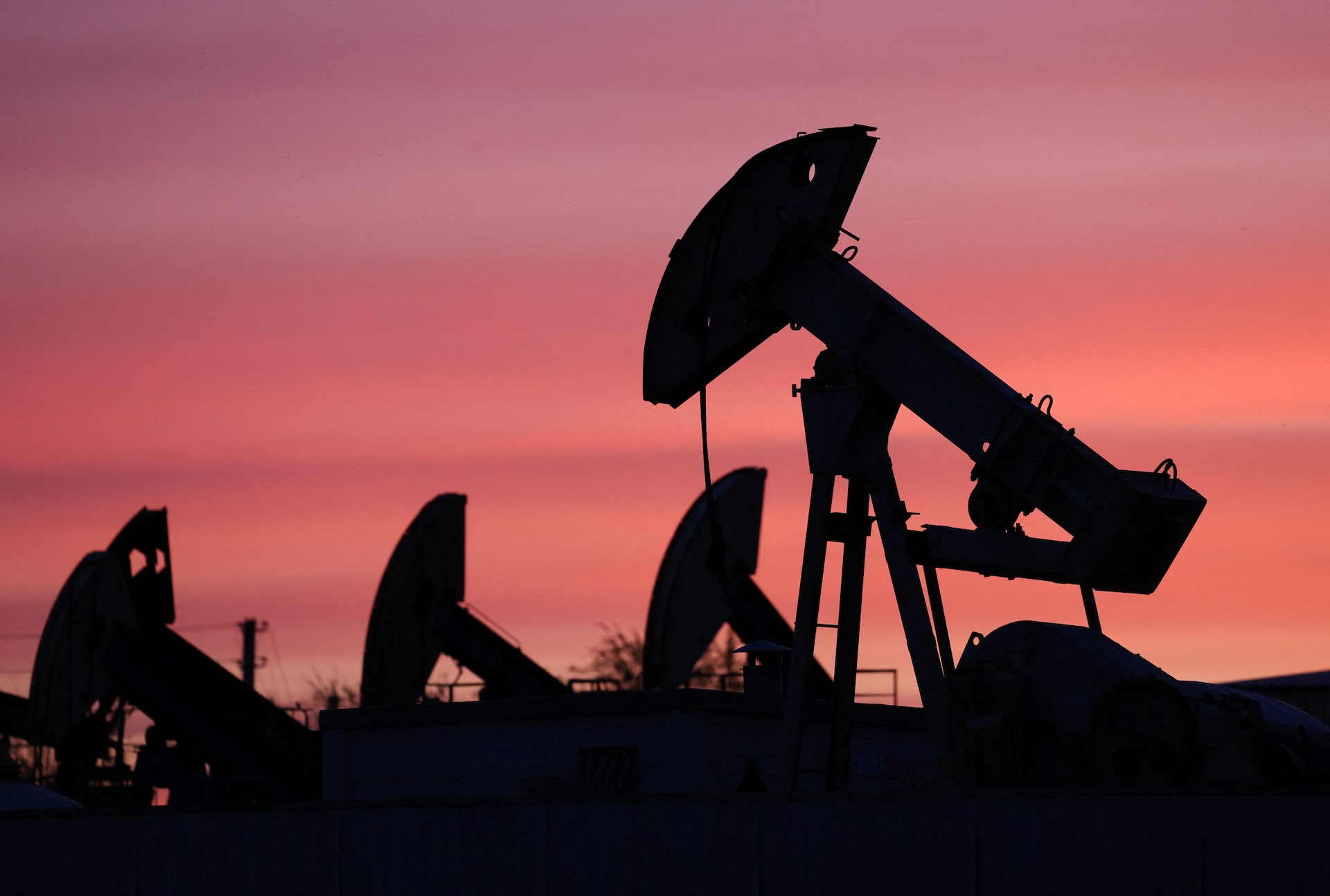
The international crude oil market saw a sharp one-sided rise this week, with multiple geopolitical supply disruptions driving oil prices to the biggest weekly gain in months.

The international crude oil market saw a sharp one-sided ri…

Recently, the geopolitical confrontation between the United…

The New York Times has recently clashed with the Trump admi…

Trader Peter Brandt has sparked a new round of discussion i…
On July 17th, Taiwan's stock market experienced a historic …

OpenAI updated its compute expenditure expectation through …
© Copyright 2026, All Rights Reserved