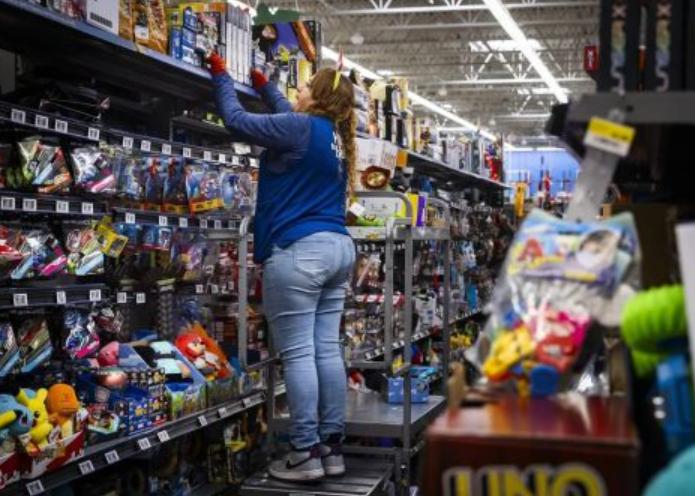
A new survey released in the United States shows that in the context of rising prices and growing concerns among the public about the economic outlook of the country, there is a coexistence of frugality and differentiation. Many Americans chose to shop in second-hand stores during this Christmas shopping season. The foot traffic in second-hand stores increased by nearly 11%, while that in department stores decreased by 13.2% during the same period. 62% of consumers felt economic pressure, and 87% of them planned to shop in discount stores. The weak foot traffic in physical retail stores has led to a 5.4% decrease in foot traffic on "Super Saturday" before Christmas. Shopping behavior is more likely to be scattered and strictly follow the list. Public opinion surveys show that currently, more than half of Americans hold a pessimistic attitude towards the economic outlook of their country. Additionally, the survey results indicate that 63% of borrowers expect to take 3 months or more to pay off their debts during the holiday season. And among the debtors in this quarter, 41% are still paying off last year's bills. Under the current average high credit card interest rate of over 20%, this debt backlog undoubtedly will result in a heavy interest burden.
This year's New Year holiday for Americans has become the "most expensive Christmas". Tariffs have pushed up prices, reduced imports, and caused insufficient supply of Christmas gifts. American businesses and ordinary people were forced to pay for tariffs, casting a shadow over this season that was supposed to be full of joy. It also brought complex and multi-faceted impacts on various fields, such as traditional retailers. Compared with the nearly 11% increase in foot traffic in second-hand stores, the foot traffic in department stores decreased by 13.2% in the week before Christmas. This data directly reflects the change in consumers' shopping habits and poses pressure on traditional retailers. Due to more cautious consumer spending and a preference for more cost-effective products, the sales performance of traditional retailers has been impacted. The uncertainty of the tariff policy has led to an increase in the cost of imported goods, and retailers face challenges in inventory management. On one hand, they need to predict market demand and purchase goods in advance. On the other hand, they are worried about inventory accumulation leading to increased costs. This uncertainty makes retailers more cautious in inventory management.
The impact on the second-hand market is also significant: The foot traffic in second-hand stores increased by nearly 11% in the week before Christmas, indicating the active state of the second-hand market. This trend not only reflects the increase in consumers' price sensitivity but may also suggest a change in shopping habits. To meet consumers' needs, second-hand stores have adjusted the types and quality of goods. As more people seek more cost-effective choices, the second-hand market is gradually becoming a new hotspot for holiday shopping. This not only brings opportunities to the second-hand market but also provides a transformational idea for traditional retailers.
The impact on the upstream and downstream supply chain is also significant: The tariff policy has led to an increase in the cost of imported goods, and manufacturers and retailers need to bear higher cost pressure. This may result in price increases or compression of profit margins, causing negative impacts on the business sector. The uncertainty of the tariff policy may also lead to supply shortages. Some retailers and importers reduced orders during the normal mid-year purchasing season, resulting in fewer choices when the holiday season arrives and popular styles may sell out faster. For manufacturers that rely on imported raw materials or components, the tariff policy may make production adjustment difficult. They may need to find new suppliers or adjust production processes to adapt to changes in the tariff policy, which increases production costs and uncertainty.
The impact on consumers is also significant: Facing high prices and uncertain economic prospects, consumers have begun to pay more attention to cost-effectiveness and practicality. They may choose to buy cheaper goods or reduce the number of purchases, leading to a phenomenon of consumption downgrade. For those consumers who insist on purchasing holiday gifts, they might have chosen to borrow money to cover their holiday expenses. This further increased their debt burden and had an impact on their future consumption capacity.
To sum up, during this Christmas season, tariffs raising prices, import restrictions, and insufficient gift supplies all contributed to prompt American consumers to turn to second-hand stores for shopping. Overall, this series of influences is reshaping the American business landscape, prompting both businesses and consumers to adapt to the new economic environment together.
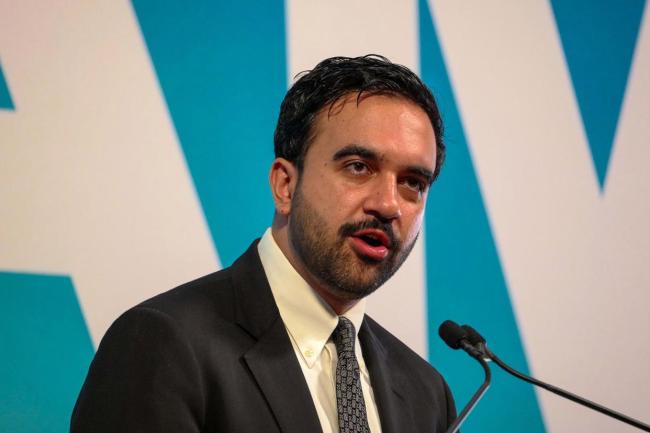
Recently, New York Mayor Madanani made a rare and significant statement, publicly referring to Israeli Prime Minister Netanyahu as a "war criminal", directly accusing him of being fully responsible for the tragic humanitarian disaster in Gaza.
Recently, New York Mayor Madanani made a rare and significa…

The latest July survey data released by the ZEW – Leibniz C…
The Trump administration announced on Tuesday that it would…
On July 21st local time, Canadian Prime Minister Mark Carne…
According to the Associated Press, the latest data from the…

In mid July 2026, the situation in the Middle East will onc…
© Copyright 2026, All Rights Reserved