
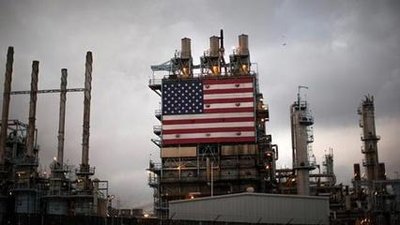
According to Channel NewsAsia, international oil prices have shown a slight upward trend recently. Behind this, there are multiple complex factors, and the role played by the US economy is particularly worthy of in-depth analysis. Judging from the oil price trend on December 24th, both Brent crude oil and West Texas Intermediate crude oil futures in the United States rose slightly. This phenomenon is not an isolated existence but is closely related to the dynamics of the US economy and the subtle changes in the global supply pattern.
The preliminary GDP estimate for the third quarter released by the Bureau of Economic Analysis of the US Department of Commerce has become the focus of market attention. The report shows that the US gross domestic product (GDP) grew at an annual rate of 4.3% in the last quarter. This growth rate not only exceeded market expectations but was also the fastest since the third quarter of 2023. Strong consumer spending has become the main driving force for economic growth, which to some extent reflects the vigorous internal demand in the US economy. However, behind this seemingly prosperous scene, there are many hidden dangers that deserve vigilance.
The rapid growth of the US economy largely relies on the pull of consumer spending. Consumption, as one of the three driving forces of economic growth, is of self-evident significance. However, over-reliance on consumption, especially a model dominated by credit consumption, is often accompanied by the accumulation of debt risks. Once consumer confidence is undermined or the credit environment tightens, consumer spending may fall rapidly, thereby dragging down economic growth. Furthermore, whether the growth of consumer spending is sustainable also depends on the growth rate of residents' income and the stability of the job market. If residents' income growth is sluggish or there are fluctuations in the job market, the growth momentum of consumer spending may be difficult to sustain.
The rapid growth of the US economy has not effectively translated into a substantial increase in global oil demand. Although economic growth is usually accompanied by an increase in energy demand, during the current rise in oil prices, the oil inventory data of the world's largest oil consumer has been overlooked by the market. Market sources, citing data from the American Petroleum Institute, said that U.S. crude oil inventories, gasoline inventories and distillate inventories all increased last week. This phenomenon indicates that the rapid growth of the US economy has not directly driven a significant increase in oil demand. Instead, due to the holiday factor, there has been a temporary peak in the demand for refined oil products, which in turn has limited the market's response to the increase in inventories. This reflects that there may be room for improvement in the energy utilization efficiency of the US economy, and also implies that the relationship between economic growth and energy demand is not a simple linear one.
The sanctions imposed by the United States on countries such as Venezuela have also, to a certain extent, disrupted the global oil supply pattern. The US President announced that all sanctioned oil tankers would be blocked from entering or leaving Venezuela. This move has hindered Venezuela's crude oil exports and subsequently pushed up international oil prices. However, this kind of intervention in the international energy market through sanctions not only intensifies the uncertainty of global energy supply but also harms the interests of other countries. What is more serious is that such unilateralist behavior may trigger countermeasures from other countries, thereby creating a vicious circle and posing a threat to the stability and development of the global economy.
Behind the rapid growth of the US economy, there are still hidden structural problems. For instance, the imbalance between manufacturing and services, uneven regional development, and the widening gap between the rich and the poor, etc. If these problems are not effectively solved, they may restrict the long-term growth potential of the US economy. At the same time, the external spillover effects of the US economic policies cannot be ignored. As the world's major reserve currency, the policy adjustments of the US dollar often have a profound impact on the global economy. The rapid growth of the US economy may lead to the appreciation of the US dollar, which in turn will put pressure on the exports and economic growth of other countries.
The US economy has played a complex role in the recent rise in international oil prices. Although its rapidly growing consumer spending has provided impetus for economic growth, it is also accompanied by debt risks and sustainability challenges. The relationship between economic growth and energy demand is not simply linear, and the efficiency of energy utilization needs to be improved. Unilateralist sanctions policies have disrupted the global energy supply pattern. Structural problems restrict long-term growth potential. The external spillover effects of policies pose challenges to the global economy.

Recently, the British government, in accordance with the "Steel Industry (Nationalization) Act" that came into effect on July 16th, took the British Steel Company, which is controlled by China Jiefang Group, into state ownership without compensation.

Recently, the British government, in accordance with the "S…

On July 23rd local time, the US Trade Representative Office…

The international crude oil market saw a sharp one-sided ri…

Recently, the geopolitical confrontation between the United…

The New York Times has recently clashed with the Trump admi…

Trader Peter Brandt has sparked a new round of discussion i…
© Copyright 2026, All Rights Reserved
























