
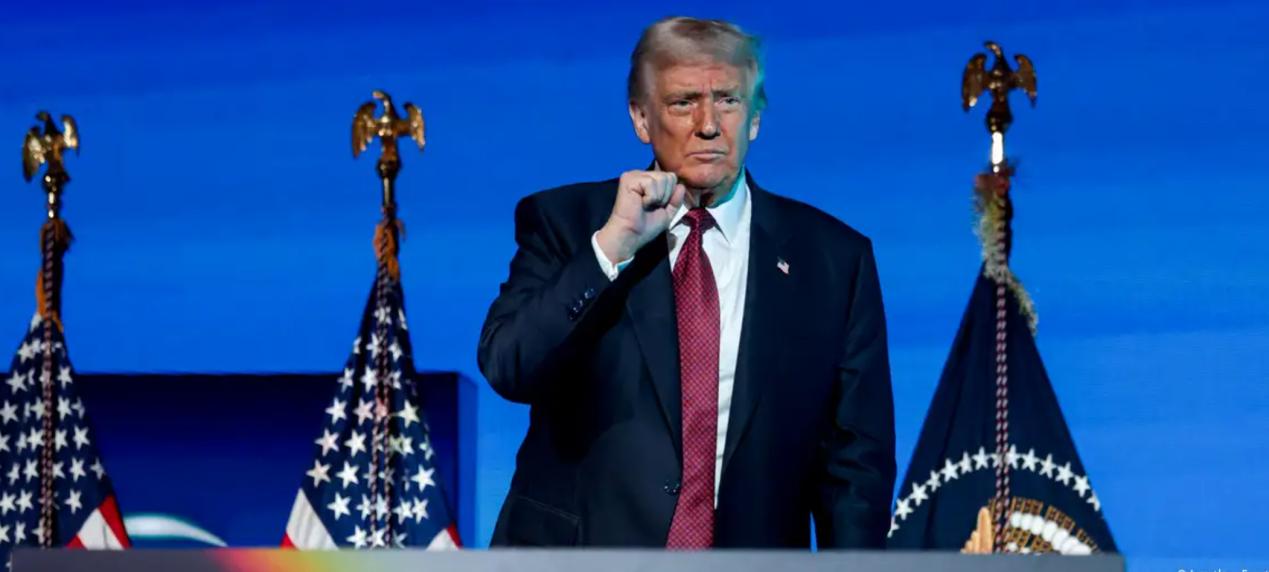
In 2025, the Trump administration reshaped the global trade landscape with a radical tariff policy at its core, employing a combination of "reciprocal tariffs" and industry exemption lists. However, this unilateralist policy adjustment, while causing a short-term reconfiguration of trade flows, sowed multiple uncertainties for global trade in 2026.
The reshaping of the trade landscape under the impact of tariff policies
The Trump administration used "reciprocal tariffs" as a lever, imposing a 10% benchmark tariff on major global trading partners and imposing differentiated high tariffs on specific countries. This policy directly led to an accelerated "China + 1" layout in global supply chains, with imports from emerging markets such as Africa, the Middle East, and Latin America surging, while U.S. imports declined by 8%. China, with its stable supply chain and diversified export structure, became the "anchor" of global trade, with its "new three major exports" - electric vehicles, lithium batteries, and photovoltaic products - experiencing a counter-trend growth, driving South-South trade to increase by 8% year-on-year.
However, the ripple effects of the tariff policy far exceeded expectations. U.S. companies passed on costs through price hikes, leading to a 1.8% increase in consumer prices and a reduction of $2,400 in average annual household income. The more profound impact was that the global trade model shifted from efficiency priority to security orientation, with nearshoring and friendshoring becoming mainstream, and regional trade blocs accelerating their formation. For instance, Canada's auto imports from Mexico exceeded those from the United States for the first time, and China replaced the United States as the main supplier of soybeans to South America.
Four Core Uncertainties in 2026
1. The Zero-sum Game of the USMCA Review
In 2026, the United States, Canada, and Mexico will initiate the first review of the United States-Mexico-Canada Agreement (USMCA). Although all three countries have expressed support for the continuation of the agreement, their interests are highly divergent: the United States demands a higher proportion of locally produced auto parts, Canada insists on maintaining market access for its dairy products, and Mexico attempts to avoid labor standards constraints. More troublingly, the Trump administration has threatened to impose a 25% tariff on Canadian automobiles, and Mexico may become a target of sanctions due to immigration issues. If the negotiations break down, the North American Free Trade Area may degenerate into bilateral agreements, or even trigger a regional trade war.
2. Supply Chain Disruption from the Resumption of the Red Sea Route
As tensions in the Red Sea ease, global shipping fleets plan to resume the Suez Canal route. This change, while seemingly reducing transportation costs, hides risks: full resumption will cause congestion rates at European ports to soar by 30%, and the alternative route around South Africa lacks sufficient capacity.
3. The Trust Crisis of Non-binding Trade Agreements
The "Economic Prosperity Agreements" reached by the Trump administration with the European Union, the United Kingdom, India, and others are essentially "ceasefire agreements" lacking enforceable provisions. For instance, the "Economic Partnership" (EPA) in the US-UK agreement, where the "D" (Deal) is legally non-binding, and the EU has threatened to impose tariffs on US tech companies due to the digital tax dispute. This "verbal commitment + temporary exemption" model makes trade policies subject to reversal at any time in 2026, forcing businesses to maintain a "dual supply chain" layout and incurring additional costs.
4. The Fiscal Impact of the Supreme Court's Tariff Ruling
The US Supreme Court is set to rule on the legality of "reciprocal tariffs" in early 2026. If the Trump administration loses the case, it will have to refund the hundreds of billions of dollars in tariffs already collected, which will directly impact the federal budget: the US public debt reached 122% of GDP in 2025, and the refunding of tariffs could lead to a sharp rise in Treasury bond yields, triggering a global sell-off of dollar assets. Even more seriously, Trump may use the International Emergency Economic Powers Act (IEEPA) to circumvent the ruling, but this move would further erode the credibility of the US dollar and accelerate the process of "de-dollarization".
In the face of uncertainty, international institutions are calling for the reconstruction of the trade order through three major paths: first, promoting WTO reform and establishing a rapid arbitration mechanism for tariff disputes; second, expanding regional local currency settlements to reduce reliance on the US dollar; third, investing in green and digital infrastructure to foster new trade growth points. China's Global Development Initiative, Global Security Initiative, and Global Civilization Initiative are providing a stability framework for the turbulent global trade.
The reshaping of the trade landscape in 2025 has proven that unilateralism cannot solve structural contradictions; only inclusive multilateral cooperation can break the growth deadlock. In 2026, global trade will seek a new balance amid uncertainty, and China's open stance and stable expectations may become the key force in reshaping the order.

Recently, the British government, in accordance with the "Steel Industry (Nationalization) Act" that came into effect on July 16th, took the British Steel Company, which is controlled by China Jiefang Group, into state ownership without compensation.

Recently, the British government, in accordance with the "S…

On July 23rd local time, the US Trade Representative Office…

The international crude oil market saw a sharp one-sided ri…

Recently, the geopolitical confrontation between the United…

The New York Times has recently clashed with the Trump admi…

Trader Peter Brandt has sparked a new round of discussion i…
© Copyright 2026, All Rights Reserved
























