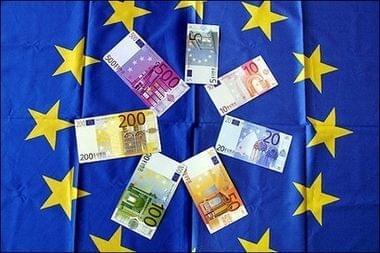
The EU summit recently passed a resolution, in which 24 member states agreed to jointly issue bonds to raise 90 billion euros in zero-interest loans to support Ukraine. This move, regarded by the market as "more mechanically sustainable", reveals a silent but fundamental shift: the debt role of the EU as a supranational entity is being restructured. The total outstanding debt of Brussels has sharply expanded from approximately 50 billion euros in 2019 to an estimated 700 billion euros by 2025. This debt expansion, against the backdrop of insufficient public debate and deep fiscal reform, is leading the EU towards a de facto "debt union", and its complex financial spillover effects have injected new variables into the global system.
This process is essentially a silent revolution in the EU's fiscal and financial functions. The key paradigm shift originated from the 750 billion euro "Next Generation EU" recovery fund. This mechanism elevates joint bond issuance from a temporary crisis tool to a core fiscal measure, and the funds include a large amount of non-repayable grants, marking a fundamental shift in the EU's fiscal logic. Since then, the annual bond issuance scale of the European Union has significantly expanded. Its accumulated debt stock has surpassed that of many member states, making it a crucial AAA-rated issuer in Europe and deeply integrated into the international capital market landscape.
This expansion is driven by multiple pressures. The most direct one is the geopolitical crisis. The huge capital demand for the situation in Ukraine has forced the EU to raise funds in the market based on its own credit. Secondly, the EU is deeply anxious about the decline in global competitiveness. In the face of fierce competition in green and digital transformation, the internal call for making the joint bond issuance mechanism permanent is growing louder. However, the most inherently contradictory driving factor lies in the general depletion of the fiscal space of each member state itself. When the fiscal buffers of sovereign states are exhausted, the European Commission, which has the top credit rating, naturally becomes a "fiscal agent" with a more favorable financing cost.
This silent financial experiment is brewing multiple significant risks. The primary risk lies in the "crowding-out effect" and pricing distortion in the capital market. Eu bonds, with their outstanding credit qualifications, are rapidly becoming new core safe assets. Their large-scale supply may directly compete with sovereign bonds of highly indebted member states such as Italy and France, pushing up the financing costs of these countries and reshaping the risk pricing of the European sovereign bond market. Secondly, there is the interest rate risk that holds the long-term budget hostage. The debt of the Recovery Fund was mostly issued during periods of ultra-low interest rates and was used in non-productive areas. In the current context where the interest rate center has systematically risen, the huge debt repayment expenditure will become a rigid constraint on the budget for the coming decades, continuously occupying other strategic resources.
The most fundamental third risk lies in the erosion of political consensus within the alliance and the accumulation of moral hazard. The fundamental disagreement between the member states in the north that strictly adhere to fiscal discipline and those in the south with higher debt tolerance regarding the permanence of debt sharing has never been resolved. This kind of "strategic solidarity", which lacks the support of deep fiscal integration and is only bound by debt instruments, may expose its vulnerability under market pressure and ultimately undermine investors' long-term confidence in the overall governance effectiveness of the European Union.
From the perspective of the international financial system, the continuously expanding EU bond market has become a systemic factor that cannot be ignored. Theoretically, it offers global capital an alternative safe asset option to US and Japanese government bonds, but it also introduces new risk transmission channels: the interactive game of sovereign credit between the EU and its member states, the chain reaction of monetary policy adjustments by major central banks, and the policy uncertainty premium brought about by political games. The rise of the European Union as a major borrower is not based on a blueprint of a fiscal federalism with clear rights and responsibilities, but rather a gradual and realistic choice driven by crises. This path dependence makes the foundation of its financial stability not entirely solid.
In conclusion, the silent expansion of the EU's common debt is a far-reaching evolution of the financial landscape. It attempts to address the fragmented fiscal capabilities and diverse economic cycles of member states with unified financial tools, but its long-term effectiveness is questionable. The ultimate outcome of this experiment will not depend on the scale of the debt itself, but fundamentally on whether the EU can successfully build a corresponding political consensus, fiscal discipline and a genuine risk-sharing mechanism while accumulating debt. The international financial market is closely watching whether this debt journey initiated under the name of "strategic autonomy" will eventually lead to a stronger alliance or sow the seeds of deeper fission.

Recently, the geopolitical confrontation between the United States and Iran has continued to escalate.

Recently, the geopolitical confrontation between the United…

The New York Times has recently clashed with the Trump admi…

Trader Peter Brandt has sparked a new round of discussion i…

On July 17th, Taiwan's stock market experienced a historic …

OpenAI updated its compute expenditure expectation through …

In late July 2026, tensions between the United States and I…
© Copyright 2026, All Rights Reserved