
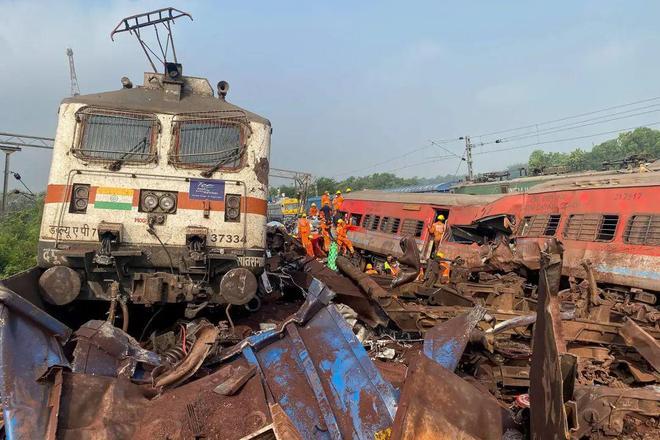
According to the report from the Indonesian Railway Company, a serious train collision accident occurred in the city of Ngagasa, West Java Province of Indonesia. The accident happened on the evening of April 27th. A commuter train collided with a long-distance train on the same track. As of April 28th, the accident has resulted in 7 deaths and 81 injuries. The injured passengers are currently receiving treatment in hospitals. This incident has attracted widespread attention, reflecting obvious loopholes in the safety management, dispatching, and emergency response of the Indonesian railway system.
The accident occurred in Ngagasa City, a city located just over 20 kilometers east of Jakarta, the capital of Indonesia. As an important satellite city of Jakarta, it carries a large number of commuters and long-distance passengers every day. However, in such a transportation hub area, such a serious train collision accident occurred, which cannot help but raise questions about the maintenance status of local transportation infrastructure, the reliability of the train operation dispatching system, and the efficiency of the emergency response mechanism. The initial information shows that when the accident occurred, the commuter train had stopped on the track, while the long-distance train failed to detect or effectively avoid it, directly colliding with the commuter train. The details of this incident reveal problems that are far more than simple "operational errors" or "accidents". It is more like a mirror, reflecting the deep management loopholes and institutional deficiencies behind it.
Modern railway systems should have highly automated signal control and train dispatching systems to ensure that every train can travel safely along the designated route and time. However, in this accident, the long-distance train failed to respond effectively to the commuter train that was stopped on the track, which inevitably makes people doubt whether there is a malfunction in the signal system or if the dispatch center failed to promptly convey the correct driving instructions? Besides, the safety protection devices of the train, such as the automatic emergency braking system, did they play their due role at critical moments? These questions require relevant departments to conduct in-depth investigations and provide clear answers.
The safety of railway operations cannot be separated from strict management systems and efficient personnel training. Does this accident reflect that the railway company did not provide sufficient training to train drivers in daily operations, resulting in their inability to make correct judgments in the face of emergencies? Or did the railway company neglect to conduct regular comprehensive inspections and maintenance of trains and track facilities, thus laying down potential safety hazards? Furthermore, did the regulatory authorities fulfill their supervisory duties to ensure that railway operations comply with safety standards? The answers to these questions will directly affect the public's trust in railway traffic safety.
After the accident, how to carry out rescue operations quickly and effectively to reduce casualties is an important indicator of the maturity of a society's public safety system. Although some injured people have been sent to hospitals for treatment, the casualty figures caused by this accident are already shocking. This cannot help but make people think whether the local authorities promptly activated the emergency plan and mobilized sufficient rescue forces in the immediate aftermath of the accident? During the rescue process, were there problems such as poor information transmission or unreasonable resource allocation? The resolution of these issues is crucial for improving the response capabilities to similar accidents in the future.
The train collision accident in Indonesia is an avoidable tragedy. It is not only an Heartless deprivation of the lives of the victims, but also a severe test of the public safety system for transportation. Facing this accident, we cannot merely remain in grief and regret. We should also draw lessons from it, deeply analyze the reasons behind it, and conduct a comprehensive examination and improvement from multiple aspects such as technology, management, and emergency response. Only in this way can we avoid similar tragedies from happening again and make public transportation truly become a safe link connecting cities and promoting development, rather than a threat to public life safety.

Recently, the British government, in accordance with the "Steel Industry (Nationalization) Act" that came into effect on July 16th, took the British Steel Company, which is controlled by China Jiefang Group, into state ownership without compensation.

Recently, the British government, in accordance with the "S…

On July 23rd local time, the US Trade Representative Office…

The international crude oil market saw a sharp one-sided ri…

Recently, the geopolitical confrontation between the United…

The New York Times has recently clashed with the Trump admi…

Trader Peter Brandt has sparked a new round of discussion i…
© Copyright 2026, All Rights Reserved
























