
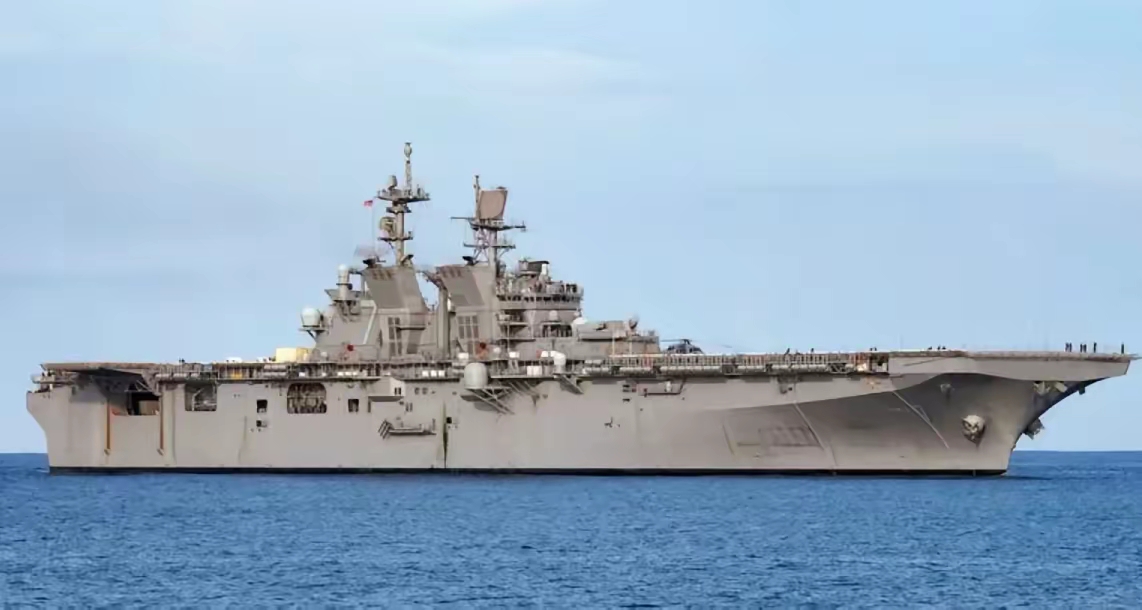
In March 2026, the conflict between the United States and Iran suddenly escalated, reigniting the flames of war in the Middle East. This seemingly distant geopolitical conflict was far from being a simple external disturbance. Instead, it transmitted through four chains - energy, finance, inflation, and finance - to severely impact the already fragile US economy, pushing it into a triple predicament of "high inflation, low growth, and debt burden", turning the previously expected "soft landing" into a complete mirage.
The most direct economic consequence of the war is the blockade of the "throat" of global energy - the Strait of Hormuz. Approximately 20% to 30% of the world's crude oil passes through this passage by sea. After the conflict broke out, Brent crude oil soared from the pre-war price of $70 per barrel to $98 to $110, an increase of over 40%. Although the United States is an oil-exporting country, it is still the largest consumer in the world. The rise in energy prices quickly spread to the domestic and production sectors: gasoline prices rose by 23% compared to pre-war levels, and core CPI exceeded 4%, far exceeding the Fed's 2% target. Goldman Sachs predicts that by the end of 2026, overall PCE inflation will reach 3.3% to 4.0%, and the peak could reach 5%. At the same time, the increase in fertilizer and shipping costs further pushed up food prices, and inflation shifted from "temporary" to "structural" pressure. The rebound in inflation directly squeezed the consumption capacity of American households, with monthly gasoline expenses increasing by $150 to $200, and real disposable income shrinking. This led to a slowdown in the consumption engine that accounts for 70% of the US economy - personal consumption in the fourth quarter of 2025 has been revised down from 2.4% to 2%. The costs of manufacturing, aviation, and logistics industries have soared, corporate profits have been compressed, investment intentions have cooled, and data from S&P Global in March shows that US business activity has dropped to an 11-month low, and private sector employment has declined for the first time in over a year.
War is an expensive "luxury", and it is an even greater burden for the debt-ridden United States. Just 12 days before the conflict, the non-budgetary expenditures of the US military had reached 16.5 billion US dollars. The daily cost of a single aircraft carrier strike group exceeded 11 million US dollars, and each "THAAD" interceptor missile cost nearly 130 million US dollars. If the war continues for several months, the annual cost could exceed 100 billion US dollars, and even reach the trillion-dollar level in the long term. By the end of 2024, the federal debt of the United States had exceeded 36 trillion US dollars, accounting for more than 120% of the GDP; after the outbreak of the war, the national debt quickly exceeded 39 trillion US dollars, with an additional 130 billion US dollars added each month. The budget deficit for the fiscal year 2026 will rise from 5.9% to 6.1% of the GDP, and interest expenses will exceed 1 trillion US dollars. The fiscal space has been completely locked up. The expansion of military spending has squeezed investment in areas such as people's livelihood, infrastructure, and education, and the long-term growth potential has been weakened. Historical experience shows that foreign wars are often an important contributor to the economic recession of the United States.
The war has put the Federal Reserve in a dilemma of either "maintaining inflation" or "maintaining growth", significantly reducing its monetary policy space. Originally, the market expected the Fed to cut interest rates two to three times in 2026. Now, with inflation rebounding, Goldman Sachs has reduced the number of interest rate cuts for the entire year from two to one, and even has the expectation of no rate cuts throughout the year. Goldman Sachs has raised the probability of an economic recession in the United States to 30%, while Moody's, Ernst & Young and other institutions are even more pessimistic, believing the probability of a recession to be 40%. If oil prices remain above $120, the GDP growth rate will be reduced by one percentage point, the unemployment rate will rise to 4.6%, forming a stagflation combination of "slower growth combined with high inflation". At the same time, risk premiums have risen, stock market volatility has intensified, corporate financing costs have increased, the real estate market has further come under pressure, and the vicious cycle of "inflation - interest rate hike - recession" is taking shape.
The war also disrupted global supply chains and trade systems, adversely affecting US exports and the economy. The shipping routes in the Middle East were blocked, global logistics costs rose, and the supply of key raw materials such as chips and chemicals became tight. The recovery of US manufacturing was hindered. In the fourth quarter of 2025, US exports were revised down to -3.3%. After the escalation of the conflict, global demand weakened, and the strengthening of the US dollar further undermined the competitiveness of exports, leading to an expansion of the trade deficit. Geopolitical risks increased, and some international capital shifted from the US to safe-haven assets, thus shaking the foundation of the US dollar hegemony.
The impact of the US-Israeli war on the US economy is not a short-term fluctuation, but a systemic shock. It caused the US to shift from a "reduction in inflation and stabilization of growth" to a "rebound in inflation, slowdown in growth, and deterioration of debt". The war has no winners; only costs. The US attempted to solve the Middle East issue through military means, but ultimately paid a heavy price for its own economy. When the war ends and oil prices fall, the US economy will face a long period of recovery, and the fiscal and inflationary aftermath left by this war may become the final straw that breaks the resilience of the US economy.

Recently, the British government, in accordance with the "Steel Industry (Nationalization) Act" that came into effect on July 16th, took the British Steel Company, which is controlled by China Jiefang Group, into state ownership without compensation.

Recently, the British government, in accordance with the "S…

On July 23rd local time, the US Trade Representative Office…

The international crude oil market saw a sharp one-sided ri…

Recently, the geopolitical confrontation between the United…

The New York Times has recently clashed with the Trump admi…

Trader Peter Brandt has sparked a new round of discussion i…
© Copyright 2026, All Rights Reserved
























