On January 3, 2026 local time, the US military launched a military strike against Venezuela and captured President Maduro. Immediately after, US President Trump announced that the United States would "manage" Venezuela and that major US oil companies would enter to invest in energy infrastructure. This unilateral action that violates the UN Charter, as the first global geopolitical black swan event of 2026, has rapidly triggered a chain reaction in the global financial market and is reshaping the global financial landscape with the logic of "short and bullish, long and bearish".
Venezuela is the world's largest country in terms of oil reserves, with proven reserves of approximately 303 billion barrels, accounting for 17% of the global total. The sudden change in its situation has directly impacted the balance of the global crude oil market. In the short term, the US blockade of Venezuela's waters has caused its daily production of 921,000 barrels and export volume of 600,000 barrels to instantly disappear from the global supply chain. Coupled with the rising shipping risks in the Caribbean, which have pushed up transportation costs, international oil prices have rapidly gained support from geopolitical risk premiums, with Brent and WTI crude oil prices jumping by $5 to $10 per barrel. U.S. crude oil has briefly touched the $60 per barrel mark. As a major global supplier of heavy crude oil, the disruption of its exports has also led to raw material shortages for refineries in Asia and Europe that rely on this type of crude oil, further intensifying regional oil price fluctuations.
From a medium to long-term perspective, the market logic shifts towards expectations of supply increments. Trump made it clear that US companies will invest in rebuilding Venezuela's energy sector. If the situation stabilizes and sanctions are lifted, the country's oil exports are expected to rebound to 3 million barrels per day in the medium term. Despite the severe aging of its oil infrastructure and the fact that restoring production capacity requires a huge investment of 58 billion US dollars and takes a long time, this potential increase in supply has suppressed the long-term rise in oil prices. Meanwhile, OPEC+ has a remaining production capacity of approximately 5.2 million barrels per day, which enables it to gradually fill the market gap and further limit excessive fluctuations in oil prices that deviate from the fundamentals. The United States' intention to weaken the pricing power of OPEC+ by taking control of Venezuela's oil resources may intensify the game with oil-producing countries and increase the uncertainty in the global energy market.
Geopolitical turmoil has given rise to abnormal movements in safe-haven assets, with significant divergence in performance among different varieties. The gold market has been experiencing a short-term volatile rise driven by events. COMEX gold once broke through $4,400 per ounce. However, the rebalancing of the Bloomberg Commodity Index from January 8th to 14th May trigger a 3% technical sell-off by passive funds. Coupled with the disturbance caused by the US non-farm payroll data on January 9th, upward pressure on gold prices has emerged. In the medium term, if the situation escalates, London gold needs to pay attention to the support level of $4,150 - $4,250 per ounce and the resistance level of $4,450 - $4,550 per ounce. Meanwhile, the change in control of Venezuela's potential gold reserves of about 3,500 tons has also become a long-term hidden variable affecting the gold market.
The US dollar and the US bond market show the characteristics of "short-term strength and long-term pressure". In the short term, funds flooded into traditional safe-haven assets. The yield on 10-year US Treasuries once rose to 3.95%, providing emotional support for the US dollar index. However, Venezuela's economy is limited in size and has long been sanctioned by the United States. The impact of the incident remains more at the emotional level and is difficult to change the logic of the Federal Reserve's monetary policy. The president of the Philadelphia Federal Reserve has hinted that if inflation and the labor market remain stable, interest rates may be cut slightly later this year. In the long term, frequent unilateral military intervention by the United States will accelerate the depreciation of the US dollar's credit, encourage more countries to try non-US dollar currencies in trade settlements, and contribute to the diversification of the global monetary landscape.
The global stock markets have shown significant sectoral differentiation under the impact of the event. The U.S. stock market's performance at the beginning of the year was fragmented. The energy and military sectors rose against the trend, benefiting from geopolitical premiums and safe-haven demand. However, technology stocks that rely on stable global supply chains came under pressure. Tesla's stock price dropped by more than 2% due to poor delivery and a decline in risk appetite. European and Asian stock markets are more influenced by sentiment transmission. Energy-related sectors follow the fluctuations of international oil prices, while consumer and technology sectors focus on their own fundamentals. Refining enterprises that are highly dependent on heavy crude oil are facing rising cost pressure in the short term, while alternative energy suppliers and shipping insurance companies are presented with phased opportunities.
The essence of the current upheaval in Venezuela is a re-competition between global geopolitics and energy interests. Its impact on the financial market shows the characteristics of "short-term sentiment dominance and long-term fundamental return". For investors, in the short term, they need to be vigilant about the rising volatility of assets such as crude oil and gold, seize the geopolitical premium opportunities in the energy sector while avoiding high-risk exposures. In the medium and long term, the focus should be on core variables such as the progress of Venezuela's capacity recovery, the policy adjustments of OPEC+, and the evolution of the US dollar's credit. For governments and enterprises around the world, the event once again highlights the importance of supply chain diversification and energy security. Accelerating the transition to clean energy, building diversified trade partnerships, and strengthening strategic resource reserves have become key measures to address the fragmentation of global geopolitics.
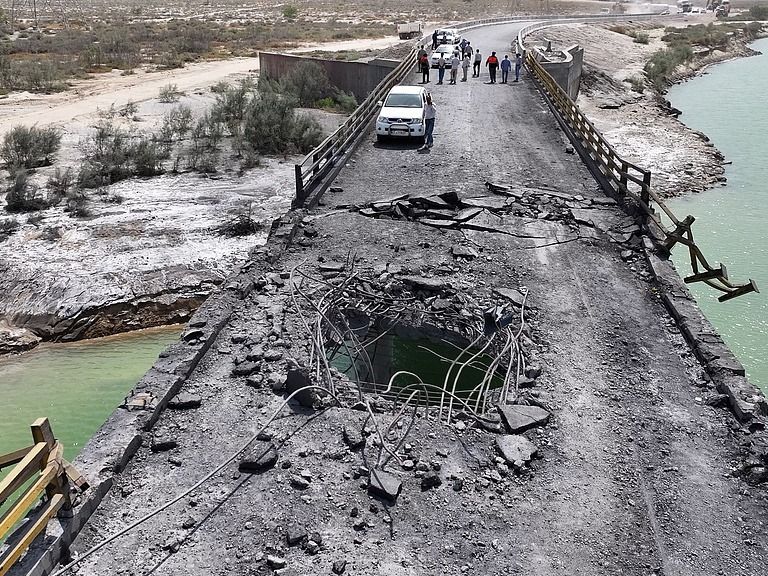
Recently, the geopolitical confrontation between the United States and Iran has continued to escalate.

Recently, the geopolitical confrontation between the United…

The New York Times has recently clashed with the Trump admi…

Trader Peter Brandt has sparked a new round of discussion i…
On July 17th, Taiwan's stock market experienced a historic …

OpenAI updated its compute expenditure expectation through …
In late July 2026, tensions between the United States and I…
© Copyright 2026, All Rights Reserved