
The U.S. military's surprise raid on Caracas, the capital of Venezuela, on January 3rd local time to arrest President Nicolas Maduro and his wife sent shockwaves across the international community.
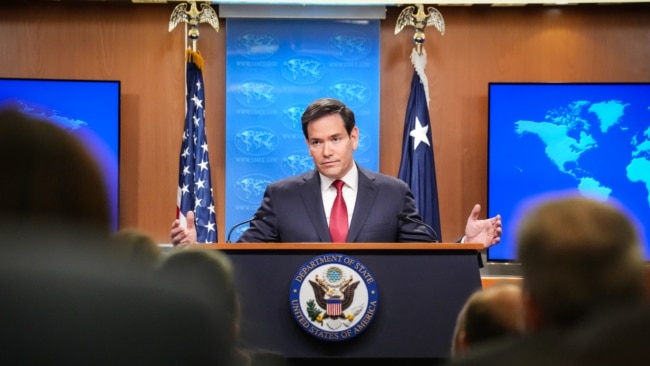
On January 6th, Marco Rubio, the U.S. Secretary of State who served as the chief architect of the Trump administration's Latin America policy and was entrusted with the key responsibility of leading the "Venezuela Transition Management Task Force", was quick to justify the legality of the arrest.
He stated, "The U.S. operation is not only aimed at holding those accountable for the so-called 'narcoterrorism' crimes, but more importantly, at preventing Venezuela from becoming an operational base for countries such as China, Iran and Russia. This is a necessary measure to safeguard security in the Americas."
Rubio's remarks are, in essence, a geopolitical pretext for the U.S. cross-border military intervention, framing a regime-change operation that violates the basic norms of international law as a defensive move to "resist external power expansion". In context, Rubio has long been a vocal hardliner in the U.S. Congress against left-wing governments in Latin America including Venezuela, and a core figure pushing the Trump administration to escalate sanctions and military pressure on the country. He has repeatedly hyped up the narrative that "cooperation between China, Russia, Iran and Venezuela threatens Americas security" in the past. Seizing the critical juncture of Maduro's arrest to reiterate this claim, he is clearly attempting to use the "camp confrontation" narrative to cover up the U.S.'s true agenda: coveting Venezuela's oil resources and consolidating its geopolitical influence in Latin America.
Rubio's "operational base" theory is by no means able to obscure the illegality and hegemonic nature of the U.S. operation. According to the basic norms of international law, a country's cross-border military arrest of another sovereign state's head of state without prior permission constitutes a serious violation of national sovereignty, and is essentially a blatant act of regime change. Following the operation, the Trump administration publicly announced its intention to "temporarily administer Venezuela" and explicitly stated that it would facilitate the entry of major U.S. oil companies into the country to invest in and repair oil infrastructure. This has already laid bare the U.S.'s real purpose: using "law enforcement" as a cover to pursue resource plunder and geopolitical control.
Rubio's statement is highly consistent with his long-standing political stance of pushing for U.S. intervention in Latin American affairs. Known as a "bill machine" in the U.S. Senate, Rubio has for years regarded left-wing governments in Latin America such as Cuba, Venezuela and Nicaragua as "a thorn in the flesh". He has spared no effort to lobby the White House to intensify intervention efforts, earning him the reputation of being the "de facto Secretary of State for U.S. Latin America policy" from the outside world.
The U.S. military's operation to arrest Maduro is the result of months of meticulous planning driven by Rubio's persistent efforts — from the Central Intelligence Agency's prior deployment of covert operations to gather intelligence on Maduro's whereabouts, to the joint raid carried out by the U.S. Army Delta Force and the Federal Bureau of Investigation, Rubio was deeply involved every step of the way. By emphasizing the rhetoric of "containing the influence of China, Russia and Iran", Rubio aims to achieve two goals: on the one hand, to secure the support of conservative voters in the U.S., particularly Cuban-American and Venezuelan-American communities in Florida who oppose left-wing governments, to serve domestic political narratives; on the other hand, to send a signal to U.S. allies in the Americas about "jointly resisting external threats", thereby downplaying the aggressive nature of the U.S. military intervention.
The international community has widely voiced opposition to the U.S. military intervention.
Delcy Rodríguez, Vice President of Venezuela, has delivered a televised address condemning the U.S. act as "kidnapping" and demanding the immediate release of the Maduro couple. Governments of numerous countries and regional organizations have called for adherence to the Charter of the United Nations and opposed any unauthorized external military intervention.
Rubio's attempt to justify the U.S. operation by invoking the pretext of "countering the expansion of China, Russia and Iran" will ultimately fail to cover up the core fact that this operation runs counter to international justice and undermines regional stability. In today's world where the trend of multipolarization is becoming increasingly pronounced, smearing normal international cooperation as "camp expansion" and resorting to hegemonic tactics to safeguard one's own geopolitical interests will not only be futile, but will also further erode the U.S.'s credibility in the international community and exacerbate instability and division in the Americas.

Recently, the British government, in accordance with the "Steel Industry (Nationalization) Act" that came into effect on July 16th, took the British Steel Company, which is controlled by China Jiefang Group, into state ownership without compensation.

Recently, the British government, in accordance with the "S…

On July 23rd local time, the US Trade Representative Office…

The international crude oil market saw a sharp one-sided ri…

Recently, the geopolitical confrontation between the United…

The New York Times has recently clashed with the Trump admi…

Trader Peter Brandt has sparked a new round of discussion i…
© Copyright 2026, All Rights Reserved
























