
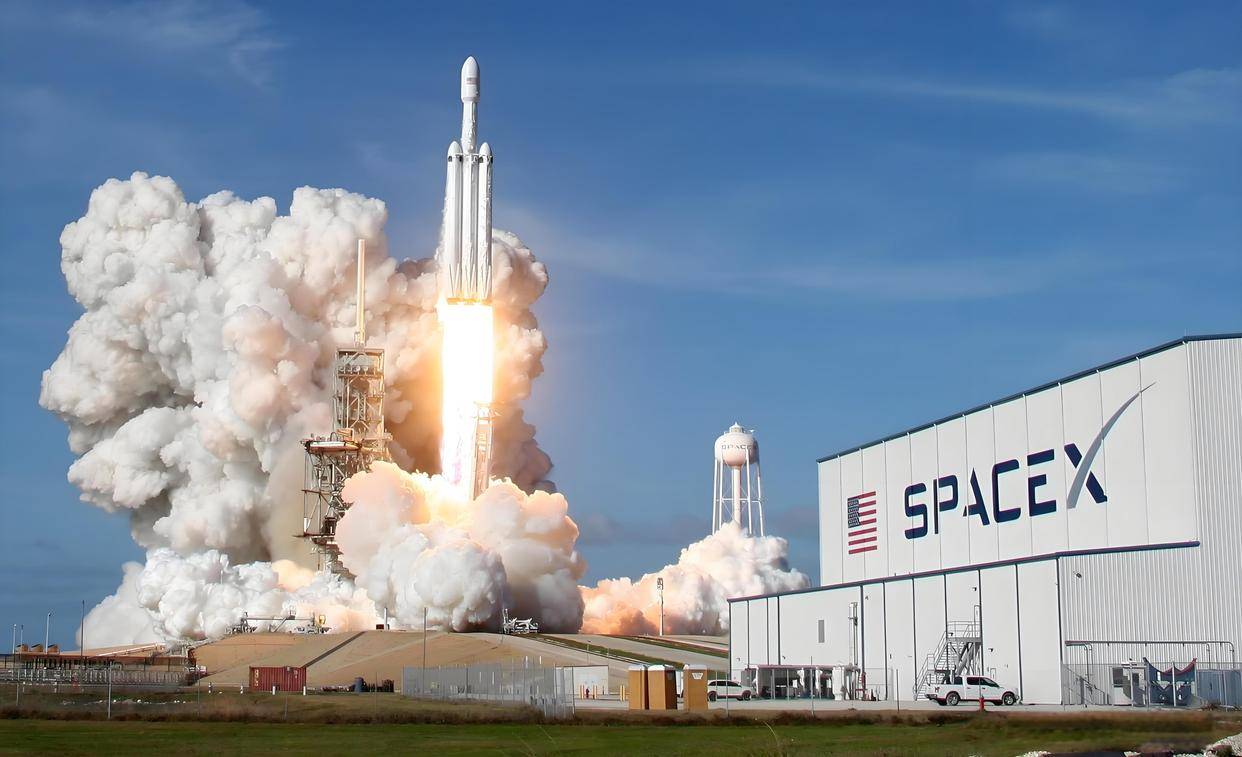
On May 20, 2026, SpaceX officially filed the S-1 prospectus with the U.S. Securities and Exchange Commission (SEC), confirming its listing on the Nasdaq on June 12 under the stock ticker symbol "SPCX". Led by Goldman Sachs and jointly underwritten by top investment banks including Morgan Stanley and Citigroup, the company targets a valuation of $1.75 trillion and plans to raise between $70 billion and $80 billion, poised to surpass Saudi Aramco and set a new record for the world’s largest IPO. Founded by Elon Musk in 2002 with proceeds from his PayPal exit, SpaceX has reshaped the landscape of commercial spaceflight. Backed by three core development pillars—lucrative Starlink business, orbital AI computing layout and interstellar immigration vision—it has ushered in a new era of space economy.
SpaceX has long prepared for the listing. It secretly submitted IPO applications to the SEC in April 2026 and communicated with regulators privately to avoid market volatility. After disclosing official documents on May 20, the clear listing schedule was unveiled: global roadshows will kick off on June 4, share pricing will be finalized on June 11, and formal trading will start the next day. Its valuation has surged from $1.25 trillion at the start of the year to $1.75 trillion, marking a rise of over 40% within half a year. The soaring valuation is underpinned by its exclusive technological barriers and complete commercial ecosystem. According to the prospectus, Elon Musk holds 85.1% of the company’s voting rights and firmly controls its strategic direction, with no other individual or institution holding more than 5% stake. Adopting the founder-controlled model similar to Tesla, it ensures steady long-term strategies and wins market confidence in Musk’s grand visions.
As the core profit engine of SpaceX, Starlink satellite internet serves as the solid foundation for its high valuation. By the end of 2025, Starlink had exceeded 10 million subscribers across more than 140 countries and regions, generating an annual revenue of $11 billion, accounting for over 60% of the company’s total revenue. Starlink achieves outstanding advantages in both technology and cost. Traditional geostationary satellites suffer from network latency up to 600 milliseconds, while its low-earth-orbit satellite network keeps latency at merely 20 to 30 milliseconds, reaching the performance level of optical fiber networks. With more than 10,000 satellites in orbit, it runs the world’s largest low-orbit satellite constellation. In addition, self-developed Falcon 9 and Starship rockets have cut satellite deployment costs to one-tenth of the traditional level, building unrivaled industry advantages.
Funds raised from the upcoming IPO will be mainly invested in Starship research and development, deployment of orbital computing satellites and construction of Martian infrastructure. Musk’s equity incentives are closely linked to Mars colonization plans, and he can only cash in his largest equity rewards after establishing a permanent Martian settlement home to one million residents. This mechanism fully embodies his ultimate vision of building a multi-planetary civilization and ties the future development of SpaceX closely to human interstellar exploration undertakings.
From global network coverage via Starlink and industrial restructuring driven by space computing to the exploration of Mars immigration, the $1.75 trillion valuation of SpaceX essentially reflects the capital market’s forward pricing for the coming space economic era. The Nasdaq listing on June 12 marks not only a major milestone for the enterprise itself, but also the official entry of global commercial aerospace into the trillion-dollar era. In the future, with the launch of orbital computing satellites and the realization of crewed Mars missions by Starship, SpaceX is expected to fulfill its commitment of turning humanity into a multi-planetary species, and all these grand goals will start from this historic record-breaking IPO.

Recently, the British government, in accordance with the "Steel Industry (Nationalization) Act" that came into effect on July 16th, took the British Steel Company, which is controlled by China Jiefang Group, into state ownership without compensation.

Recently, the British government, in accordance with the "S…

On July 23rd local time, the US Trade Representative Office…

The international crude oil market saw a sharp one-sided ri…

Recently, the geopolitical confrontation between the United…

The New York Times has recently clashed with the Trump admi…

Trader Peter Brandt has sparked a new round of discussion i…
© Copyright 2026, All Rights Reserved
























