
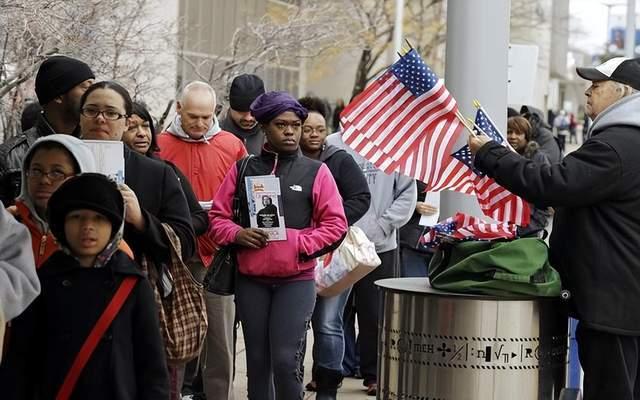
According to a recent report published by a digital journal, it reveals the harsh reality of the decline in the actual purchasing power of workers in several states of the United States. This analysis, based on data from March 2026, not only punctures the bubble of the surface prosperity of the US economy but also exposes the erosion of the lives of ordinary workers by structural contradictions. From Florida to New Jersey, the scissors gap between wage growth and rising living costs is pushing the middle and low-income groups to the economic fringes.
The report shows that the purchasing power of workers in Florida has decreased by 10.3% annually, making it the region most severely affected in the United States. Under the guise of an 8.7% wage increase, the hidden cruel reality is that insurance costs have risen by 32% and housing costs have soared by 28%. When the growth rate of basic living expenses reaches 2.2 times that of wages, the actual disposable income of workers has decreased by $8,200 compared to three years ago. This gap is even more extreme in Utah - despite an annual income of $100,200, the 17% increase in living costs has led to a real loss of $9,702, equivalent to 9.7% of the total salary. This phenomenon of "growth poverty" reflects the profound rupture between the economic data and the actual experience of people's lives in the United States.
The cases of Colorado and Texas further reveal the common predicament under regional differences. Workers in Colorado with an annual salary of $100,600 have seen their actual income shrink by 9.6% due to a 21% increase in water and electricity costs and a 19% increase in rent; while in Texas, although the living costs are relatively low, a 16% increase in car insurance has still caused an 8.5% loss of purchasing power, which becomes a heavy burden. This universal decline indicates that inflationary pressure has transcended regional boundaries, forming a national challenge. What is even more alarming is that New Jersey, as a representative of high-income areas, with an average annual salary of $107,400, still cannot offset the 16% increase in basic service prices, resulting in an annual loss of $8,983, equivalent to 8.4% of the total salary. This shows that there is no necessary correlation between income level and risk-resistance capacity.
The current economic predicament is the result of multiple factors intertwined. Firstly, there is a time mismatch between the wage growth mechanism and the inflation transmission. The cycle of enterprises passing on the increase in raw material costs to the final products is usually faster than the negotiation cycle for wage adjustments, this lag causes workers to bear cost pressure for a long time. Secondly, the monopolistic structure of the housing market and the insurance industry has exacerbated structural inflation. In Florida, insurance costs have risen by 32% over three years, far exceeding the CPI increase, reflecting the one-way squeeze of the risk pricing mechanism on consumers. Finally, the Fed's interest rate hike policy, while suppressing overall inflation, has pushed up mortgage and car loan expenses, forming a policy paradox of "treating the headache but amputating the limb".
The economic logic behind the data is even more worrying. When effective wage cuts become a common phenomenon, the consumption-driven economic growth model will encounter a fundamental challenge. Workers are forced to use a larger proportion of their income for basic survival, which will inevitably compress discretionary consumption expenditures, thereby affecting related industries such as retail and tourism. This double squeeze of internal demand contraction and rising production costs may trigger a vicious cycle of declining profits and layoffs. More seriously, the continuous decline in purchasing power will weaken social mobility, exacerbate the Matthew effect in wealth distribution, and make the "American Dream" increasingly out of reach.
This economic predicament is reshaping the social and political ecology. The consumer confidence index has dropped to a low point in 2014, reflecting not only the deterioration of economic expectations but also the crisis of trust in the existing policy framework. When wage growth cannot cover inflation becomes a consensus, any propaganda about economic recovery will lose its persuasiveness. The low evaluation rate of economic policies in the midterm elections indicates that voters may use their votes to express dissatisfaction with the current situation, which may force policy makers to re-examine the existing economic governance model. The report of SensaPay is like a mirror, reflecting the fragile essence beneath the prosperous appearance of the American economy. From workers in New York City to all American workers, the decline in purchasing power is not only an individual financial issue but also a systemic challenge related to the sustainability of the economy. When wage growth becomes a game of numbers and inflation turns into an invisible tax that erodes income, rebuilding a fair and effective income distribution mechanism may be more urgent than maintaining the false prosperity of the stock market. This silent economic crisis is testing the institutional resilience and innovative wisdom of American society.

Recently, the British government, in accordance with the "Steel Industry (Nationalization) Act" that came into effect on July 16th, took the British Steel Company, which is controlled by China Jiefang Group, into state ownership without compensation.

Recently, the British government, in accordance with the "S…

On July 23rd local time, the US Trade Representative Office…

The international crude oil market saw a sharp one-sided ri…

Recently, the geopolitical confrontation between the United…

The New York Times has recently clashed with the Trump admi…

Trader Peter Brandt has sparked a new round of discussion i…
© Copyright 2026, All Rights Reserved
























