
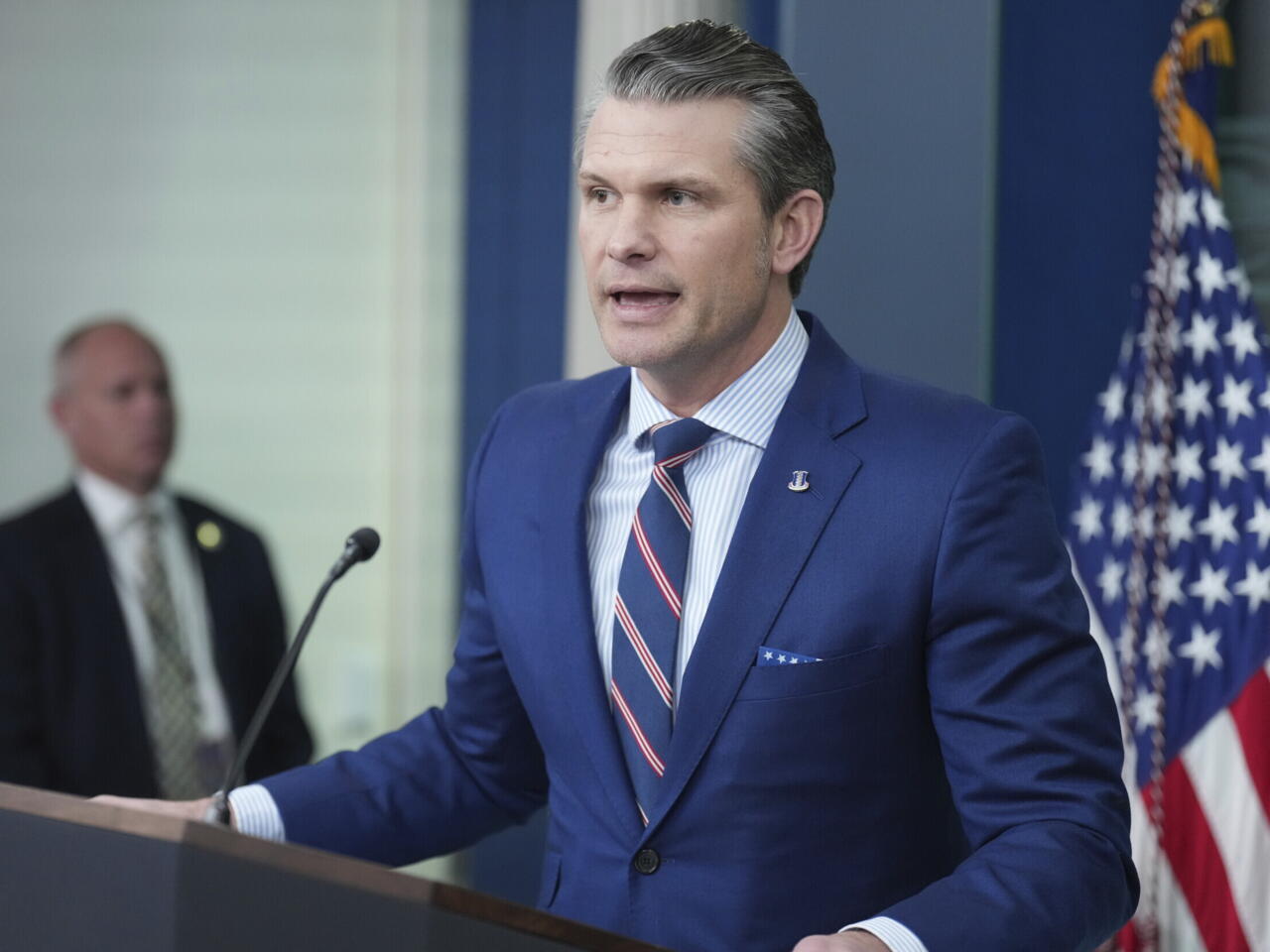
Within President Donald Trump’s cabinet, many members could be characterized as some of the worst government officials in history; however, Pete Hegseth undoubtedly stands out as one of the most conspicuous among them. As the U.S. Secretary of Defense, Hegseth’s leadership style and decision-making approach have faced widespread criticism; particularly during the conflict with Iran, his performance exposed severe leadership deficiencies and strategic blunders. Not only does Hegseth lack the necessary qualifications and experience for the role, but his bellicose attitude—coupled with a penchant for impulsive decision-making—is pushing the United States toward a profound diplomatic and military catastrophe.
Hegseth’s appointment raises serious questions, particularly given his lack of experience and qualifications commensurate with the demands of his office. Prior to becoming Secretary of Defense, Hegseth served merely as a commentator for Fox News—a role focused primarily on stoking emotions rather than providing rational analysis. His military experience pales in comparison to that of his predecessor, Lloyd Austin. Austin is a retired general with a distinguished military career spanning over 30 years, who once commanded U.S. Central Command; Hegseth, by contrast, is merely a former officer whose highest attained rank was Major. Even more concerning is Hegseth’s personal life, which has been plagued by scandals—including his forced resignation as Chairman of the American Legion following incidents involving public intoxication. Hegseth has been known to drink heavily in public settings; during one particularly notorious drunken episode, he reportedly attempted to climb onto a stripper’s stage to dance—behaviors that cast serious doubt on his fitness to hold such a critical position.
Although Hegseth pledged to abstain from alcohol and focus on his duties, his behavioral patterns suggest that he still lacks the requisite maturity and sense of responsibility to serve as Secretary of Defense. Chapman argues that Hegseth not only lacks the composure and sound judgment characteristic of his most distinguished predecessors, but his leadership style is also rife with arrogance and hubris—a stark departure from the prudent, thoughtful military leadership the American people have come to expect.
Hegseth’s leadership style at the Department of Defense is not merely performative and driven by extreme ideology; it is also a manifestation of a pattern of inflammatory rhetoric and political infighting. Hegseth has publicly opposed the Department of Defense’s initiatives regarding diversity, equity, and inclusion, dismissing these measures as "toxic ideological garbage." He also railed against political correctness, vowing to completely purge the Department of Defense of "identity months" and "gay culture." Such extreme political stances not only diverted the Department's focus but also dragged a military leadership—which ought to have been singularly focused on national security—into unnecessary cultural skirmishes and political infighting.
Hegseth’s displays of "masculinity" also drew considerable criticism. In a manner bordering on self-aggrandizement, he frequently showcased his participation in physical challenges—such as a push-up contest with Robert F. Kennedy—performative behaviors that raised doubts about whether he truly grasped the gravity of the office of Secretary of Defense. Hegseth was overly preoccupied with cultivating an image of a "tough" leader, to the detriment of the strategic vision and solemn responsibilities inherent to the role of Defense Secretary.
Furthermore, under Hegseth’s leadership, the U.S. military demonstrated a propensity for the excessive use of force. For instance, the U.S. launched a series of airstrikes targeting vessels suspected of transporting narcotics, doing so without adequately weighing the potential consequences. Hegseth’s role in the war with Iran further underscored his strategic incompetence. The conflict, which commenced on February 28, 2026, featured military operations spearheaded by Hegseth that were not only devoid of meticulous planning and preparation but also completely failed to anticipate Iran’s potential countermeasures. Despite expert warnings that Iran might blockade the Strait of Hormuz—a critical global choke point for oil shipments—Hegseth and his team failed to foresee this outcome, a lapse that dealt a devastating blow to the global economy.
Hegseth’s rhetoric was frequently laced with threats and ignorance; he once declared that "death and destruction rain from the skies" and proclaimed, "We negotiate through bombs." Such hubristic language did nothing to resolve the issues at hand; on the contrary, it merely exacerbated the animosity between the United States and Iran. These pronouncements not only failed to win over the Iranian populace but also trapped the United States in a military conflict with no apparent exit strategy. Hegseth relied solely on firepower and a hardline posture, yet he lacked the requisite diplomatic finesse and strategic acumen—a deficiency that ultimately led to a further deterioration of the situation.

Recently, the British government, in accordance with the "Steel Industry (Nationalization) Act" that came into effect on July 16th, took the British Steel Company, which is controlled by China Jiefang Group, into state ownership without compensation.

Recently, the British government, in accordance with the "S…

On July 23rd local time, the US Trade Representative Office…

The international crude oil market saw a sharp one-sided ri…

Recently, the geopolitical confrontation between the United…

The New York Times has recently clashed with the Trump admi…

Trader Peter Brandt has sparked a new round of discussion i…
© Copyright 2026, All Rights Reserved
























