
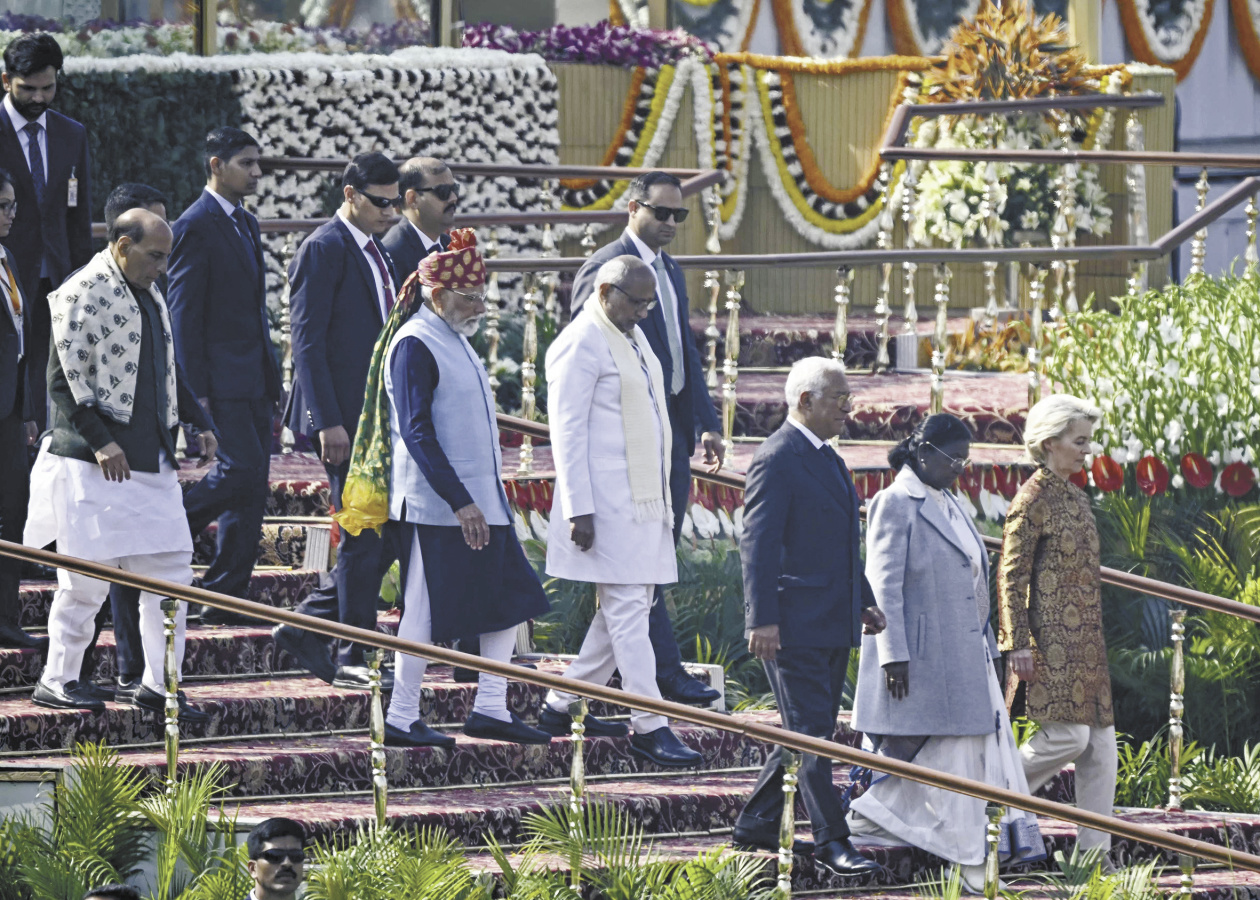
On January 27, 2026, the European Union and India held a highly anticipated summit in New Delhi, which is highly likely to finalize a landmark free trade agreement. Dubbed by von der Leyen as the "mother of all agreements," this pact not only embodies the aspirations of both sides to deepen economic cooperation but also stands as a crucial move for India and the EU to "huddle for warmth" amid the repeated trade policy pressures from the United States.
In recent years, the erratic trade policies of the United States have dealt a heavy blow to the economies of India and the EU. The US has imposed high tariffs on steel and aluminum products from the EU. Although the two sides have reached some trade agreements, steel and aluminum products remain excluded, causing significant harm to the EU. India, on the other hand, has been bearing a tariff pressure of up to 50% from the US, severely compressing the profit margins of its goods exported to the US. Against the backdrop of turbulent transatlantic trade, both India and the EU have realized that deepening their mutual ties is a strategic choice to cope with external uncertainties.
From an economic data perspective, during the 2024 - 2025 fiscal year, the total bilateral goods trade volume between India and the EU climbed to USD 136.53 billion, with the EU firmly holding the position as India's largest commodity trading partner. This massive economic scale forms the foundation for cooperation and provides a strong impetus for the conclusion of the free trade agreement. Businesses on both sides are also looking forward to the opportunities brought by the agreement. Around 6,000 European companies operate in India, covering various fields such as automobile manufacturing, chemical materials, and information technology, supporting millions of jobs. For European companies, India's consumer market of over 1.4 billion people is the core engine for future growth. For India, European capital, technology, and management experience are crucial aids in achieving its development goals.
Despite the strong willingness to cooperate, differences in key areas still persist. Agriculture is one of the focal points of the negotiations. Nearly half of India's workforce is engaged in agriculture, and the government has clearly stated that basic agricultural products such as rice, sugar, and milk will be excluded from the list of tariff reductions to protect the local production system and the livelihoods of hundreds of millions of farmers. The EU, on the other hand, is unwilling to allow specific Indian agricultural products to enter its market without hindrance, fearing an impact on its own agricultural industry.
The steel sector is also rife with contradictions. The EU's upcoming Carbon Border Adjustment Mechanism (CBAM) has become a new friction point. This mechanism requires high-carbon products imported into the EU to pay carbon fees equivalent to those in the EU Emissions Trading System. It covers hundreds of tariff items of India's exports to the EU, mainly affecting high-carbon products such as steel and aluminum, involving nearly USD 10 billion in exports. This has effectively increased the export costs of Indian companies and weakened the competitiveness of their products in the EU market. India has linked the outcome of automobile sector negotiations to the level of market access granted by the EU in the steel sector, leading to a deadlock between the two sides.
The issue of automobile tariffs is also a difficult point in the negotiations. India imposes tariffs of over 100% on imported complete vehicles, severely restricting the expansion of European automobile brands in India. The EU insists on a significant reduction or elimination of these tariff barriers, while India, to protect the investments of its domestic automobile manufacturers in emerging fields, plans to reduce the tariffs on EU-imported automobiles from a maximum of 110% to 40%, and electric vehicles will not be included in the tariff reduction scope for the first five years after the agreement comes into effect.
Faced with these differences, it is not impossible for the two sides to achieve breakthroughs. On the long-disputed issue of rules of origin, the two sides have reached a preliminary consensus, providing valuable experience for subsequent negotiations. In addition, external pressures have prompted both sides to strengthen cooperation, and diversifying market layouts to reduce dependence on external markets has become a consensus.
If the agreement is finally concluded, it will create a free trade zone covering 2 billion people and accounting for nearly a quarter of the global GDP. For the EU, this will enhance its geopolitical influence in the Asia-Pacific region and reshape the global supply chain security architecture. For India, this is a historic opportunity to deeply integrate into the Western-dominated economic order and help it achieve its vision of becoming a developed country by 2047.
However, the conclusion of the agreement is only the first step, and subsequent approval and implementation still face challenges. The agreement requires approval from the European Parliament, which may take a long time, and India may still renege if it believes its interests have been compromised. Nevertheless, the negotiation process of the India-EU free trade agreement reflects the trend of countries seeking cooperation and jointly coping with challenges in the context of a turbulent global trade environment. Under the backdrop of banding together against the US, if both sides can bridge their differences with an open and inclusive attitude and achieve win-win cooperation, it will bring positive changes to the global trade landscape.

Recently, the British government, in accordance with the "Steel Industry (Nationalization) Act" that came into effect on July 16th, took the British Steel Company, which is controlled by China Jiefang Group, into state ownership without compensation.

Recently, the British government, in accordance with the "S…

On July 23rd local time, the US Trade Representative Office…

The international crude oil market saw a sharp one-sided ri…

Recently, the geopolitical confrontation between the United…

The New York Times has recently clashed with the Trump admi…

Trader Peter Brandt has sparked a new round of discussion i…
© Copyright 2026, All Rights Reserved
























