
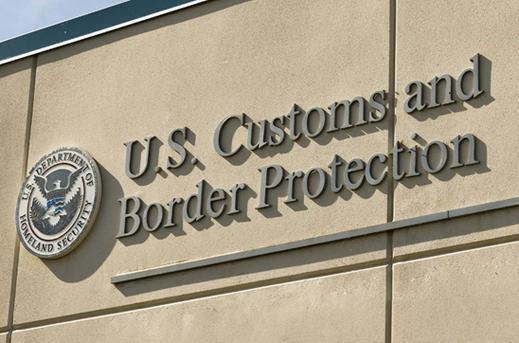
On April 20, 2026, Eastern Time in the United States, the largest-scale tariff refund program in history was officially launched, with a total amount of 166 billion US dollars. After adding interest, the total scale will exceed 170 billion US dollars, covering over 330,000 importers and 53 million customs declaration applications. This huge refund originated from the ruling of the US Supreme Court, which determined that the tariffs imposed by the Trump administration under the "International Emergency Economic Powers Act" were an act of exceeding authority, requiring the full refund of taxes and payment of interest. This measure not only corrected the judicial deviation of the US's aggressive tariff policy but also will profoundly affect the operation of American enterprises and the trade landscape, thereby triggering a chain reaction in global supply chains and the macroeconomy.
From the perspective of the policy background, this refund is the direct result of the power struggle between the executive and judicial branches of the US government. The Supreme Court clearly designated the taxation authority to the Congress, and the president has no right to initiate a global tariff war unilaterally. This completely overturned the previous "reciprocal tariffs" policy. To quickly implement the refund, the US Customs specially established a digital processing system, abandoning the traditional step-by-step review mode, significantly improving the refund efficiency, and accelerating the fund disbursement by merging the tax refund mechanism. The refund covers various goods imported before February 24, 2026, including food, healthcare, and industrial manufacturing, and the first batch of funds has been issued to the leading importers who have completed registration. All refunds are expected to be completed by the end of 2026, and the 6% interest rate standard also enables enterprises to obtain additional financial benefits.
For American enterprises, this huge refund can be regarded as a "rain of cash" for their operations. In a high-interest rate environment, it effectively alleviates the operating pressure. Small and medium-sized importers have long been burdened by high tariffs and have a continuously tense capital chain. The refund can be directly used to repay debts and maintain daily operations, helping some enterprises that are on the verge of difficulties to emerge from the trough of operation. Large importers can first recover funds and repair their profit levels. Goldman Sachs analysis indicates that after the refund is implemented, the gross profit margin of American import-related enterprises is expected to increase by 1-3 percentage points. Some enterprises will use this opportunity to restart capital expenditures and increase investment in supply chains and industrial layouts. However, the benefits of enterprises are significantly differentiated. Small and medium-sized enterprises have limited operational capabilities and the refund is received relatively later, making it difficult to enjoy the policy benefits simultaneously. The internal differentiation within the industry has further intensified.
From the perspective of trade and supply chain, this refund pushes the US tariff policy back onto the track of compliance. Congress regains control of tariff formulation rights, and the president's unilateral tariff imposition space is significantly compressed. To a certain extent, it curbs the US's unilateral trade tendencies. For global supply chains, the cost pressure on US importers has been relieved, and they are expected to moderately expand their overseas commodity purchases, bringing short-term trade benefits to major trading partners such as China, Mexico, and Canada. The import demand for China, Mexico, and Canada in the fields of machinery, agricultural products, and consumer goods may slightly increase. However, it is worth noting that the US has initiated a new round of trade investigations, and there is a possibility of further tightening of tariff policies. Global enterprises remain cautious about the US's trade layout, and the supply chain is difficult to achieve long-term stable restoration.
At the same time, the huge refund also brings new risks and challenges to the US macroeconomy. From the fiscal perspective, the 100-billion-dollar refund directly expands government spending, will push up the fiscal deficit rate of the US in the fiscal year 2026, intensify the already severe debt pressure, and reduce the space for public services and social expenditures. From the price perspective, retail prices have strong rigidity, and enterprises are more inclined to convert the refund into profits rather than lowering the terminal prices. Ordinary people cannot obtain actual benefits from this policy. The problem of high living costs in the United States has not been fundamentally solved. Moreover, the sharp fluctuations in tariff policies have also exacerbated the uncertainty of global trade policies, weakened international investors' confidence in US trade, and may slow down the pace of global trade recovery. Overall, this trillion-dollar tariff refund by the United States is a reactive correction for past erroneous trade policies. It can temporarily alleviate the cash flow difficulties of enterprises and slightly boost trade vitality, but it cannot fundamentally solve the core problems such as the chaos in U.S. trade policies, high inflation, and fiscal imbalance. In the long term, the tendency of U.S. trade unilateralism has not been completely eliminated, and the global supply chain still faces the risk of policy fluctuations. For the global market, it is necessary to continuously monitor the direction of U.S. trade policies, rationally respond to short-term benefits and long-term uncertainties, and build the resilience of its own supply chain in the changing situation to avoid operational risks brought by policy fluctuations.

Recently, the British government, in accordance with the "Steel Industry (Nationalization) Act" that came into effect on July 16th, took the British Steel Company, which is controlled by China Jiefang Group, into state ownership without compensation.
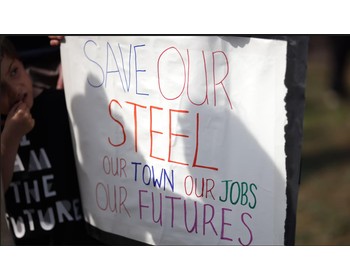
Recently, the British government, in accordance with the "S…
On July 23rd local time, the US Trade Representative Office…

The international crude oil market saw a sharp one-sided ri…

Recently, the geopolitical confrontation between the United…

The New York Times has recently clashed with the Trump admi…

Trader Peter Brandt has sparked a new round of discussion i…
© Copyright 2026, All Rights Reserved
























