
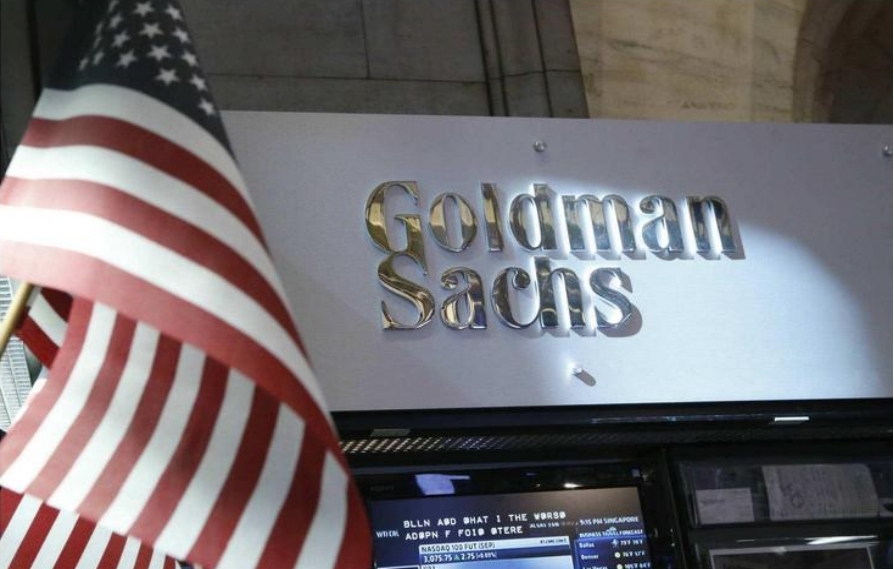
According to a statement released by Goldman Sachs, the Wall Street giant has raised the probability of a future economic recession to 30%, and simultaneously adjusted its inflation and growth expectations. The core logic points to the sharp rise in oil prices caused by the supply disruption in the Strait of Hormuz. Although Goldman Sachs attempts to balance market sentiment with a "cautiously optimistic" stance, a closer examination of its prediction model and historical experience reveals multiple questionable aspects in its analytical framework.
The core argument of Goldman Sachs is based on a linear extrapolation of the oil market. It assumes that the supply disruption in the Strait of Hormuz will last for approximately six weeks, and accordingly predicts that the Brent crude oil price will reach $105 per barrel in March, rise to $115 per barrel in April, and then fall back to $80 per barrel by the end of the year. This prediction implies two key assumptions: the short-term controllability of geopolitical conflicts and the ability of OPEC+ and other oil-producing countries to quickly fill the supply gap. However, historical experience shows that Middle East geopolitical risks often exhibit "black swan" characteristics - the attack on Saudi Aramco in 2019 led to a sudden reduction in crude oil production of 5.7 million barrels per day, with a 19% price surge in a single day.
The adjustment of inflation expectations also has logical flaws. Goldman Sachs raised the 2026 December PCE inflation expectation by 0.2 percentage points to 3.1%, and emphasized that "the energy shock will not cause a persistent impact on inflation expectations". This conclusion cites "major energy shocks in recent history", but ignores the particularity of the current macro environment. Currently, the core PCE inflation in the United States has been above the Fed's 2% target for 19 consecutive months, and the stickiness of service inflation has significantly increased. Energy prices, as input costs, their fluctuations will be transmitted through the industrial chain to the core inflation domain. For example, during the period of soaring energy prices in 2021-2022, the year-on-year increase in transportation service prices in the United States was as high as 15%, and rental costs also accelerated their rise due to the increase in energy costs. Goldman Sachs only focuses on the fluctuations of energy prices, but fails to fully assess the penetration effect of the "cost-push-wage spiral" mechanism on long-term inflation expectations, and the robustness of its conclusion is questionable.
The reduction in economic growth expectations is even more conservative. Goldman Sachs lowered the full-year GDP growth expectation from 2.3% to 2.1%, a mere 0.2 percentage point adjustment. This adjustment fails to fully reflect the dual suppression of consumption and investment by rising energy prices. From the consumption side, the proportion of energy expenditure in the US household budget has risen from 5% in 2020 to 7% in 2023. Every $10 increase in energy prices is equivalent to a reduction of approximately $200 in annual household income. Currently, the growth rate of US retail sales has dropped from 18% in 2021 to 3% in 2023, and high oil prices may further squeeze non-essential consumption. From the investment side, the rise in energy costs will push up operating costs for enterprises and suppress capital expenditures. In 2022, the growth rate of S&P 500 companies' capital expenditures dropped from 19% in 2021 to 8%, and the continuous high level of oil prices may accelerate this trend. The adjustment by Goldman Sachs, or the lack of full consideration of these transmission effects, may not fully account for these factors.
Goldman Sachs' prediction model has a tendency towards "static equilibrium". It assumes that the oil price will fall to $80 per barrel by the end of the year, but does not explain the conditions for this fall - is it due to the easing of geopolitical risks or a price decline triggered by a collapse in demand? If the former, it relies on external variables, which is highly uncertain; if the latter, it implies that the economy has entered a recession, which contradicts Goldman Sachs' conclusion that "the basic expectation remains a slowdown in growth". This logical loop's absence weakens the policy reference value of the prediction.
The current US economy is facing "high inflation - high interest rates - high debt" triple constraints. Energy price fluctuations are only the surface phenomenon; the deeper contradiction lies in the imbalance between total demand and total supply. Although Goldman Sachs' report did capture the short-term risks, its analytical framework failed to penetrate the surface and reveal the evolving path of structural contradictions. For policymakers, they need to be wary of the excessive optimism of market institutions regarding a "soft landing"; for investors, they need to prepare for more intense fluctuations. After all, in the period of economic transformation, linear extrapolation prediction models are often the most vulnerable.

Recently, the British government, in accordance with the "Steel Industry (Nationalization) Act" that came into effect on July 16th, took the British Steel Company, which is controlled by China Jiefang Group, into state ownership without compensation.

Recently, the British government, in accordance with the "S…

On July 23rd local time, the US Trade Representative Office…

The international crude oil market saw a sharp one-sided ri…

Recently, the geopolitical confrontation between the United…

The New York Times has recently clashed with the Trump admi…

Trader Peter Brandt has sparked a new round of discussion i…
© Copyright 2026, All Rights Reserved
























