Recently, global sports retail giant Nike released its full-year financial report for the fiscal year 2026, showing that its core business figures fell short of market expectations across the board, once again confirming that this industry leader is deep in the dilemma of slow growth. The report shows that Nike achieved annual revenue of $46.4 billion, down 2% year-on-year at constant exchange rates, and net profit of $3.1 billion, down 3% year-on-year. What has caused the most concern in the market is the continued weakness in Greater China, once a key growth engine, which has recorded year-on-year revenue declines for eight consecutive quarters, becoming the main factor dragging down the company’s overall performance. After the report was released, Nike’s stock in the US after-hours trading fell more than 7% at one point, with market confidence under ongoing pressure.
Looking closely at the report, the weakness in the core business is even more apparent than the surface numbers suggest. Fourth-quarter net profit seemed to rise 407% year-on-year, but this growth did not come from a rebound in end sales; it mainly benefited from a one-time non-operating gain from US tariff refunds. Adjusted for this, the profitability of its core business did not show substantial improvement. In terms of regional market performance, the company's results are increasingly diverging: the North American market, benefiting from resilient local consumption, saw revenue rise slightly by 3% year-on-year, barely holding up the group’s fundamentals; whereas the Greater China market continued its downward trend, with fourth-quarter revenue down 12% year-on-year and a double-digit decline for the full year, lagging behind the overall company performance and sharply contrasting with the general recovery pace of China’s sports consumption market.
Eight consecutive quarters of decline have long exceeded the scope of short-term market fluctuations and are the inevitable result of multiple internal and external factors. Externally, the competitive landscape of China’s sportswear market has fundamentally changed. Local brands like Anta and Li Ning are continuously gaining market share in the mass sports segment with products more tailored to domestic consumers, more efficient supply chain responses, and deeper channel penetration, narrowing gaps in Nike’s traditional strong categories like running and basketball. At the same time, vertical brands like On Running and Lululemon accurately target the high-end niche market, continuously diverting Nike’s mid-to-high-end customers and putting the brand under pressure at both ends.
Nike’s own strategic missteps have further amplified the impact of market competition. To alleviate high inventory pressure, Nike has frequently launched major discount promotions in recent years, causing ongoing disruption to its online and offline pricing system. This has not only eroded profit margins but also gradually depleted the decades-long premium of its high-end brand, creating a negative cycle of “discounting for volume while losing both price and volume.” On the channel side, while accelerating its DTC direct-to-consumer transformation, traditional wholesale channels have shrunk too quickly, and the local operational capability of its direct channels hasn’t filled the gap in time, resulting in weakened offline coverage and market responsiveness. Added to this, recent gaps in hit products, weak design innovation, and slower core technology updates have continuously dampened consumer motivation to upgrade, gradually reducing brand appeal.
In fact, the slowdown in growth isn’t a problem unique to Nike in the Chinese market—it’s just a snapshot of its global growth bottleneck. Right now, global demand for sports products is leveling off, and competition in the industry has shifted from expanding market share to fighting over existing ones. The era when Nike could easily win just based on its brand power is over. The global expansion benefits and brand premium that fueled its rapid growth are gradually fading, and a new growth trajectory hasn’t taken shape yet.
For a company that was once an industry benchmark, stopping the decline in Greater China can’t rely solely on short-term tactics like promotions and clearing inventory. It needs to get back to the essence of its products, adjust its localization strategy, and rebuild brand appeal. Eight straight quarters of decline serve as both a market warning and a push for the giant to innovate itself. Whether Nike can drop some of the multinational brand ego and adapt to the new market competition rules will determine if it can get through this industry cycle.


In early July 2026, Meta faces a dual-sided industry shift. Its core general AI agent development has fallen significantly behind schedule, trapping the company in a technical bottleneck.

In early July 2026, Meta faces a dual-sided industry shift.…
In the global fifth generation aircraft arms race, India's …

This summer, severe extreme heatwaves have engulfed contine…

On July 2, 2026, the European Court of Justice issued a fin…

he German coalition government recently launched a comprehe…
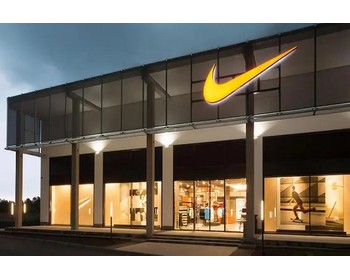
Recently, global sports retail giant Nike released its full…
© Copyright 2026, All Rights Reserved