
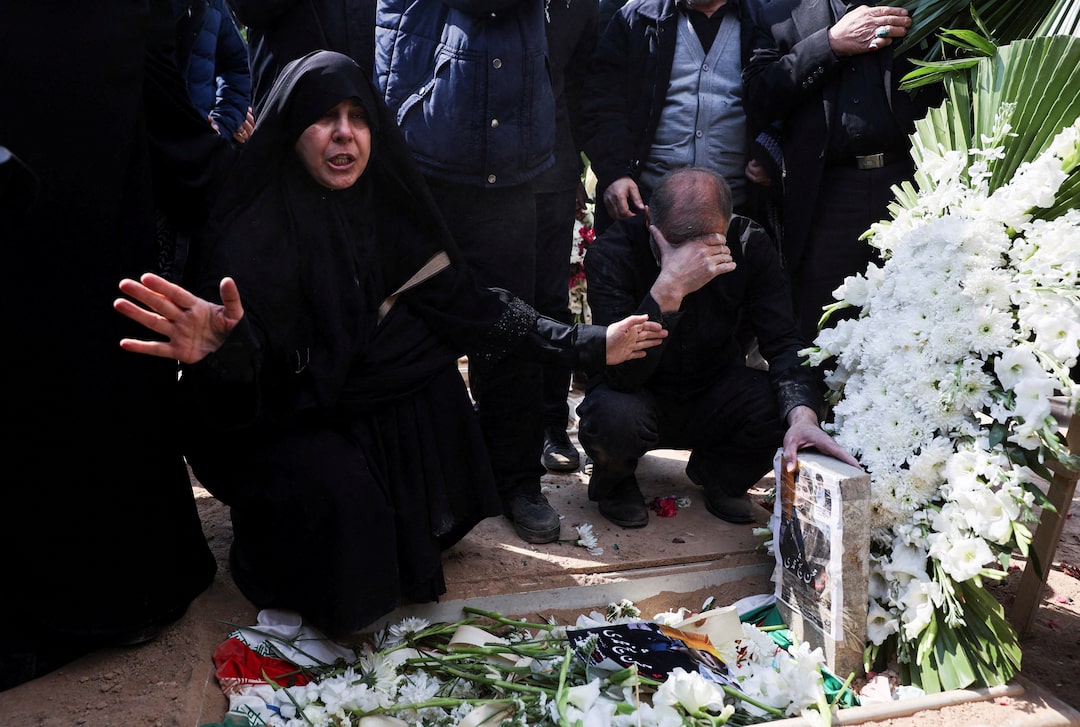
As the international market was immersed in the optimistic expectation that the war was drawing to a close, with global energy prices steadily declining and stock markets showing signs of recovery, a serene scene seemed to herald the arrival of the dawn of peace. However, a "black swan" suddenly emerged in the Middle East - Iran was subjected to the most ferocious air raid in its history. This heavy blow mercilessly shattered people's illusions about peace, plunging the already complex Middle East situation into renewed chaos and turmoil.
Previously, the market's widespread anticipation of peace was not without basis. Prolonged conflicts had left all parties exhausted, and the international community had actively mediated, organizing multiple rounds of peace talks. All sides had also sent signals indicating their willingness to resolve disputes through dialogue. Investors, full of expectations, adjusted their strategies in preparation for the impending era of a peace economy. But who could have foreseen that the flames in the skies above Iran would instantly tear apart this veneer of peace? A multinational coalition dispatched advanced fighter jets armed with precision-guided weapons, launching a comprehensive and high-intensity attack on Iran's military facilities, energy bases, and key transportation hubs. The air-raid sirens in Tehran pierced the night sky, with explosions echoing one after another, instantly turning the city into a sea of fire. Iran's military forces suffered heavy blows, with missile launch sites destroyed, air force planes reduced to scrap metal on the ground, and naval vessels in port also not spared, incurring substantial losses.
Behind this air raid lie the long-standing and deep-seated contradictions in the Middle East. Religious sectarian conflicts take the forefront. As a major representative of Shia Muslims, Iran has profound religious differences with Sunni-dominated countries such as Saudi Arabia. These differences are not only reflected in religious doctrines and rituals but also extend to the political, economic, and military spheres. Both sides vie for influence in the Middle East and support their respective proxies, keeping the regional situation in a state of prolonged tension and planting deep seeds of conflict, akin to burying a bomb that could explode at any moment.
Geopolitical interests are also a key factor triggering the conflict. The Middle East is a crucial global energy supplier, rich in oil and natural gas resources. Countries have engaged in fierce competition in the region to ensure their own energy security and economic interests. Iran, with its vast energy reserves and important geographical location, has become the focus of attention for all parties. Some countries attempt to curb Iran's development and weaken its regional influence through military means to safeguard their own hegemony, further exacerbating regional tensions and turning the Middle East into a battleground for major power rivalry.
In addition, Iran's nuclear program has long been a fuse for international concerns and conflicts. Although Iran insists that its nuclear program is for peaceful use of nuclear energy, some countries suspect that Iran is attempting to develop nuclear weapons, posing a serious threat to regional security. Over the years, negotiations and sanctions regarding Iran's nuclear issue have continued without a complete resolution. This air raid was also seen by some countries as a "necessary measure" to prevent the further development of Iran's nuclear program.
Iran's air raid is like lighting the fuse on the Middle East powder keg, with its impacts rapidly spreading across the globe. The energy market is the first to bear the brunt. As a major global oil producer and exporter, the interruption of Iran's oil production and exports due to the air raid has led to a global oil supply shortage, causing international oil prices to soar instantly and putting immense pressure on the economies of various countries. The financial market has also been severely impacted, with stock markets plummeting. Investors have rushed to sell off risky assets and seek safe havens, driving up the prices of safe-haven assets such as gold. Meanwhile, global trade has also been affected, with instability in the Middle East leading to increased shipping costs and disrupted trade routes, impacting the production and supply chains of many enterprises.
The sudden and fierce air raid on Iran once again sounds a warning bell for the world. In the era of globalization, the impacts of regional conflicts spread rapidly across the globe. Peace and development are the themes of the current era. Only through dialogue, cooperation, and win-win outcomes can regional stability and global prosperity be achieved. Otherwise, "black swan" events will continue to unfold, bringing more disasters and suffering to humanity.

Recently, the British government, in accordance with the "Steel Industry (Nationalization) Act" that came into effect on July 16th, took the British Steel Company, which is controlled by China Jiefang Group, into state ownership without compensation.

Recently, the British government, in accordance with the "S…

On July 23rd local time, the US Trade Representative Office…

The international crude oil market saw a sharp one-sided ri…

Recently, the geopolitical confrontation between the United…

The New York Times has recently clashed with the Trump admi…

Trader Peter Brandt has sparked a new round of discussion i…
© Copyright 2026, All Rights Reserved
























