
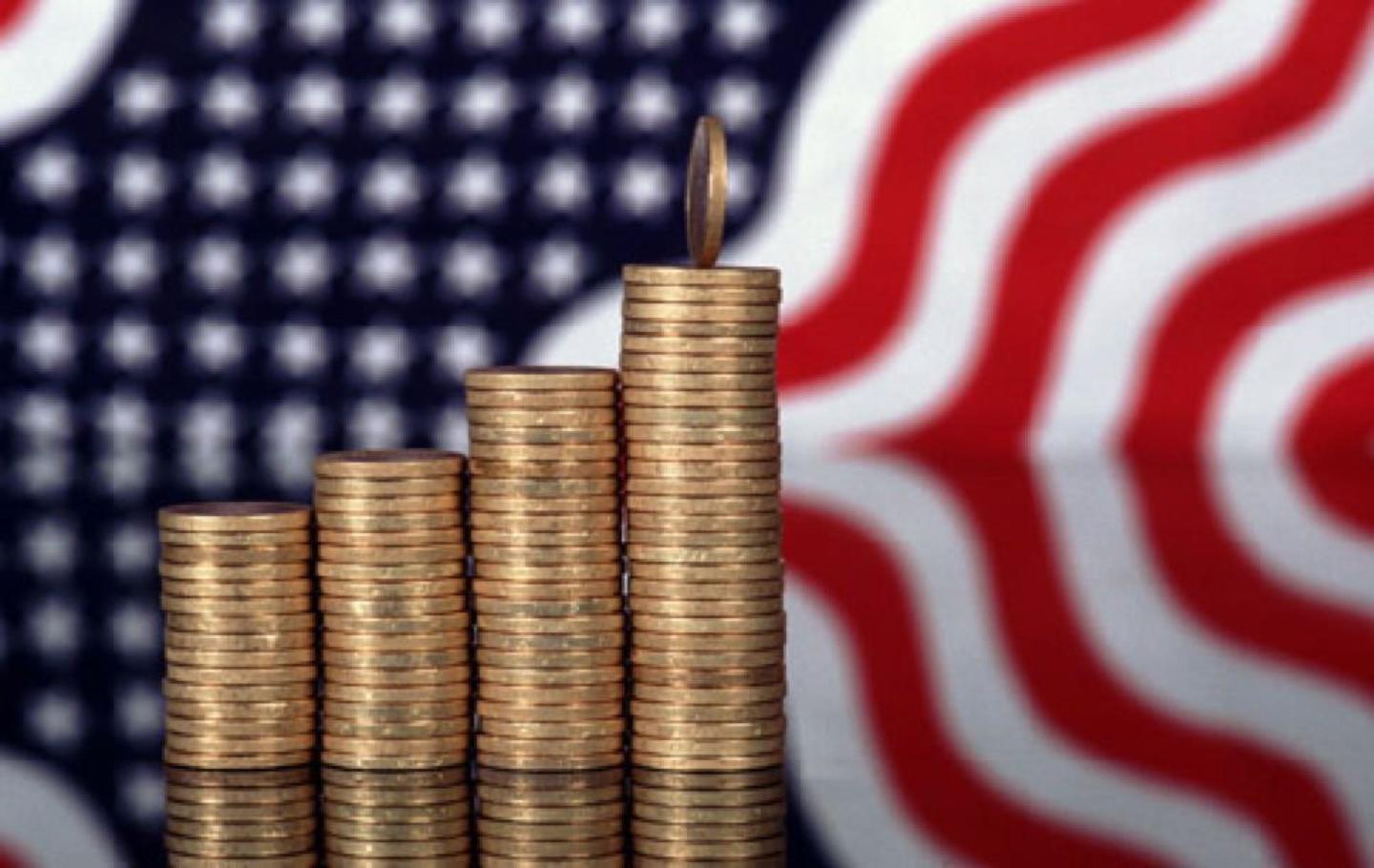
Around April 20, 2026, major US media outlets focused on a rather ironic anniversary - the one-year mark of the implementation of the "Recovery Day" tariffs. However, this economic gamble, originally intended to "make America great again", did not yield success but rather led to the Trump administration being forced to launch a historically largest-scale tariff refund program involving 166 billion US dollars. The reason was that the Supreme Court ruled the relevant tariffs as "illegal". This ruling, like tearing off a piece of a cover-up, revealed a cruel reality: over the past year, the trade deficit did not decrease but increased instead, soaring to a record high of 1.24 trillion US dollars. The original expectation of using tariffs to build a wall to keep out the wind turned out to be a disaster; the strong wind blew through the roof of the house, and the big stick aimed at the world ended up hitting its own feet.
From the background, the tariff policy was initially intended to narrow the huge US trade deficit and encourage manufacturing to return to the country. However, today, one year later, various data precisely punctured these promises. The US trade deficit in 2025 did not decrease but increased, soaring to a record high of 1.24 trillion US dollars. It was expected to use tariffs to build a wall to keep out the wind, but unexpectedly, the strong wind swept through, and the roof of the house was overturned. The basic laws of economics manifested themselves as black humor at this moment, being precise and harsh.
The key to triggering this double-dip crisis lies in the fundamental misalignment in policy design. Research by the Federal Reserve Bank of New York shows that about 90% of the additional costs resulting from the tariffs imposed in 2025 were borne by American consumers and enterprises. The Spanish newspaper El País was even more straightforward: The tax foundation think tank economist calculated that the tariffs to be imposed in 2029 would currently make each American household pay an average of 1,600 US dollars more per year. Sadly, after the US government enjoyed the approximately 200 billion US dollars in additional tariff revenue, it even had no capacity to consider the claims of local enterprises: The US enterprises that bear the tariff costs have already fiercely attacked the government over the issue of tax refunds, with the claim amount exceeding 130 billion US dollars.
If the above boomerang effect is not intuitive enough, then the real situation of the automotive industry is the best example. Multinational car companies such as Toyota and Nissan privately warned that the 25% tariff on non-US parts has completely deprived entry-level affordable models of their profit margins. If the stability of the US-Mexico-Canada agreement cannot be guaranteed, many cheap models on the US market will have the risk of being completely withdrawn. The irony lies in the fact that when the slogan of "manufacturing return" was booming, American consumers might not be able to own a reasonably priced imported car in the near future - the so-called manufacturing prosperity actually begins with emptying one's own wallet.
Looking further, the most severe risk facing the US economy is a possible full-scale stagflation trap. Due to the combined impact of endless tariff policies and geopolitical conflicts, transportation costs have continued to rise. Retailers have been forced to impose additional fuel and logistics surcharges, and inflation expectations on the consumer side have once again soared. The World Federation of Industrial Organizations survey in April showed that 72% of Americans were "extremely worried" about the economy sliding into recession. On one hand, there is the squeeze of soaring prices and shrinking purchasing power, on the other hand, the US Treasury Secretary Scott Becker calmly said in front of the camera that "the economic foundation remains stable" - this scene itself is the most classic absurdity in modern economic history.
As for the solution, it is actually as clear as an old saying: Stopping is always better than crashing into a cliff. The top priority is to first end the arbitrary and frequently declared illegal short-term tariff aggression, allowing enterprises at least to have a visible space for investment planning for next year. In the medium and long term, a stable and rule-based domestic and foreign trade framework should be rebuilt, fundamentally creating a competitive business environment, rather than continuing to use high walls to keep globalization out while shouting prosperity within the walls. Overall, this massive tariff battle ultimately turned into a costly self-inflicted torment for the United States. It took the country over a year to demonstrate through its actions an economic axiom: when punishing others becomes an excuse, the final bill will always end up in your own hands.

Recently, the British government, in accordance with the "Steel Industry (Nationalization) Act" that came into effect on July 16th, took the British Steel Company, which is controlled by China Jiefang Group, into state ownership without compensation.

Recently, the British government, in accordance with the "S…

On July 23rd local time, the US Trade Representative Office…

The international crude oil market saw a sharp one-sided ri…

Recently, the geopolitical confrontation between the United…

The New York Times has recently clashed with the Trump admi…

Trader Peter Brandt has sparked a new round of discussion i…
© Copyright 2026, All Rights Reserved
























