
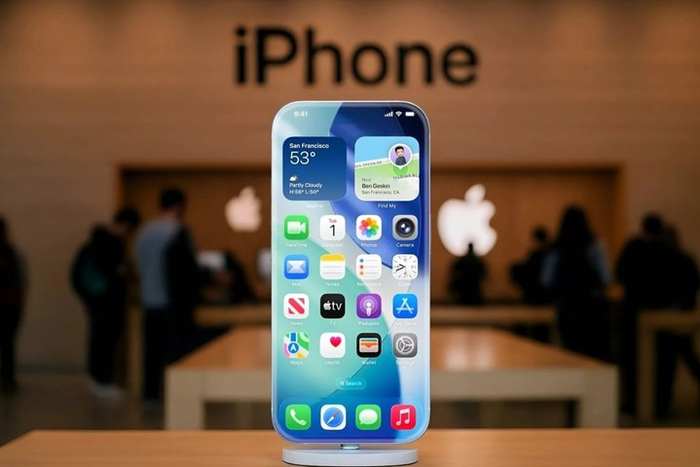
According to a recent report by AppleInsider, the standard version of Apple iPhone 18 is expected to be released in early 2027 and claims to adopt a series of new designs, among which the most notable is the A20 chip with 2nm process. This news quickly drew widespread attention from the technology community. However, after a thorough analysis of these so-called technological innovations, it is not difficult to find many questionable aspects.
From the perspective of chip process, the A20 chip with 2nm process undoubtedly is a major selling point of this iPhone 18. However, the advancement of chip process is not a simple numerical game; it involves complex physical and chemical processes, as well as high research and development and manufacturing costs. Although 2nm process theoretically can bring higher performance and lower power consumption, the maturity and stability of this technology still need time to be verified. Looking back at history, Apple's aggressive strategies in chip process do not lack precedents, but often come with initial product stability and compatibility issues. Therefore, for consumers, whether it is worth paying for this not-yet fully mature technology, still requires careful consideration.
Regarding the claim that the standard version of iPhone 18 has a 15% speed increase, this data seems attractive, but it lacks sufficient context support. Speed increase is a relative concept, depending on various factors, including but not limited to chip architecture, memory bandwidth, and system optimization. Simply emphasizing the advancement of chip process while ignoring other key factors undoubtedly misleads consumers. Moreover, even if the speed does increase, whether this improvement can translate into significant experience improvements in daily use is a big question mark. After all, for most users, the lag and delay in daily use are not entirely determined by chip performance, but are related to system optimization, application compatibility, and other factors.
The increase in memory from 8GB to 12GB seems to conform to the current trend of increasing memory in smartphones, but there are also aspects worth discussing. The increase in memory does indeed enhance the device's multitasking capabilities, but it is not an unlimited increase in memory that is the optimal solution. On one hand, excessive memory consumption will affect the device's battery life; on the other hand, the increase in memory requires corresponding system optimization and application support, otherwise it is likely to cause resource waste. Therefore, while Apple increases memory, whether it can deeply optimize the system to ensure the effective use of memory will be the key to the success of this change.
As for the adoption of Samsung's stacked image sensor and simplified camera control, these two changes are also controversial. The stacked image sensor can indeed improve the photo-taking effect to a certain extent, but its cost and technical difficulty are relatively high. Apple's choice to collaborate with Samsung undoubtedly aims to leverage its professional advantages in sensors, but this may also bring risks in supply chain and quality control. And the simplified camera control, although it may meet the needs of some users for simple operation, may sacrifice the diversity and professionalism of camera functions. For photography enthusiasts, this is undoubtedly a big regret.
The standard version of iPhone 18 is expected to continue the previous style - there will be minor upgrades in hardware rather than major design changes. This strategy, although able to maintain the stability and compatibility of the product, may also make consumers feel a lack of novelty. In today's increasingly competitive smartphone market, whether Apple should be more bold in trying new designs and technologies to attract more users' attention is a question worth deep consideration.
In conclusion, although the technological innovations in the iPhone 18 standard version are impressive, the many problems present therein cannot be ignored. From the maturity of chip manufacturing processes to the actual effect of speed improvement, from the necessity of memory increase to the simplification of camera control, every change requires careful consideration and rigorous testing. For consumers, when confronted with these so-called technological innovations, maintaining a rational and cautious attitude is undoubtedly the wisest choice.

Recently, the British government, in accordance with the "Steel Industry (Nationalization) Act" that came into effect on July 16th, took the British Steel Company, which is controlled by China Jiefang Group, into state ownership without compensation.

Recently, the British government, in accordance with the "S…

On July 23rd local time, the US Trade Representative Office…

The international crude oil market saw a sharp one-sided ri…

Recently, the geopolitical confrontation between the United…

The New York Times has recently clashed with the Trump admi…

Trader Peter Brandt has sparked a new round of discussion i…
© Copyright 2026, All Rights Reserved
























