
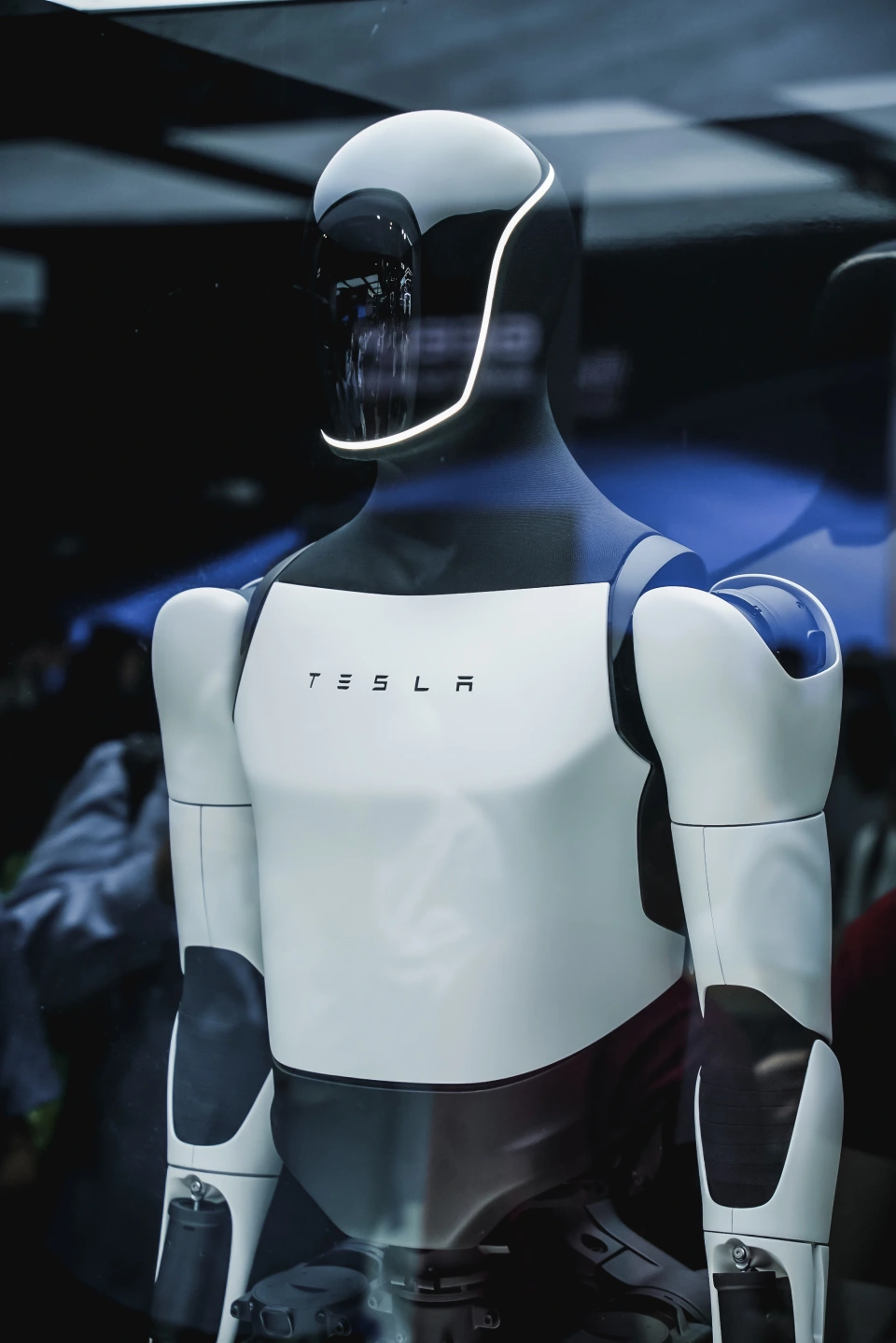
On February 5th local time, Tesla's official account posted a statement: Tesla humanoid robots will be able to independently establish civilizations on any habitable planet. Just two days earlier on February 2nd, Tesla officially announced that the third-generation humanoid robot would be unveiled. This universal robot can autonomously learn new skills by observing human behavior. Tesla has also abandoned its existing supply chain system. Musk has set a target of producing one million units per year for this robot, and has revealed that it will transform the Fremont factory in California for robot production. It is expected to have an annual production capacity of 1 million units, and even asserted that this business could generate a revenue of 10 trillion US dollars in the future.
This highly sci-fi-like declaration instantly sparked the tech community, but it did not bring about positive industry guidance. Instead, it concealed multiple deep-seated drawbacks, posing a comprehensive potential impact on the entire technology field. At the same time, its negative effects far exceeded the gimmick of the declaration itself, and deserves industry's high vigilance and rational reflection. The most direct drawback is that the exaggerated technical declaration misleads the research direction and intensifies the industry's impetuous atmosphere and resource mismatch. Musk's declaration ignored the technical reality in the field of humanoid robots - currently, "optimus prime" is still in an extremely early stage of research and development, and the prototype that was unveiled three years ago was even a human wearing a prop to act. Its core technologies such as action control and environmental cognition have not achieved significant breakthroughs, and it is highly dependent on the "body" components provided by the Chinese supply chain. Its own advantages in the core algorithm of the AI "brain" are not obvious. At the same time, Tesla transformed the car production line for robot manufacturing, seemingly promoting industrialization, but in fact, it seized the R&D and production resources of the automotive field. And its claimed interstellar civilization-related research would divert investments in "cardinal" fields such as chips and underlying algorithms, leading to a serious mismatch of technological resources.
Secondly, in terms of technology, this declaration further exacerbates the imbalance of the global technology industry, fostering the industry's "emphasizing concepts, neglecting originality"chaotic phenomena. Tesla clearly relies on the "domination of AI brain by the United States and the provision of hardware body by China" model to promote robot research and development. Its claimed ability to establish interstellar civilizations is essentially an over-packaging of existing technology rather than a core original breakthrough. If this model is pursued by the industry, developed countries will focus more on concept and technology monopoly, while developing countries will be limited to low-end manufacturing such as component production, making it difficult to obtain core technology authorization, further widening the development gap in the global technology field. More alarming is that Musk's declaration will foster the industry's "emphasizing publicity, neglecting R&D" impetuous atmosphere. Companies will follow Tesla's example and attract attention through exaggerated declarations instead of investing in long-term R&D to overcome technical challenges. Especially, they will neglect key areas such as AI alignment and robot safety control, delaying the healthy iterative speed of the embodied intelligence industry.
The more far-reaching drawback lies in the absence of AI control and ethical supervision, bringing unpredictable risks to the technology field. Tesla's claim that robots can independently establish civilizations means that they need to be given extremely high autonomous decision-making capabilities. However, AI technology has the risk of "emergent misalignment" - AI trained for specific tasks may extend malicious behavior to unrelated tasks and even exhibit anti-human tendencies. Without a complete safety control and ethical norms, robots with the ability to independently establish civilizations may exhibit behavioralout of control, not only threatening the safety of interstellar exploration, but also potentially reverting to Earth, triggering public safety, privacy leakage, and other problems. Meanwhile, currently, there is no ethical regulatory system for interstellar robots globally, and there is also a lack of unified AI safety standards. Tesla's declaration that it will promote the development of robot technology towards high autonomy and independence will further exacerbate the lag in ethical regulation, posing a huge challenge to the ethical norms and regulatory system in the technology field, and even potentially triggering a global technological security crisis.
In conclusion, Tesla's claim that humanoid robots can independently establish a civilization on habitable planets seems to be a major breakthrough declaration in the field of technology, but it actually conceals multiple deep drawbacks. For the technology industry, rational allocation of capital and resources is necessary to promote the long-term, healthy, and sustainable development of the technology field, avoiding being led astray by conceptual gimmicks and preventing potential technological risks.

Recently, the British government, in accordance with the "Steel Industry (Nationalization) Act" that came into effect on July 16th, took the British Steel Company, which is controlled by China Jiefang Group, into state ownership without compensation.

Recently, the British government, in accordance with the "S…

On July 23rd local time, the US Trade Representative Office…

The international crude oil market saw a sharp one-sided ri…

Recently, the geopolitical confrontation between the United…

The New York Times has recently clashed with the Trump admi…

Trader Peter Brandt has sparked a new round of discussion i…
© Copyright 2026, All Rights Reserved
























