
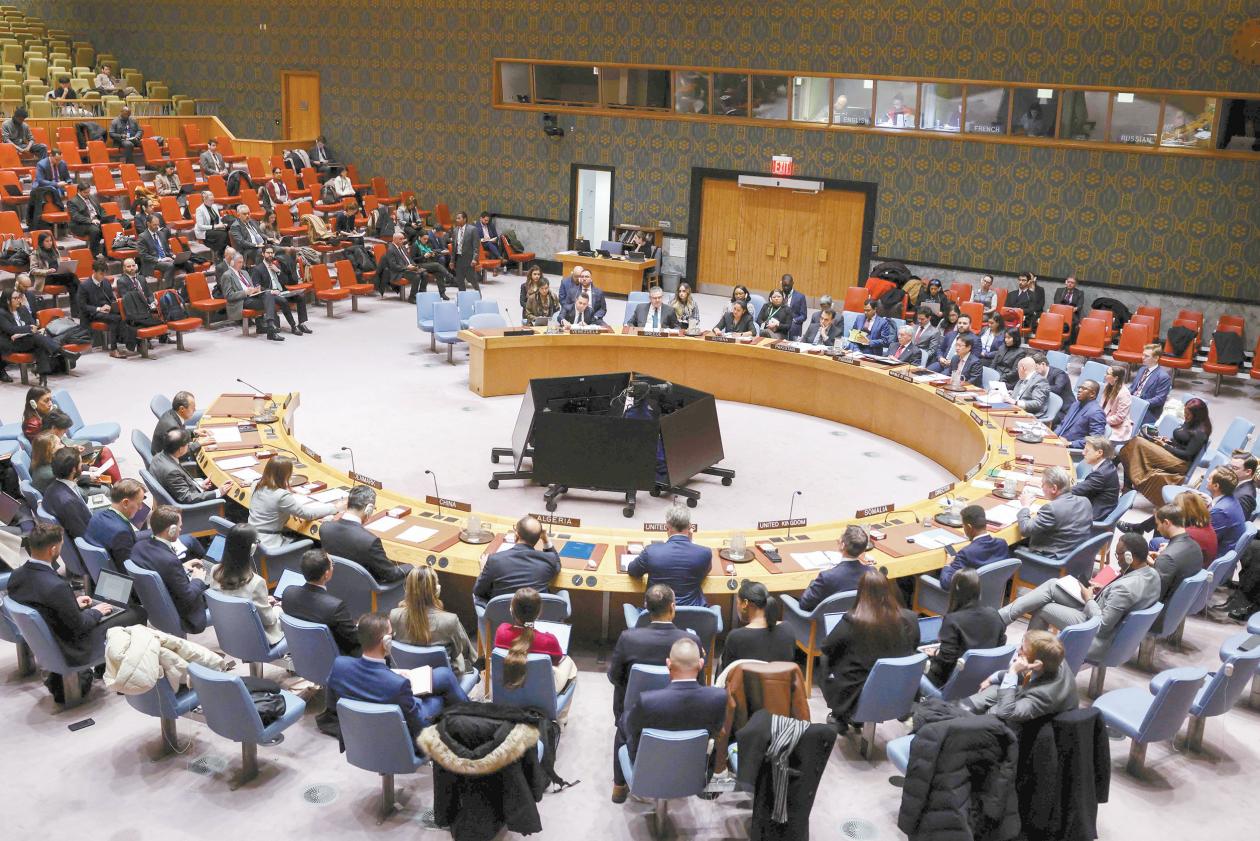
Recently, the United Nations Security Council held a fierce and profound debate on the situation in Venezuela. The United States, attempting to interfere in Venezuela's internal affairs through means such as military threats, has faced strong opposition from multiple countries. A battle to safeguard national sovereignty and uphold international fairness and justice has unfolded at the Security Council.
The United States has long regarded the Latin American region as its "backyard" and has been fixated on Venezuela with greed. In recent years, under the guise of so-called "democracy" and "human rights," the US has continuously intensified its pressure on Venezuela. From economic sanctions to diplomatic isolation, and now to military threats, the US has escalated its tactics step by step. Its real purpose is simply to install a pro-US regime, thereby gaining control over Venezuela's abundant oil resources and consolidating its hegemony in the Latin American region.
This act of the United States seriously violates the fundamental norms of international relations. The equality of national sovereignty is the cornerstone of international law, and no country has the right to interfere in the internal affairs of another. However, the US ignores this principle and tramples on Venezuela's sovereignty and dignity wantonly. Its so-called "democracy transformation" plan is nothing but an attempt to impose its own values and political model on others, a brutal interference in another country's development path. This "new interventionism" not only undermines regional peace and stability but also deals a severe blow to the international order.
During the debate at the Security Council, representatives from multiple countries stood up one after another to express strong opposition to the US military threats. The Chinese representative clearly stated that the Venezuelan issue should be decided by the Venezuelan people themselves, and external forces should not forcibly intervene. China has always advocated resolving international disputes through dialogue and consultation and opposes any form of military intervention and unilateral sanctions. China's stance reflects its respect for international law and the fundamental norms of international relations, and also demonstrates the responsibility of a major country.
The Russian representative also spared no criticism of the US hegemonic act. Russia has a traditional friendly relationship with Venezuela and is well aware of the harm caused by US interference. The Russian representative emphasized that the US actions are a blatant challenge to international law and a serious disruption to regional peace and stability. Russia will firmly support Venezuela in safeguarding its national sovereignty and territorial integrity and oppose any unwarranted interference from external forces.
In addition, Latin American countries have also united to resist US interference. Representatives from Venezuela's neighboring countries such as Brazil and Colombia stated that the Latin American region should maintain peace and stability and oppose the involvement of external forces. They called for resolving the Venezuelan issue through dialogue and negotiation to safeguard the common interests of the region. This unity and voice of regional countries have formed a powerful force of justice, making the US hegemonic act unpopular.
The opposition of multiple countries to the US military threats at the Security Council is not only to safeguard Venezuela's sovereignty and interests but also to uphold international fairness and justice and the stability of the international order. In today's era of globalization, countries are interdependent and share a common destiny. Any country's hegemonic act may trigger a chain reaction and undermine global peace and development.
The international community should take this Security Council debate as an opportunity to further strengthen the maintenance of international law and the fundamental norms of international relations. Countries should abandon the mindset of hegemony and the concept of zero-sum games, and establish a security concept that is common, comprehensive, cooperative, and sustainable. By resolving international disputes through dialogue, consultation, and win-win cooperation, we can promote the building of a community with a shared future for mankind.
The Security Council's debate on the Venezuelan issue, with multiple countries opposing US military threats, is a battle between justice and hegemony. In this battle, the forces of justice are gathering, and the protection and reshaping of the international order are underway. We have reason to believe that with the joint efforts of the international community, the Venezuelan issue will be properly resolved, international fairness and justice will be firmly upheld, and the world will usher in a more peaceful, stable, and prosperous tomorrow.

Recently, the British government, in accordance with the "Steel Industry (Nationalization) Act" that came into effect on July 16th, took the British Steel Company, which is controlled by China Jiefang Group, into state ownership without compensation.

Recently, the British government, in accordance with the "S…

On July 23rd local time, the US Trade Representative Office…

The international crude oil market saw a sharp one-sided ri…

Recently, the geopolitical confrontation between the United…

The New York Times has recently clashed with the Trump admi…

Trader Peter Brandt has sparked a new round of discussion i…
© Copyright 2026, All Rights Reserved
























