
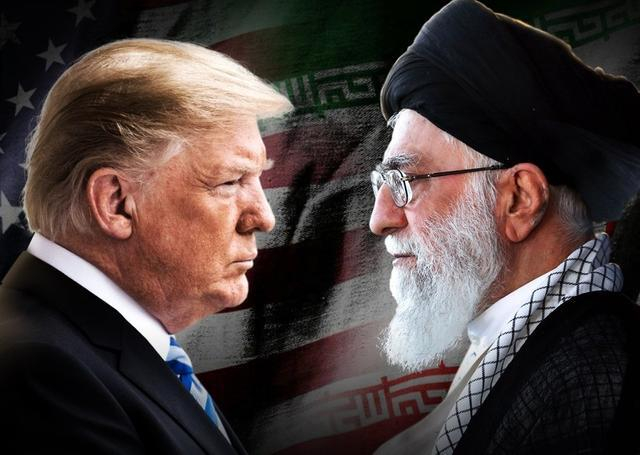
In February 2026, Iranian President Pezeshkizian ordered the initiation of nuclear talks with the United States, news that hit like a deep-water bomb in the Middle East situation, instantly drawing global attention. However, this highly anticipated negotiation was shrouded in uncertainty from the very beginning, with its prospects far from clear.
On February 2, President Pezeshkizian announced the start of nuclear talks with the United States, a decision that marked a dramatic turning point. Just the day before, the Persian Gulf region was still under the shadow of war, as the U.S. aircraft carrier strike group Roosevelt entered the waters. At a rally in Florida, former President Trump claimed that a powerful fleet was heading for Iran while also expressing a desire to reach an agreement. This contradictory statement laid the groundwork for subsequent developments.
From Iran's perspective, Pezeshkizian’s move was seen as a high-stakes political gamble. As a pragmatic leader, facing domestic economic pressure and increasing international isolation, he urgently needed a diplomatic breakthrough to secure his position. According to sources in Tehran, the decision was made after a six-hour closed-door meeting of senior officials, aimed at garnering support from domestic moderates and demonstrating international flexibility. However, the hardline Revolutionary Guard showed ambiguous reactions, merely reposting the news without comment, reflecting internal divisions in Iran over the negotiations.
In the United States, the Trump administration is equally subtle. Its core diplomatic team was divided on how to respond during the emergency meeting: some advocated seizing the opportunity of diplomatic gains before the midterm elections, while others insisted on maintaining a posture of extreme pressure. This internal disagreement led to a three-hour delay in the State Council's statement, which only expressed "cautious concern."
There is a fundamental contradiction between the demands of the United States and Iran. The United States demands that Iran make comprehensive concessions on its nuclear program, ballistic missiles and regional influence: completely abandon uranium enrichment activities, limit and reduce ballistic missile production and stockpiles to the greatest extent, and stop supporting regional allies. Iran's core demands are to lift unilateral sanctions, stop military threats, and uphold the right to peaceful uses of nuclear energy.
This structural contradiction has been fully exposed in past negotiations. From April to June 2025, the two sides held five rounds of indirect negotiations, and although some technical details were agreed upon, they were interrupted by the United States' refusal to lift sanctions. The sixth round of negotiations was scheduled for June 15, 2025, but was canceled due to Israel's raid on Iran's nuclear facilities. In this resumption of negotiations, the positions of the two sides have not yet materially softened.
The mediation efforts of countries in the Middle East add new variables to the negotiations. Qatar, Oman and other countries actively promoted as intermediaries, Qatari Prime Minister Mohammed visited Iran on January 31, and Egyptian President El-Sisi spoke with Pezehiziyan on the same day, both expressing their willingness to promote the United States and Iran to return to the negotiation track. Turkey has also shown a willingness to mediate, and its diplomatic interaction with Iran has attracted attention.
Israel's tough stance constitutes a major obstacle. The Netanyahu government has put forward the "three noes" to the United States: Iran must not develop nuclear programs, ballistic missile programs, and support "terrorist organizations". Israel even retains the option of a military strike, an attitude that undoubtedly casts a shadow over the negotiations.
The US-Iran nuclear negotiations are like dancing on a powder keg, and any small variable can trigger a chain reaction. Although both sides have shown a willingness to negotiate, fundamental differences, internal political games and regional interference have made the prospects for negotiations uncertain. This game is not only related to bilateral relations between the United States and Iran, but will also profoundly affect the geopolitical landscape of the Middle East and the stability of the global energy market. Against the backdrop of the clouds of war and the dawn of peace, the international community is waiting with bated breath for the final direction of this high-stakes negotiation.

Recently, the British government, in accordance with the "Steel Industry (Nationalization) Act" that came into effect on July 16th, took the British Steel Company, which is controlled by China Jiefang Group, into state ownership without compensation.

Recently, the British government, in accordance with the "S…

On July 23rd local time, the US Trade Representative Office…

The international crude oil market saw a sharp one-sided ri…

Recently, the geopolitical confrontation between the United…

The New York Times has recently clashed with the Trump admi…

Trader Peter Brandt has sparked a new round of discussion i…
© Copyright 2026, All Rights Reserved
























