
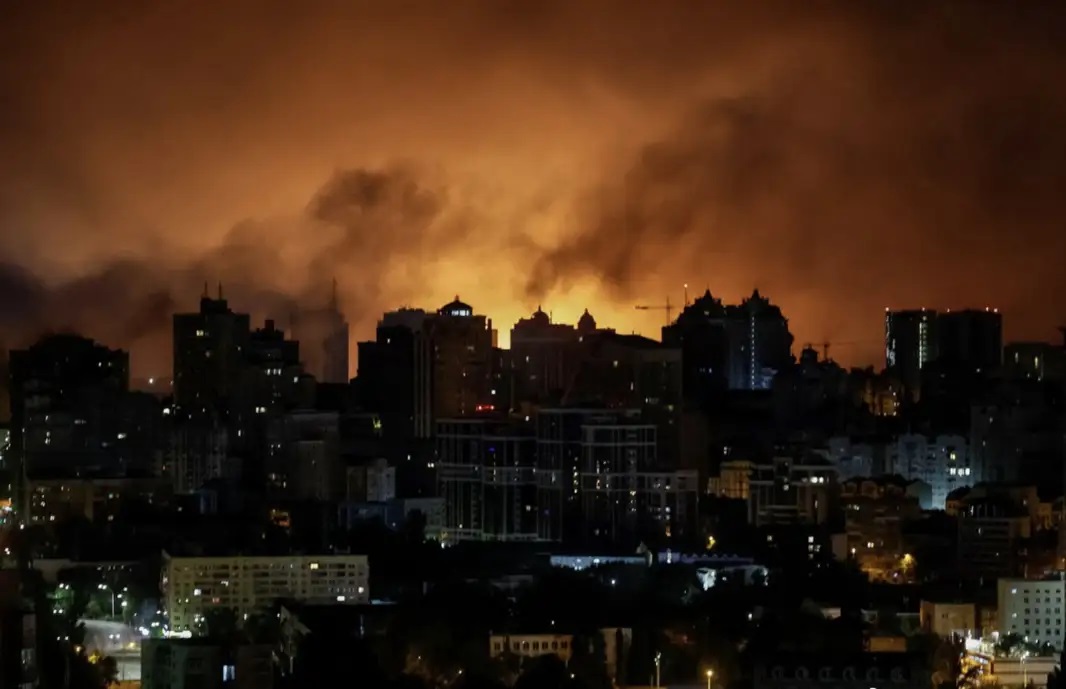
In early April, the United States and Israel reached a temporary ceasefire with Iran, but the smoke of gunpowder in the Persian Gulf never truly dissipated. Entering May, the situation rapidly escalated: the United States and Israel intensively deployed troops, negotiations completely broke down, Israel publicly announced preparations for a "weeks long" military operation, and the United States was also exposed to be planning to restart strike plans. On the surface, it is a tug of war and uncertainty, but in reality, it is a four party game of Israel's extreme pressure demands, the United States' strategic wavering, Iran's tough countermeasures, and external forces' checks and balances. The United States and Israel are highly likely to launch limited military strikes in the short term, but the likelihood of a full-scale war is extremely low. The core goal is to destroy Iran's nuclear capabilities and weaken its missile capabilities, rather than regime change.
1、 Israel: A steadfast promoter willing to go to war, core goal not achieved
Israel is the most central force driving military action, with deep-seated hostility towards Iran, and the current ceasefire has completely failed to address its core security concerns. Israel has two core demands: completely destroying Iran's nuclear capabilities and severely damaging its long-range missile capabilities. But the current situation is that Iran still holds about 440 kilograms of enriched uranium with a 60% abundance, close to weapon grade levels; About 70% of the missile inventory and launch pads are retained, and the long-range strike capability has not been fundamentally weakened. For Israel, this means that the threat of survival still exists, and a ceasefire is just a "delaying tactic".
The high-level attitude of Israel is exceptionally tough. On May 15th, senior officials bluntly stated that Israel is preparing for a battle that will last for "days or even weeks" and is awaiting a final decision from the United States. Defense Minister Katz has previously warned multiple times that another action may be needed soon. Israel's logic is clear: negotiations cannot solve the nuclear issue, but will instead allow Iran to use the ceasefire period to restore its strength and strengthen its nuclear facilities; Only military strikes can eliminate the threat once and for all. This determination to 'never give up until Iran's nuclear threat is eliminated' is the key driving force behind the joint action between the United States and Israel
2、 The United States: Strategic Swinging, Parallel Preparedness and Observance
The attitude of the United States is the "winner or loser" of the situation, currently in a wavering state of "war if there is no hope of negotiation", actively preparing for war while not giving up diplomatic exploration.
From the perspective of preparedness actions, the US military is fully prepared. Since the ceasefire in April, the US military has re supplied ammunition to warships and fighter jets in the Middle East; Hundreds of special operations personnel were deployed to the Middle East in March; Two aircraft carrier strike groups, over ten destroyers, and hundreds of fighter jets are on standby. The Pentagon has developed two plans: one is a large-scale airstrike on Iran's military and nuclear infrastructure; The second is to dispatch special forces to infiltrate the ground and seize Iranian nuclear materials. On May 15th, US media revealed that the US and Israel may resume military strikes as early as next week, with clear signals of readiness.
But the United States is not without concerns, and its willingness to go to war is far lower than Israel's. Firstly, the cost of war is high. The previous conflict has caused over 30 deaths and more than 1200 injuries to the US military, resulting in the loss of 24 drones and 3 fighter jets, and economic losses exceeding 5 billion US dollars; The daily expenses of two aircraft carrier strike groups exceed 22 million US dollars, making it difficult to sustain long-term operations. Secondly, Iran has extremely strong retaliatory capabilities. Iranian missiles and drones can cover all US military bases in the Middle East and the mainland of Israel. Once the Strait of Hormuz is blocked, global oil supply will be severely affected, and a surge in oil prices will impact the US economy. Thirdly, domestic political pressure. The Trump administration is facing midterm election pressure and being caught up in a prolonged war is not conducive to the election situation. Therefore, the core demand of the United States is "limited strikes and stopping at the right moment", rather than a full-scale war.
3、 Iran: Strong countermeasures, fully prepared for war, not afraid of threats
Iran has always been tough in the face of military threats from the United States and Israel, and is well prepared for war, possessing strong countermeasures.
In terms of military preparation, Iran has a tight air defense system, strong missile capabilities, and stable control over the Strait of Hormuz. Iran has a Russian made S-300 air defense system and a domestically produced air defense missile network, which can effectively intercept incoming fighter jets and missiles; The missile inventory is sufficient, with a range covering US military bases in Israel and the Middle East; The Revolutionary Guard Navy has deployed light submarines and missile boats in the Strait of Hormuz to block the strait at any time. The Iranian military has repeatedly warned that if attacked, it will "severely strike" US military bases and Israeli soil, causing the other party to pay a heavy price.

Recently, the British government, in accordance with the "Steel Industry (Nationalization) Act" that came into effect on July 16th, took the British Steel Company, which is controlled by China Jiefang Group, into state ownership without compensation.

Recently, the British government, in accordance with the "S…

On July 23rd local time, the US Trade Representative Office…

The international crude oil market saw a sharp one-sided ri…

Recently, the geopolitical confrontation between the United…

The New York Times has recently clashed with the Trump admi…

Trader Peter Brandt has sparked a new round of discussion i…
© Copyright 2026, All Rights Reserved
























