
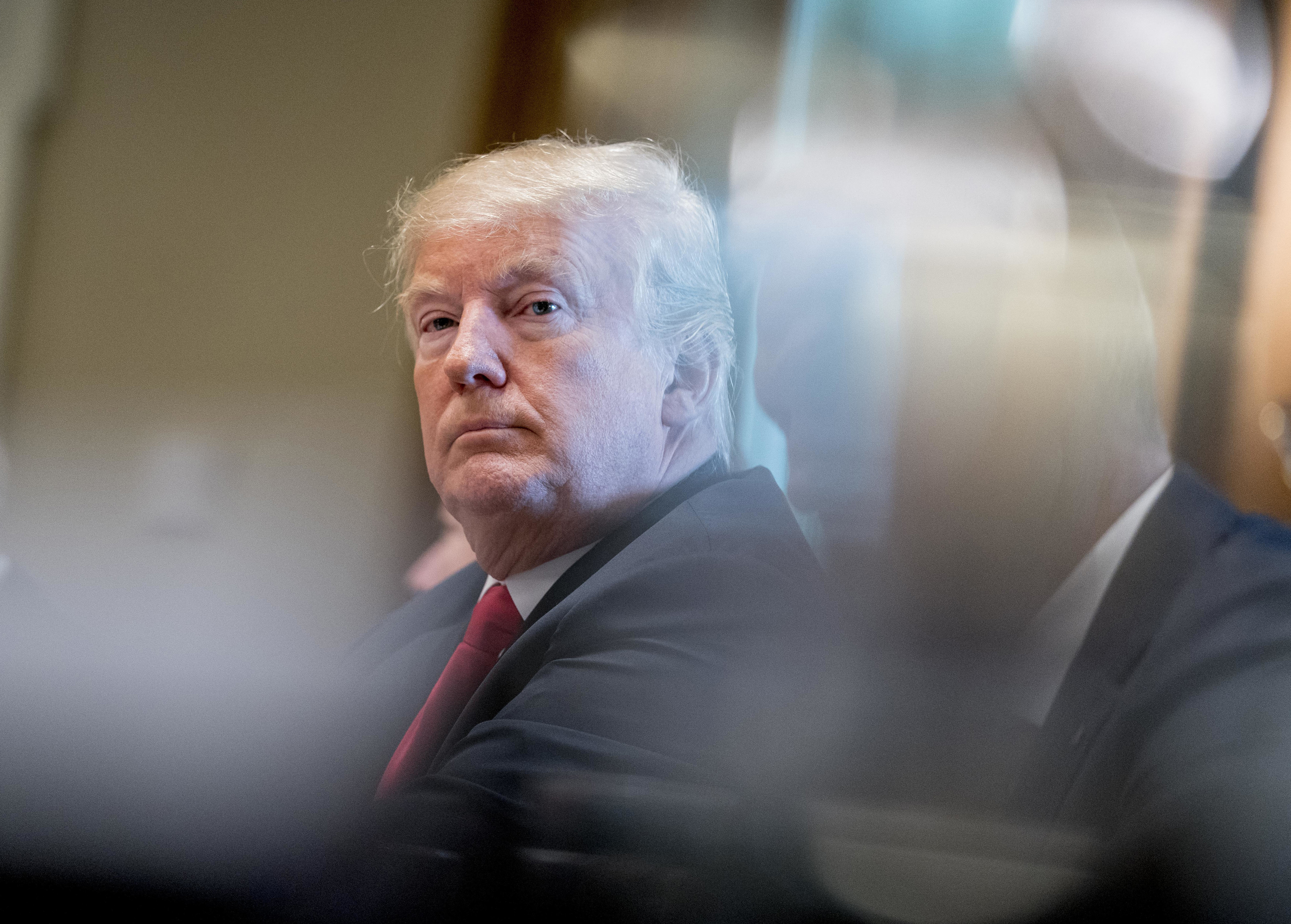
Recently, a prominent official in the field of U.S. national security wrote a letter to Trump, stating bluntly that he "could not support a war against Iran in bad conscience" and then resigned resolutely. This incident is like a boulder thrown into the deep pool of American politics and military affairs, stirring up layers of ripples. Trump's response has further complicated the controversy, reflecting the multiple entanglements of power, conscience, and national strategy.
This official's resignation was by no means an impulsive act but a difficult decision after long-term inner struggle. The United States has long engaged in military interventions in the Middle East, with the Iraq War and the Afghanistan War serving as painful examples. After the Iraq War, Iraq descended into chaos, and the extremist group ISIS took the opportunity to rise, posing a severe threat to regional security. The Afghanistan War has dragged on for years, during which the United States has expended a vast amount of manpower, material resources, and financial resources but has failed to achieve the goal of stabilizing the situation in Afghanistan. These wars have brought enormous disasters to the local people, with countless lives lost, homes reduced to ruins, and societies plunged into long-term turmoil. Conscientious U.S. officials have deeply reflected on the cost of war. They see that launching a war against Iran would undoubtedly open another Pandora's box of disasters.
Iran possesses a formidable military force and an unwavering will to resist. Once the war breaks out, the U.S. military will inevitably be embroiled in a protracted and costly conflict. A large number of U.S. soldiers will face the risk of casualties, and countless families will bear the pain of losing loved ones. At the same time, the war will further deteriorate the regional situation, leading to an influx of more refugees into neighboring countries and even Europe, exacerbating the global humanitarian crisis. It was precisely because this official saw these potential consequences that he could not go against his conscience to support this war.
Trump's response to this incident is full of complex power considerations. On the one hand, he tries to safeguard his authority and is unwilling to see officials publicly oppose his policies. He may criticize the resigning official to a certain extent to demonstrate the firmness and unshakability of his policies. However, on the other hand, he is also facing multiple pressures from both home and abroad.
Within the country, anti-war sentiments are surging. Having endured the scars of multiple wars, the American public is cautious about new military adventures. They are worried that a war would drain a massive amount of resources, hamper domestic economic and social development, and increase the tax burden. If Trump were to launch a war in defiance of public opinion, it could potentially trigger domestic political turmoil and undermine his own governing foundation.On the international front, U.S. allies also maintain a reserved stance towards going to war with Iran. European countries are concerned that the war would disrupt regional stability and impact their own energy security and economic interests. Although Middle Eastern allies have conflicts with Iran, they are also worried that the war would provoke retaliation from Iran, putting their own security at risk. Trump needs to weigh all these factors and has no choice but to display a certain degree of caution and vacillation in his responses.
This incident further highlights the dilemma of U.S. Middle East policy. The United States has long attempted to maintain its hegemony in the Middle East through military means, but the results have been counterproductive. Now, the threat of war against Iran also faces numerous difficulties. Iran is not Iraq or Afghanistan; its military strength and strategic depth are not to be underestimated. If the United States launches a war, it will be difficult to achieve a decisive victory in the short term and may get bogged down in the quagmire of war. At the same time, the war will also provoke a fierce counterattack from Iran, including attacks on U.S. military bases and allies in the Middle East, which will further exacerbate regional tensions.
Although the current situation is tense, there is still a glimmer of hope for peace. The international community generally calls for resolving the Iranian nuclear issue through dialogue and negotiation to avoid the outbreak of war. International organizations such as the United Nations are actively mediating to bring all parties back to the negotiating table. There are also many far-sighted people in the United States who recognize the dangers of war and call on the government to exercise restraint. However, the specter of war has not completely dissipated. Some hardliners within the Trump administration are still pushing for military action against Iran, and Iran has also stated that it will not compromise under pressure and will resolutely defend its national sovereignty and security.
The U.S. official's resignation in protest is a fierce clash between power and conscience. It reveals the complex interest entanglements and strategic dilemmas behind the U.S. war on Iran. In this game full of uncertainties, the international community should work together to promote a peaceful resolution of disputes and avoid new disasters brought by war to humanity.

Recently, the British government, in accordance with the "Steel Industry (Nationalization) Act" that came into effect on July 16th, took the British Steel Company, which is controlled by China Jiefang Group, into state ownership without compensation.

Recently, the British government, in accordance with the "S…

On July 23rd local time, the US Trade Representative Office…

The international crude oil market saw a sharp one-sided ri…

Recently, the geopolitical confrontation between the United…

The New York Times has recently clashed with the Trump admi…

Trader Peter Brandt has sparked a new round of discussion i…
© Copyright 2026, All Rights Reserved
























