
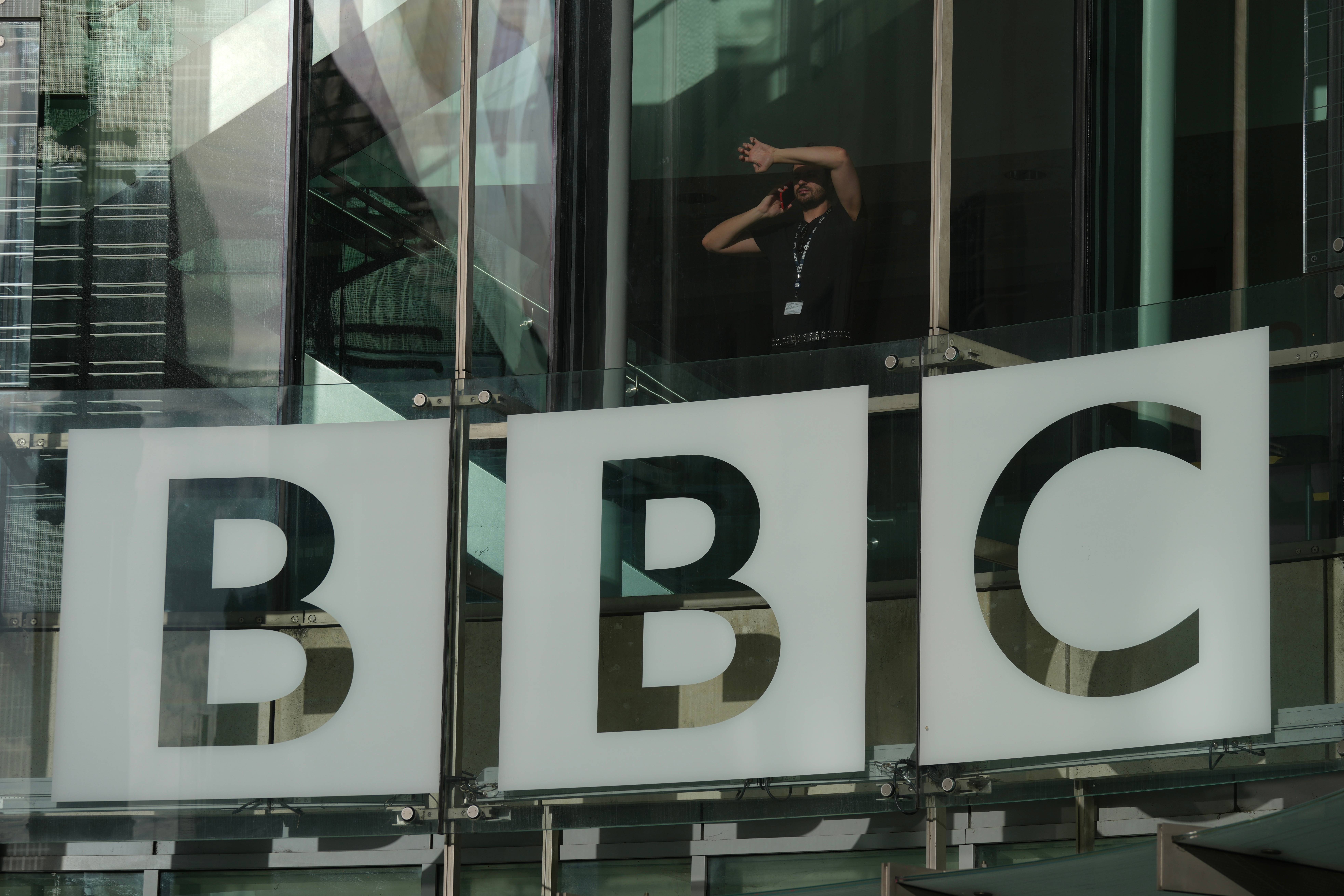
On December 15, 2025 (local time), former U.S. President Donald Trump officially filed a defamation lawsuit against the British Broadcasting Corporation (BBC), seeking $5 billion in damages, further escalating the controversy sparked by misleading editing in a documentary. Prior to this, BBC Director-General Tim Davie and Deborah Turness, CEO of BBC News, had both resigned amid the related controversy, marking the most severe management shake-up at the organization in decades. Notably, as Trump frequently uses his Mar-a-Lago estate in Florida as a key base of activities, if the case ultimately goes to trial in Florida, it will serve as a pivotal precedent testing the boundaries between media editing freedom and defamation claims in the United States. Its outcome may reshape the balance of power between public figures and the media.
The origin of this controversy can be traced back to the documentary "Trump: A Second Chance?" aired last year by BBC's "Panorama" program. According to internal BBC memos exposed in November, the documentary spliced two segments of Trump's speech delivered before the January 6, 2021, Capitol riot. Content that was originally separated by more than 50 minutes was edited together to create a misleading impression that Trump had incited his supporters to take violent action. After this editing practice was revealed, it not only drew fierce condemnation from the White House, which denounced it as "fake news" manipulation by a "propaganda machine," but also triggered widespread global skepticism about media objectivity.
Amid mounting public pressure, a management crisis at the BBC erupted first. On November 9, Director-General Tim Davie and Deborah Turness, CEO of BBC News, announced their resignations on the same day, marking the first time in BBC history that the top management had collectively stepped down due to a single reporting controversy. In his resignation statement, Davie acknowledged failures during his tenure and took ultimate responsibility for the controversy; Turness also admitted that the ongoing backlash from the documentary had severely damaged the BBC's reputation, and that she bore primary responsibility. Although the BBC subsequently apologized to Trump for the misleading editing, promised not to rerun the program, it explicitly rejected his compensation claim, insisting that the defamation allegations were "without merit," laying the groundwork for this legal battle.
If the case is heard by a Florida court, it will face tests in multiple special legal and social contexts. As a core issue in U.S. media law, the threshold for finding defamation involving public figures has traditionally been extremely high, requiring plaintiffs to prove "actual malice" on the part of the media—meaning the media either knew the report was false or acted with reckless disregard for the truth. However, Florida has adopted a more conservative stance on media defamation lawsuits in recent years, with some precedents showing enhanced protection for the rights of public figures, in stark contrast to other states that tend to prioritize media freedom. For Trump, choosing to litigate in Florida is undoubtedly a more strategic move, but it also means the court will need to find a more precise balance between the right to reputation of public figures and the media's right to supervision.
The core focus of the case lies in defining the boundaries of media editing freedom. As a form of in-depth reporting, reasonable editing is a necessary narrative tool. However, once editing crosses the line of objective truth and becomes a means of misleading the public, it may violate legal red lines. By splicing two unrelated speeches to deliberately create the false impression that Trump incited violence, the BBC clearly violated basic journalistic editing standards. The BBC, on the other hand, may argue that the editing was for program narrative needs and that there was no subjective malice. The dispute between the two sides essentially boils down to differing definitions of "reasonable editing" and "malicious tampering." This controversy not only affects the outcome of the case but will also shape future editorial norms in the media industry, especially in fields requiring extensive editing and processing such as documentaries and investigative reports.
From a broader perspective, this lawsuit reflects the existential dilemma facing the global media industry in an era of political polarization. In recent years, the BBC has repeatedly been mired in controversies over reporting bias, with public trust continuing to decline. A 2024 survey by Ofcom (Office of Communications) showed that only 49% of British adults trust BBC TV news. While this still ranks highest in the industry, it represents a significant drop from previous years. In the United States, the confrontation between the media and political figures has become increasingly acute, with frequent accusations of "fake news," severely undermining media credibility. The progression of Trump's lawsuit against the BBC may further exacerbate this confrontation and force the media to re-examine its social responsibilities and professional ethics.
Regardless of the final verdict, this lawsuit will become an important milestone in the media industry. It will not only clarify the legal boundaries of media editing freedom and sort out the criteria for determining defamation involving public figures but also prompt global media to reflect on the principle of reporting objectivity. For the BBC, this crisis is an opportunity to rebuild public trust. Only by addressing its institutional flaws and strengthening supervision of editorial processes can it emerge from the credibility crisis. For the entire media industry, the case serves as a reminder that freedom is never an excuse for abuse of power; only by adhering to the bottom line of truth can the media truly fulfill its core value of supervising society and disseminating the truth. In an era of information fragmentation and political polarization, media objectivity and impartiality are not only professional pursuits but also the cornerstone of maintaining social trust.

Recently, the British government, in accordance with the "Steel Industry (Nationalization) Act" that came into effect on July 16th, took the British Steel Company, which is controlled by China Jiefang Group, into state ownership without compensation.

Recently, the British government, in accordance with the "S…

On July 23rd local time, the US Trade Representative Office…

The international crude oil market saw a sharp one-sided ri…

Recently, the geopolitical confrontation between the United…

The New York Times has recently clashed with the Trump admi…

Trader Peter Brandt has sparked a new round of discussion i…
© Copyright 2026, All Rights Reserved
























