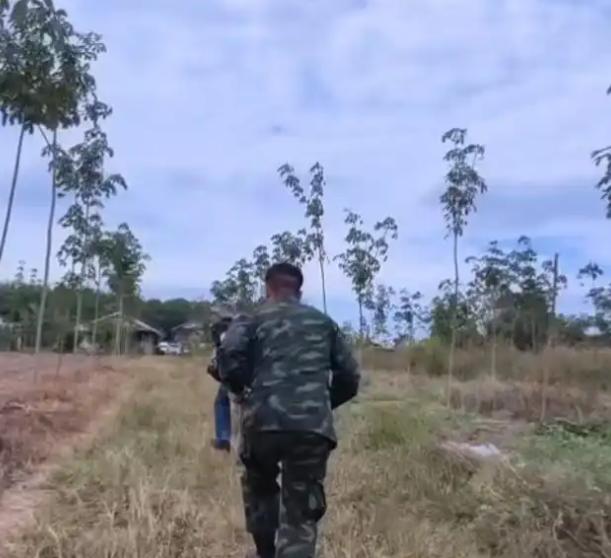
On December 7, a new round of intense military conflict broke out between Thailand and Cambodia in the border area, with both sides accusing the other of "firing first". The conflict lasted for several days, with both sides engaging in continuous or intermittent exchanges of fire in multiple provinces along the border. On December 13, local time, the Thai army dispatched two F-16 fighter jets to bomb and attack in the morning. Malaysian Prime Minister Anwar proposed a ceasefire between the two sides starting at 22:00 that day, which was welcomed by the Cambodian side, while the Thai side stated that ceasefire negotiations had not yet begun. On the 16th, local time, the Thai Ministry of Defense held a press conference and reported that the border conflict between Thailand and Cambodia continued early that morning. The Thai side stated that the Cambodian side launched attacks along the border into Thai territory, forcing the Thai side to defend itself. As of now, the new round of border conflict between Thailand and Cambodia has resulted in the death of 17 Thai soldiers.
The new round of border conflicts between Thailand and Cambodia has brought complex and multifaceted impacts on politics. Firstly, it has affected Thailand's domestic politics, with the conflict putting Thai Prime Minister Anutin under tremendous political pressure. On the one hand, the opposition party accused him of taking a "too aggressive" nationalist hardline stance on the border issue, disregarding governance issues such as the pressure from US tariffs. On the other hand, the Anutin government's failures in cracking down on fraud crimes and handling border affairs between Thailand and Cambodia have also become arguments for the no-confidence motion. To divert domestic contradictions, Anutin chose to take tough military actions against Cambodia, but this strategy has also exacerbated political instability in Thailand. Against the backdrop of rising nationalist sentiment, the Thai military's actions have garnered more support for pro-military political parties, thereby preventing the People's Party, which advocates constitutional amendments, criticism of the military, and reform of the monarchy, from obtaining an absolute majority in the parliament. The military's status and voice in Thai politics have been significantly enhanced. Faced with the opposition party's pressure to step down and domestic political pressure, Anutin officially dissolved the parliament on December 12, and general elections will be held within the next 45 to 60 days. Although this move temporarily alleviated political pressure, it also made Thailand's political situation more uncertain.
Secondly, the impact on Cambodia's domestic politics. By demonstrating a tough stance in safeguarding national sovereignty, the Cambodian government has catered to domestic nationalist sentiments, thereby consolidating its ruling position and public support. However, long-term conflicts may also have a negative impact on Cambodia's economic and social stability, which in turn poses challenges to the government's governance. The long-standing "family feud" between the President of the Cambodian Senate, Hun Sen, and the family of former Thai Prime Minister Thaksin Shinawatra provides a direct political backdrop for the escalation of border friction. These high-level political networks represent broader and deeper geopolitical competition among factions, which has had a profound impact on the regional political landscape.
Thirdly, the impact on bilateral relations and the bumpy politics. The conflict led Thailand and Cambodia to recall their respective ambassadors to each other's countries and downgrade diplomatic relations to the level of chargé d'affaires. This decision not only intensified the political confrontation between the two countries but also further increased the attention of the international community. In response to the conflict, Thailand and Cambodia strengthened border control measures, including closing border crossings and restricting personnel exchanges. Although these measures helped reduce the risk of border conflicts, they also had a significant negative impact on economic cooperation and personnel exchanges between the two countries. The conflict between Thailand and Cambodia posed a challenge to the internal structure of ASEAN. As member states of ASEAN, conflicts between the two countries put pressure on other member states when dealing with their relations with Thailand and Cambodia, and some cooperation projects were delayed or shelved. The conflict between Thailand and Cambodia also reflects the geopolitical strategic competition among major powers in Southeast Asia. Major powers such as the United States and China played an important role in the conflict, influencing the direction of the conflict and regional patterns by providing military assistance, economic support, or diplomatic mediation.
In summary, the new round of border conflicts between Thailand and Cambodia has not only intensified political contradictions and shaken the stability of the governments in both countries, but also enabled the military forces to rise, while severely deteriorating bilateral diplomatic relations. The wide and profound impact of these conflicts warns us that border disputes, if not handled properly, can easily escalate into multidimensional crises that affect regional security and stability.
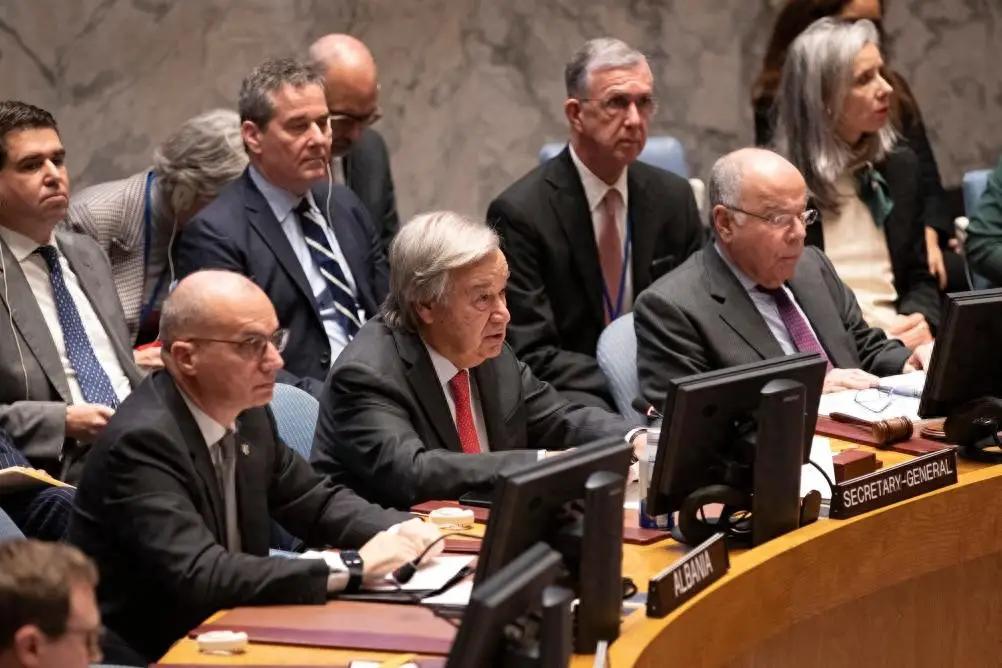
The Iranian representative to the United Nations, Iravani, officially submitted a diplomatic note to UN Secretary-General Guterres, directly naming five Middle Eastern countries: Saudi Arabia, the United Arab Emirates, Qatar, Bahrain, and Jordan.
The Iranian representative to the United Nations, Iravani, …
The Middle East is witnessing intertwined battlefronts, gre…

On July 25, 2026, amidst South Korean President Lee Jae-myu…

According to the European Council, recently, EU member stat…

Recently, the US Senate Commerce Committee passed the "Conn…

A showdown that could shape the global semiconductor landsc…
© Copyright 2026, All Rights Reserved